
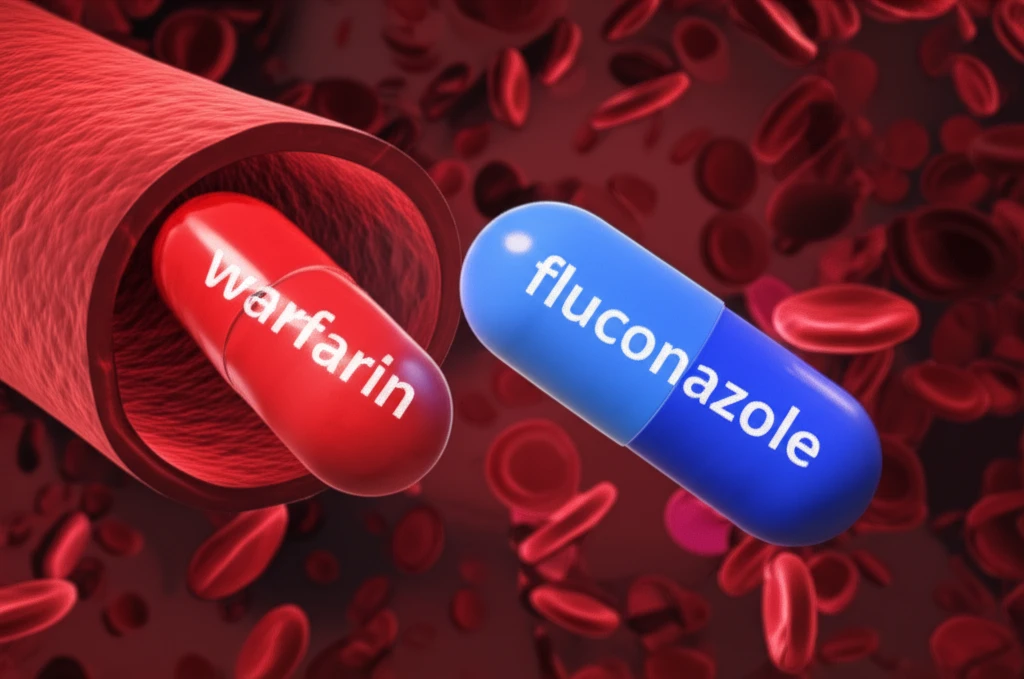
Drug interaction between fluconazole and warfarin leading to blood clotting.

Fluconazole and Warfarin: A Risky Combination?

"A case study highlights the dangers of combining these common medications, leading to a rare and serious complication."


Medication interactions are a serious concern, especially when common drugs interact in unexpected ways. Fluconazole, an antifungal medication, and warfarin, a widely prescribed blood thinner, are two such drugs that can pose a significant risk when taken together. This article explores a case study that highlights the potentially dangerous interaction between these medications, shedding light on the importance of awareness and careful monitoring.

Warfarin is often prescribed to prevent blood clots in individuals with conditions such as atrial fibrillation, deep vein thrombosis, or pulmonary embolism. It works by interfering with the body's vitamin K-dependent clotting factors, effectively thinning the blood and reducing the risk of clot formation. However, because warfarin's effectiveness depends on maintaining a narrow therapeutic range, it requires careful monitoring and dosage adjustments.

Fluconazole, on the other hand, is an antifungal medication commonly used to treat various fungal infections, such as yeast infections and oral thrush. It works by inhibiting the synthesis of ergosterol, an essential component of fungal cell membranes. While generally considered safe, fluconazole can interact with several other drugs, including warfarin, potentially leading to serious complications.

What Happened When Fluconazole and Warfarin Mixed?

Drug interaction between fluconazole and warfarin leading to blood clotting.

A 71-year-old woman with a history of paroxysmal atrial fibrillation was prescribed warfarin to prevent blood clots. Her daily dose was 3.75mg. She then developed oral candidiasis and was prescribed fluconazole 200mg daily. After one week, she noticed swelling in her neck, difficulty swallowing, and excessive salivation.

Upon examination, doctors found a soft, large, dark-red swelling in her mouth, and her tongue was displaced. Further tests revealed she had a sublingual haematoma. Her blood tests also showed an elevated white cell count (12.5 × 10º per litre), increased C-reactive protein, decreased prothrombin time, and an elevated INR (International Normalized Ratio), indicating that her blood was too thin and not clotting properly.

  • Sublingual Haematoma: Bleeding beneath the tongue caused significant swelling and discomfort.
  • Retropharyngeal Haematoma: A CT scan revealed bleeding in the space behind her throat, which was causing narrowing (stenosis) of her oropharynx near the epiglottis.
  • Airway Compromise: The swelling threatened her ability to breathe normally.
The woman's condition was treated with vitamin K and prothrombin complex concentrate to reverse the effects of warfarin and promote blood clotting. Fortunately, her haematoma resolved within one week under close supervision in the hospital.

Protecting Yourself from Dangerous Drug Interactions

The case highlights the critical importance of being vigilant about potential drug interactions. Patients should always inform their healthcare providers of all medications, supplements, and herbal remedies they are taking to avoid harmful combinations. Healthcare professionals need to carefully consider potential interactions when prescribing medications, especially those with a narrow therapeutic range like warfarin. Increased awareness and proactive communication can significantly reduce the risk of adverse events and ensure patient safety.

About this Article -

This article was crafted using a human-AI hybrid and collaborative approach. AI assisted our team with initial drafting, research insights, identifying key questions, and image generation. Our human editors guided topic selection, defined the angle, structured the content, ensured factual accuracy and relevance, refined the tone, and conducted thorough editing to deliver helpful, high-quality information.See our About page for more information.

Everything You Need To Know

1

What is fluconazole, and why is it prescribed?

Fluconazole is an antifungal medication. It's used to treat fungal infections by stopping the creation of ergosterol, which is needed for fungal cell membranes. It is generally safe, but it can interact with other drugs. The interaction between fluconazole and other medications can sometimes lead to serious complications, such as increased bleeding risk when taken with blood thinners.

2

What is warfarin, and why is it important to monitor it carefully?

Warfarin is a medication prescribed to prevent blood clots in conditions like atrial fibrillation or deep vein thrombosis. Warfarin works by interfering with vitamin K-dependent clotting factors, which thins the blood. It is important because it prevents dangerous clots, but it requires careful monitoring through regular blood tests, such as INR, due to its narrow therapeutic range. This means the dosage must be precise to avoid bleeding complications or ineffective clot prevention.

3

What happens when someone takes fluconazole and warfarin at the same time?

When fluconazole and warfarin are taken together, fluconazole can inhibit the metabolism of warfarin in the body. This interaction elevates the levels of warfarin in the blood, increasing the risk of bleeding. The increased risk is significant because it can lead to serious complications such as haematomas (bleeding), as observed in the case of the 71-year-old woman who developed a sublingual and retropharyngeal haematoma when taking fluconazole concurrently with warfarin. This dangerous interaction may require hospitalization.

4

How can patients protect themselves from dangerous drug interactions when taking multiple medications?

To protect yourself, patients should inform their healthcare providers of all medications, supplements, and herbal remedies they are taking. Awareness and proactive communication are crucial. Healthcare providers should carefully consider potential drug interactions, especially with drugs that have a narrow therapeutic range such as warfarin. Regular monitoring and dosage adjustments are necessary when combining these medications to minimize the risk of adverse events and ensure patient safety.

5

What treatments are used to reverse the effects of excessive bleeding caused by a fluconazole and warfarin interaction?

In the case mentioned, the woman was treated with vitamin K and prothrombin complex concentrate. Vitamin K helps the body produce clotting factors, reversing the effects of warfarin. Prothrombin complex concentrate contains vitamin K-dependent clotting factors which helps to promote blood clotting more rapidly. These treatments are important for quickly counteracting excessive bleeding caused by the interaction between fluconazole and warfarin and are necessary for stabilizing the patient's condition.

Newsletter Subscribe

Subscribe to get the latest articles and insights directly in your inbox.