
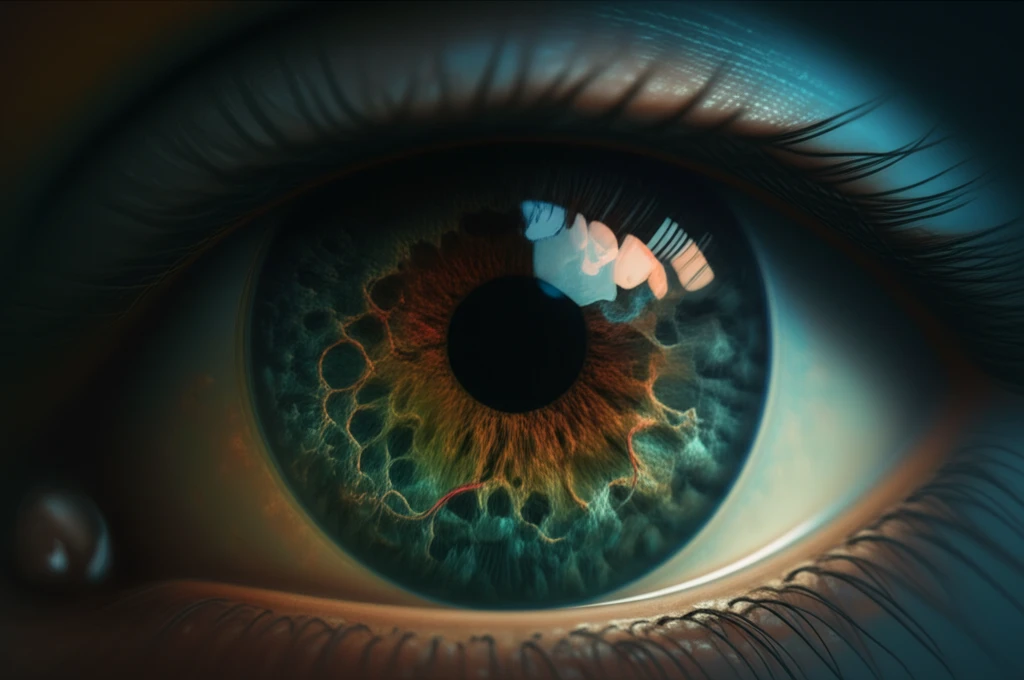
Surreal image representing the balance between eye stimulation and rest in retinal activity.

Flicker Fusion: Why Your Eyes Tire Faster Than You Think

"Uncover the surprising reason why your vision might need a break during prolonged screen time, and how it affects your retinal response."


Our eyes are constantly working, adjusting to light and movement to give us a clear picture of the world. When we look at something that flickers, like a screen, our eyes respond by dilating and constricting blood vessels in the retina. This process, known as functional hyperemia or neurovascular coupling, is essential for maintaining healthy vision.

However, repeated stimulation from flickering light can sometimes overwhelm this system. Studies have shown that individuals with conditions like diabetes may experience reduced vasodilation in response to flicker stimulation, potentially indicating impaired retinal function. This raises an important question: can repeated exposure to flickering light affect the retinal response in healthy individuals as well?

New research investigates how frequent retesting with flicker light impacts retinal vasodilation over a short period. The findings reveal a surprising phenomenon: the retinal arteriolar response to flicker stimulation decreases with short-term retesting, suggesting that our eyes need more recovery time than we might think.

The Flicker Effect: How Retinal Response Changes with Repeated Stimulation

Surreal image representing the balance between eye stimulation and rest in retinal activity.

In a study published in Investigative Ophthalmology & Visual Science, researchers Jonathan E. Noonan, Thanh T. Nguyen, Ryan E. K. Man, William J. Best, Jie Jin Wang, and Ecosse L. Lamoureux explored how retinal blood vessels react to repeated exposure to flickering light. The team used the Dynamic Vessel Analyzer to measure the diameter changes in retinal arterioles and venules of twenty healthy participants during and after flicker stimulation.

Each participant underwent three tests: an initial baseline assessment, followed by retests after 5 minutes and 30 minutes of rest. This allowed the researchers to observe how quickly the retinal vessels recovered their ability to respond to the flickering stimulus. Here are the key points:

  • Arteriolar Dilation Reduction: The study revealed that the average dilation of arterioles significantly decreased after just 5 minutes of rest, indicating a reduced responsiveness to the flicker stimulus. However, after 30 minutes of rest, the response recovered, showing no significant difference from the baseline test.
  • Venular Dilation Stability: Unlike arterioles, venules did not show significant changes in dilation across the three tests. This suggests that venules respond differently to repeated flicker stimulation compared to arterioles.
  • Baseline Diameter Consistency: The resting diameters of both arterioles and venules remained consistent across all tests, confirming that the observed changes were due to the flicker stimulus and not general vessel constriction or dilation.
These findings suggest that repeated exposure to flickering light can lead to a short-term desensitization of the retinal arterioles. This desensitization diminishes the vessels' ability to dilate and respond effectively to the stimulus, potentially impacting visual performance and comfort.

Protecting Your Vision: Practical Steps for the Digital Age

Understanding how flicker light affects our retinal response is crucial in today's digital world, where we spend countless hours in front of screens. While the study focused on healthy individuals, its findings highlight the importance of taking breaks and allowing our eyes sufficient recovery time.

Based on the research, here are a few practical steps you can take to protect your vision and minimize the negative effects of flicker stimulation:<ul><li><b>Take Regular Breaks</b>: Implement the 20-20-20 rule: every 20 minutes, look at something 20 feet away for 20 seconds.</li><li><b>Optimize Screen Settings</b>: Adjust brightness and contrast to comfortable levels. Reduce blue light emission, especially in the evening.</li><li><b>Ensure Proper Lighting</b>: Work in a well-lit environment to reduce eye strain caused by excessive contrast between the screen and surroundings.</li><li><b>Consider Anti-Glare Screens</b>: These can help reduce reflections and flicker from overhead lights.</li></ul>

By incorporating these simple habits into your daily routine, you can help maintain optimal retinal function and reduce the risk of eye strain and fatigue. Further research could explore how specific light wavelengths and screen technologies impact retinal response, paving the way for more tailored recommendations and interventions.

About this Article -

This article was crafted using a human-AI hybrid and collaborative approach. AI assisted our team with initial drafting, research insights, identifying key questions, and image generation. Our human editors guided topic selection, defined the angle, structured the content, ensured factual accuracy and relevance, refined the tone, and conducted thorough editing to deliver helpful, high-quality information.See our About page for more information.

This article is based on research published under:

DOI-LINK: 10.1167/iovs.13-12525, Alternate LINK

Title: Retinal Arteriolar Dilation To Flicker Light Is Reduced On Short-Term Retesting

Subject: General Medicine

Journal: Investigative Opthalmology & Visual Science

Publisher: Association for Research in Vision and Ophthalmology (ARVO)

Authors: Jonathan E. Noonan, Thanh T. Nguyen, Ryan E. K. Man, William J. Best, Jie Jin Wang, Ecosse L. Lamoureux

Published: 2013-11-21

Everything You Need To Know

1

What happens to the eyes when exposed to flickering light?

The retina dilates and constricts blood vessels in a process known as functional hyperemia or neurovascular coupling. This is how the eyes maintain healthy vision, reacting to light and movement to create a clear picture. Repeated exposure to flickering light on screens can disrupt this process, potentially impacting visual performance.

2

What is meant by 'flicker light' in this context?

The term "flicker light" refers to the rapid and repeated changes in light intensity, often found in screens. This flickering can lead to the retinal arteriolar response to decrease, which in turn can lead to the blood vessels dilating less in response to the stimulus.

3

What methodology did the researchers use in their study?

The study utilized the Dynamic Vessel Analyzer to measure the diameter changes in retinal arterioles and venules. Twenty healthy participants underwent three tests: an initial baseline assessment, followed by retests after 5 minutes and 30 minutes of rest. The primary findings revealed that arteriolar dilation decreased after 5 minutes of rest, while after 30 minutes of rest, the response recovered. The venules showed no significant changes.

4

What are the implications of the findings related to flicker light exposure?

The implications of the research suggest that repeated exposure to flickering light can lead to a short-term desensitization of the retinal arterioles. This means the arterioles temporarily lose some of their ability to dilate and respond effectively to the flicker stimulus, impacting visual comfort and performance. This is especially significant in the digital age due to prolonged screen time.

5

How can I protect my vision from the effects of flickering light?

To protect your vision, it's essential to take breaks from screens, allowing your eyes to recover. The research found the retinal arteriolar response recovers after 30 minutes of rest. This allows the retina enough time to restore its responsiveness to stimuli like flickering light. Adequate rest is crucial in today's digital world to maintain optimal eye health and visual performance.

Newsletter Subscribe

Subscribe to get the latest articles and insights directly in your inbox.