
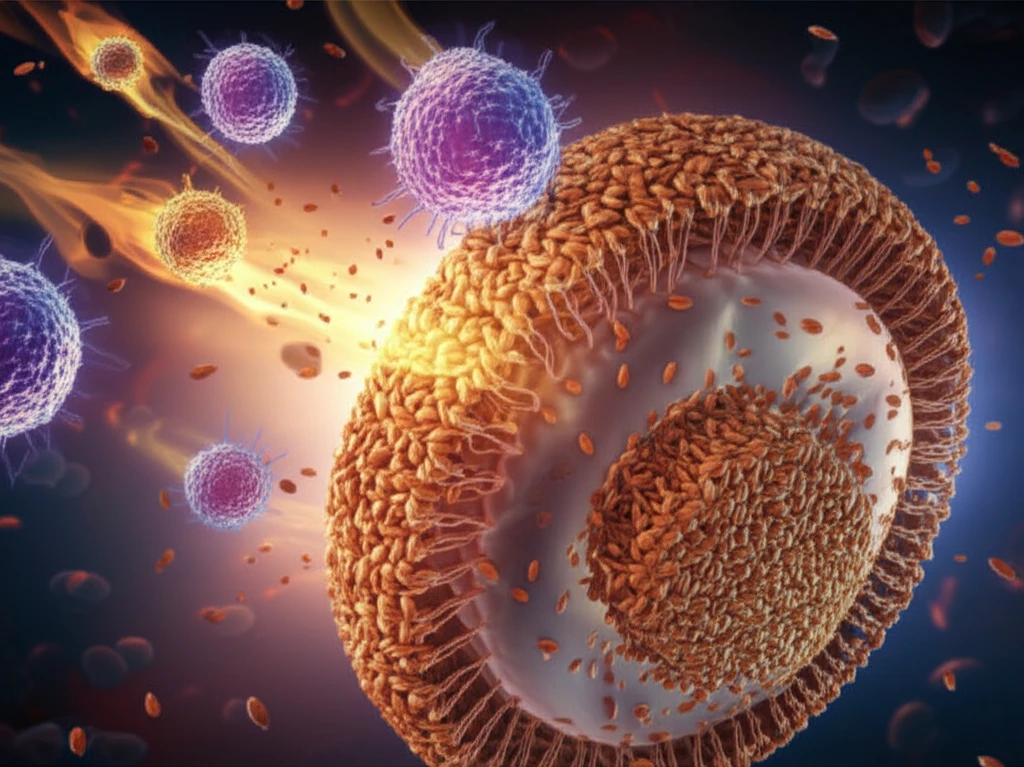
Flaxseeds protect cell membrane from oxidation

Flaxseed Power: How These Tiny Seeds Fight Lipid Oxidation

"Uncover the science behind flaxseed's potent phenolic compounds and how they protect your health by combating lipid oxidation."


Polyunsaturated fatty acids (PUFAs), essential for health, are highly vulnerable to damage from reactive oxygen species. This process, known as lipid oxidation, is implicated in food degradation and the early stages of numerous diseases. Finding natural ways to combat lipid oxidation is a growing area of interest.

Flaxseed (Linum usitatissimum), a nutritional powerhouse, has gained recognition for its potential health benefits. This study delves into the mechanisms by which phenolic compounds found in flaxseed prevent membrane lipid oxidation, providing insights into their antioxidant properties.

Researchers employed biophysical techniques, including oxidative stress tests, surface tension measurements, fluorescence spectroscopy, and HPLC, to investigate the ability of flaxseed compounds to prevent lipid oxidation and interact with cell membranes. The goal was to understand how these compounds work at a fundamental level.

Aglycones: Flaxseed's Potent Antioxidant Warriors

Flaxseeds protect cell membrane from oxidation

The research highlights that aglycone compounds within flaxseed are significantly more effective antioxidants than their glucoside counterparts (p<0.05). This means they are better at preventing the chain reaction of lipid oxidation within cell membranes.

Specifically, the study revealed that aglycone lignans spontaneously penetrate cell membranes, inserting themselves directly into the environment where oxidation occurs. This strategic placement allows them to neutralize harmful free radicals more effectively.

Here’s why this matters:
  • Direct Action: By inserting into the membrane, these compounds directly intercept the oxidation process.
  • Superior Protection: Membrane-inserted compounds demonstrated better inhibition of lipid oxidation compared to those that remained outside the membrane.
  • Targeted Defence: This targeted approach is more effective than simply scavenging free radicals in the surrounding environment.
While aglycone lignans excel at membrane insertion and protection, aglycone hydroxycinnamic acids exhibit a less pronounced antioxidant effect. This difference underscores the importance of molecular structure and its influence on antioxidant activity.

Unlocking Flaxseed's Full Potential: Implications for Health

This research deepens our understanding of how flaxseed's unique phenolic compounds protect against lipid oxidation, a process linked to aging and various diseases. By understanding the mechanisms of action, we can better leverage the health benefits of flaxseed.

The study highlights the importance of aglycone lignans and their ability to integrate into cell membranes, providing targeted antioxidant protection. This knowledge could inform the development of new dietary strategies and supplements aimed at preventing lipid oxidation.

While further research is always valuable, this study reinforces the importance of incorporating flaxseed into a balanced diet as part of a proactive approach to health and well-being, particularly for those seeking to combat oxidative stress and promote cellular health.

About this Article -

This article was crafted using a human-AI hybrid and collaborative approach. AI assisted our team with initial drafting, research insights, identifying key questions, and image generation. Our human editors guided topic selection, defined the angle, structured the content, ensured factual accuracy and relevance, refined the tone, and conducted thorough editing to deliver helpful, high-quality information.See our About page for more information.

This article is based on research published under:

DOI-LINK: 10.1016/j.foodchem.2018.08.126, Alternate LINK

Title: Flax Phenolic Compounds As Inhibitors Of Lipid Oxidation: Elucidation Of Their Mechanisms Of Action

Subject: General Medicine

Journal: Food Chemistry

Publisher: Elsevier BV

Authors: Larissa Socrier, Anthony Quéro, Margaux Verdu, Yiming Song, Roland Molinié, David Mathiron, Serge Pilard, François Mesnard, Sandrine Morandat

Published: 2019-02-01

Everything You Need To Know

1

What is lipid oxidation and why is it important in the context of flaxseed?

Lipid oxidation is a process where polyunsaturated fatty acids (PUFAs) react with free radicals, leading to cell damage and the early stages of numerous diseases. The phenolic compounds in flaxseed, particularly aglycone lignans, help prevent this process. This is significant because it protects the body at a cellular level and helps prevent damage associated with aging and disease.

2

What are the key components of flaxseed and how do they work to combat lipid oxidation?

Flaxseed (Linum usitatissimum) is a nutritional powerhouse containing phenolic compounds. Within flaxseed, the aglycone lignans are more effective antioxidants than their glucoside counterparts at preventing lipid oxidation. These components insert themselves into cell membranes to neutralize harmful free radicals. This targeted approach provides superior protection against oxidative stress.

3

What are aglycone lignans, and how do they function as antioxidants?

Aglycone lignans are a type of phenolic compound found in flaxseed that acts as a potent antioxidant. They insert themselves directly into cell membranes, where lipid oxidation occurs, allowing them to intercept and neutralize free radicals effectively. This direct action provides superior protection against lipid oxidation compared to compounds that remain outside the membrane.

4

What methods did the researchers use to study the effects of flaxseed compounds?

The research used biophysical techniques like oxidative stress tests, surface tension measurements, fluorescence spectroscopy, and HPLC. These methods helped researchers investigate the ability of flaxseed compounds to prevent lipid oxidation and interact with cell membranes. The goal was to understand how flaxseed's phenolic compounds work at a fundamental level, providing insights into their antioxidant properties.

5

How do the various types of phenolic compounds within flaxseed compare in their antioxidant activity?

Aglycone hydroxycinnamic acids exhibit a less pronounced antioxidant effect than aglycone lignans. This difference highlights that molecular structure affects antioxidant activity. Understanding these differences helps in leveraging the health benefits of flaxseed more effectively. The superior protection of the aglycone lignans in the membrane is an advantage over other types of antioxidants found in flaxseed.

Newsletter Subscribe

Subscribe to get the latest articles and insights directly in your inbox.