
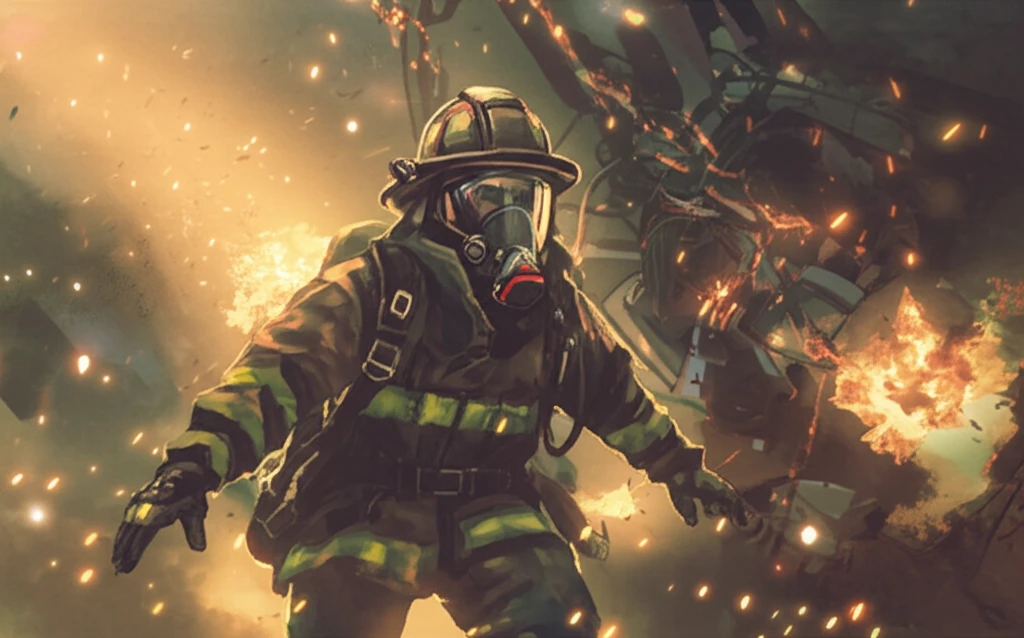
Firefighter Mobility: How Gear Size Impacts Safety

"A look at how ill-fitting boots and SCBA cylinders can compromise a firefighter's agility and increase the risk of injury."
Firefighters face countless dangers, navigating confined spaces and unstable environments where every movement counts. Their personal protective equipment (PPE) is their lifeline, designed to shield them from burns, toxic gases, and physical trauma. However, bulky or poorly fitted gear can inadvertently hinder their agility, leading to falls and injuries.
Recent studies highlight a concerning link between standard-issue firefighting gear and mobility restrictions. Fire boots with fixed heights and Self-Contained Breathing Apparatus (SCBA) cylinders designed with limited sizing options may compromise a firefighter's range of motion, impacting their ability to perform critical tasks.
This article explores how the size of fire boots and SCBA cylinders affects firefighter mobility, drawing on research that combines biomechanical testing with anthropometric data. It aims to shed light on potential design flaws and inspire improvements that can enhance firefighter safety and performance.
Firefighter Injury and Safety Statistics
Firefighter injuries remain a significant concern in the United States, with comprehensive statistical data maintained by the U.S. Fire Administration documenting fire-related incidents and firefighter casualties. The NFPA Research division regularly publishes reports examining firefighter injuries sustained annually, providing insights into how firefighters become injured or ill on the job. The NIOSH Center for Firefighter Safety, Health, and Well-being serves as a central hub for research and services aimed at reducing adverse health events among firefighters, recognizing that while their jobs protect communities, they also put firefighters' own safety and health at risk. These statistical reports on fire department activities and firefighter causalities help inform intervention efforts to improve safety outcomes across the fire service.
Current Assessment Methods
Standard methods for evaluating firefighter mobility typically involve both static and dynamic range of motion measurements combined with task-based assessments. These approaches aim to capture how protective equipment affects movement capabilities during essential firefighting operations. However, current assessment methods may not fully account for the complex interplay between gear design, body proportions, and real-world operational demands that firefighters encounter in the field.
Historical Context
The evolution of firefighter protective equipment has been driven by ongoing efforts to balance safety with operational effectiveness. Historical developments in turnout gear design have generally prioritized thermal protection and durability, though recognition of mobility constraints has grown over time. Foundational research in occupational safety has established the importance of considering both protective performance and wearer functionality in personal protective equipment development.
The Hidden Risks of Fixed-Size Fire Boots and SCBA Cylinders
Researchers conducted biomechanical tests with 21 firefighters, focusing on the correlation between boot height, SCBA cylinder size and lower body mobility. The findings revealed a significant connection between boot height and mobility, demonstrating that the fixed boot height mandated by the National Fire Protection Association (NFPA) 1971 standard can decrease lower body range of motion during job-related tasks.
- Decreased space causes greater mechanical binding between multiple layers of turnout pants.
- The study revealed a greater negative impact of fixed length SCBA cylinders on shorter firefighters' upper body mobility.
- This was evidenced by a limited range of motion in neck extension and lumbopelvic flexion while carrying fire gear.
Current Research Landscape
Recent research continues to examine how firefighter protective ensembles affect mobility and performance. Studies are increasingly focusing on standardized test methods to better evaluate the impact of personal protective equipment on movement capabilities. This body of work reflects growing interest in understanding the relationship between gear design, physical fitness requirements, and task performance outcomes for firefighters.
Fitness and Design Challenges
Research indicates that firefighter personal protective equipment can create movement limitations, highlighting the need for firefighters to maintain high levels of physical fitness to mitigate these constraints. Current findings suggest that gear manufacturers should incorporate more end-user feedback, including insights from long-term wear trials, to optimize PPE design for both mobility and task performance. The NIOSH Center for Firefighter Safety, Health, and Well-being continues to investigate these challenges through research and programs aimed at improving firefighter safety and health outcomes.
Evaluating Different Approaches
Comparative analysis of firefighter protective equipment reveals ongoing efforts to balance protective qualities with mobility requirements. Different gear designs and sizing approaches may produce varying effects on movement capabilities and task performance. Research continues to explore how different equipment configurations and body types influence operational effectiveness in firefighting scenarios.
Toward Safer Firefighting Gear
The study's findings highlight the critical need for innovative solutions in firefighting gear design. By recognizing the impact of gear size and fit on firefighter mobility, manufacturers can develop more personalized and ergonomic equipment. This includes offering a wider range of boot heights and SCBA cylinder sizes to accommodate the diverse anthropometry of the firefighting workforce. Ultimately, these improvements will contribute to a safer and more effective environment for those who risk their lives to protect our communities.
Expert Perspectives on Gear Design
Research on firefighter turnout gear and personal protective clothing emphasizes the importance of addressing fit and sizing issues, particularly for improving comfort, mobility, and safety across different body types. Expert commentary suggests that non-governmental standards play significant roles in shaping occupational and environmental health and safety requirements for structural firefighter PPE. Studies recommend further analysis of fit and mobility issues by PPE manufacturer and model, along with development of prototype turnout suits with improved mobility and comfort features guided by firefighter feedback.
Emerging Trends in Firefighter Safety
The fire and emergency services landscape continues to evolve with several critical trends shaping the future of the profession, including the intensifying shortage of firefighters. Emerging trends in the fire service highlight the importance of staying current with developments to maintain safety and effectiveness. Future firefighter safety will increasingly depend on advances in training, technology, and PPE innovation to prepare for increasingly complex operational risks.
Systemic Considerations
Systemic challenges in firefighter safety extend beyond individual equipment issues to encompass broader organizational and environmental factors. These challenges include resource constraints, workforce demographics, and the evolving nature of emergency response demands. Addressing these systemic issues requires coordinated efforts across multiple stakeholders in the fire service community.
Practical Implications and Case Studies
Real-world case studies provide valuable insights into firefighter health and safety lessons learned from actual fire incidents. Research on firefighter monitoring in real-world conditions highlights both the potential and challenges of wearable technology for enhancing safety and operational performance. Studies examining firefighter interventions in challenging environments, such as old urban centers, reveal significant limitations to mobility and action in emergencies that condition response effectiveness.