
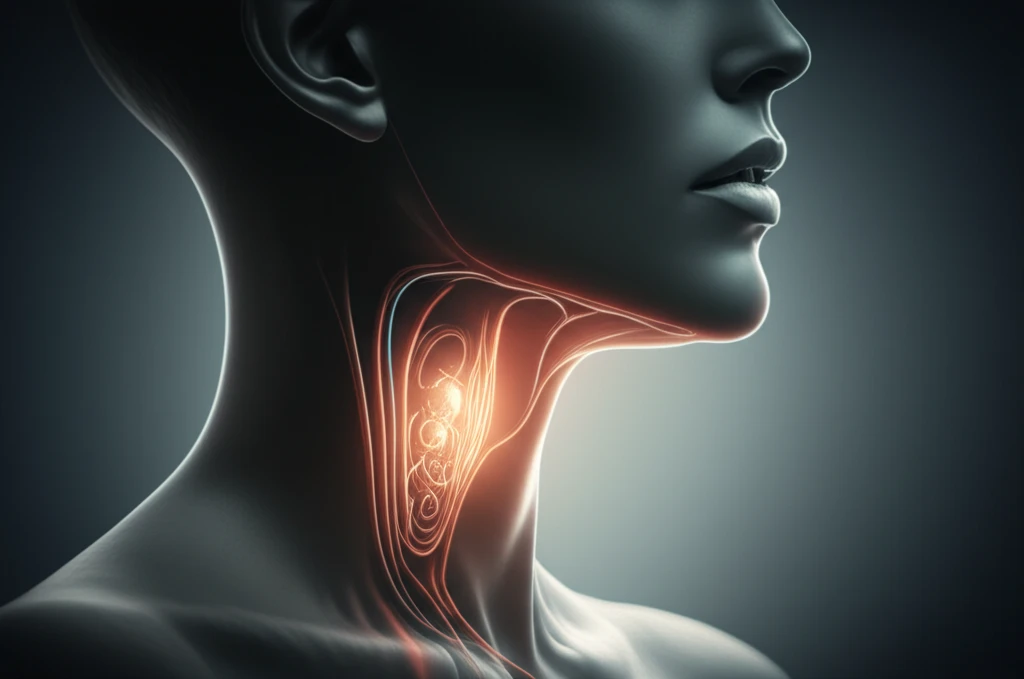
Symbolic illustration of vocal cord restoration through voice therapy

Finding Your Voice Again: How Voice Therapy Can Help After Vocal Cord Paralysis

"Regain your voice and confidence with voice therapy after unilateral vocal fold paralysis caused by cancer treatment. Discover the long-term benefits and factors influencing successful rehabilitation."


Cancer treatments, while life-saving, can sometimes lead to unexpected side effects. One such complication is unilateral vocal fold paralysis (UVFP), where one of your vocal cords becomes weakened or paralyzed. This can significantly impact your ability to speak clearly, project your voice, and even swallow comfortably. If you've experienced UVFP following cancer treatment, know that you're not alone and that effective treatments are available.

Voice therapy emerges as a powerful tool in helping individuals regain vocal function and improve their quality of life after UVFP. It's a non-invasive approach that focuses on strengthening the remaining vocal cord, improving coordination, and teaching compensatory strategies to optimize voice production. The effectiveness of voice therapy, however, can vary depending on individual factors and the specifics of the paralysis.

This article explores the findings of a prospective study that investigated the multidimensional effects of voice therapy in patients affected by UVFP due to cancer. We'll delve into how voice therapy can improve vocal parameters, what factors contribute to successful rehabilitation, and offer insights into the long-term benefits of this therapeutic approach. Understanding these aspects can empower you to make informed decisions about your care and embark on a journey toward reclaiming your voice.

Unlocking the Potential of Voice Therapy: What the Research Shows

Symbolic illustration of vocal cord restoration through voice therapy

A study published in the Brazilian Journal of Otorhinolaryngology, investigated the effectiveness of voice therapy in 61 patients with UVFP resulting from cancer treatments. The research team followed patients through short-term (1-3 months), medium-term (4-6 months), and long-term (12 months) phases of voice therapy, utilizing a comprehensive assessment protocol to track changes in vocal function. This protocol included videoendoscopy, maximum phonation time (MPT), GRBASI scale, acoustic voice analysis, and the Voice Handicap Index (VHI).

The findings revealed statistically significant improvements in GRBASI scale and VHI scores across the board, except when comparing medium-term and long-term results. This suggests that the most substantial vocal improvement occurs within the first six months of therapy, with results stabilizing thereafter. Furthermore, the study found that approximately 69% of patients with permanent UVFP achieved complete glottal closure (the complete touching together of the vocal cords) following voice therapy.

  • GRBASI Scale and VHI Improvements: Significant differences were observed in multiple comparisons, indicating overall voice quality and reduction in perceived handicap.
  • Glottal Closure: A substantial percentage of patients achieved complete glottal closure, crucial for improved voice production.
  • Sustained Results: Improvements tended to stabilize after six months, suggesting long-term benefits with consistent therapy.
Acoustic analysis also showcased notable progress, with the variables PPQ (Perturbation Quotient) and Shimmer% demonstrating significant decreases compared to baseline. These improvements indicate enhanced vocal stability and reduced hoarseness. However, the study also identified a potential risk factor: elevated Jitter values (a measure of vocal instability) at the beginning of treatment were associated with a lower likelihood of achieving full vocal recovery.

Reclaiming Your Voice: Key Takeaways and the Road to Recovery

This research reinforces the value of voice therapy as a cornerstone of rehabilitation for individuals experiencing UVFP following cancer treatment. By consistently engaging in therapy, individuals can experience notable improvements in vocal quality, glottal closure, and overall communication abilities. The study's long-term follow-up data also suggests that these improvements can be sustained over time, empowering individuals to confidently participate in social, professional, and personal activities.

While voice therapy offers significant promise, it's important to acknowledge that individual outcomes may vary. Factors such as the initial severity of vocal impairment, the presence of other health conditions, and individual commitment to therapy can all play a role. The study highlighted that elevated Jitter values before treatment may indicate a more challenging rehabilitation journey, underscoring the importance of early assessment and tailored therapeutic interventions.

If you're considering voice therapy for UVFP, consult with a qualified speech-language pathologist who specializes in voice disorders. They can conduct a comprehensive evaluation, discuss your individual goals and concerns, and develop a personalized treatment plan that addresses your specific needs. Remember, regaining your voice is a journey, and with dedication and the right support, you can achieve meaningful improvements in your communication and quality of life.

About this Article -

This article was crafted using a human-AI hybrid and collaborative approach. AI assisted our team with initial drafting, research insights, identifying key questions, and image generation. Our human editors guided topic selection, defined the angle, structured the content, ensured factual accuracy and relevance, refined the tone, and conducted thorough editing to deliver helpful, high-quality information.See our About page for more information.

This article is based on research published under:

DOI-LINK: 10.1016/j.bjorl.2017.07.012, Alternate LINK

Title: Multidimensional Effects Of Voice Therapy In Patients Affected By Unilateral Vocal Fold Paralysis Due To Cancer

Subject: Otorhinolaryngology

Journal: Brazilian Journal of Otorhinolaryngology

Publisher: Elsevier BV

Authors: Camila Barbosa Barcelos, Paula Angélica Lorenzon Silveira, Renata Lígia Vieira Guedes, Aline Nogueira Gonçalves, Luciana Dall’Agnol Siqueira Slobodticov, Elisabete Carrara-De Angelis

Published: 2018-09-01

Everything You Need To Know

1

What is voice therapy and how does it help with vocal cord paralysis?

Voice therapy is a non-invasive treatment approach designed to help individuals regain their vocal function after experiencing Unilateral Vocal Fold Paralysis (UVFP). It focuses on strengthening the remaining vocal cord, improving coordination between the vocal cords, and teaching compensatory strategies. This is important because UVFP, often caused by cancer treatments, can severely impact a person's ability to speak clearly, project their voice, and even swallow comfortably. Voice therapy helps address these impairments, improving vocal quality and overall communication abilities.

2

What is Unilateral Vocal Fold Paralysis (UVFP), and why is it significant?

Unilateral Vocal Fold Paralysis (UVFP) is a condition where one vocal cord becomes weakened or paralyzed. This can be a side effect of cancer treatments. The significance of UVFP lies in its impact on an individual's voice and communication. It affects clarity, projection, and even the ability to swallow comfortably. Voice therapy directly addresses the challenges posed by UVFP by strengthening the functioning vocal cord and teaching compensatory techniques, ultimately improving the patient's quality of life.

3

How are the GRBASI scale and Voice Handicap Index (VHI) used in relation to voice therapy?

The GRBASI scale and the Voice Handicap Index (VHI) are used to measure the effectiveness of voice therapy. The GRBASI scale assesses overall voice quality, while the VHI measures the impact of voice problems on a person's life. The improvements in both metrics suggest that voice therapy improves the overall quality of the voice and reduces the perceived handicap caused by UVFP, leading to better communication and social interactions.

4

What factors can affect the success of voice therapy?

Factors that can influence the success of voice therapy include the specific nature of the Unilateral Vocal Fold Paralysis (UVFP) and the individual's commitment to the therapy. A study found that patients with elevated Jitter values at the beginning of treatment were associated with a lower likelihood of achieving full vocal recovery. The key takeaway is that consistent participation in voice therapy is crucial for achieving and sustaining positive outcomes in vocal rehabilitation.

5

What are the long-term benefits of voice therapy for UVFP?

The long-term benefits of voice therapy for Unilateral Vocal Fold Paralysis (UVFP) include sustained improvements in vocal quality, glottal closure, and overall communication abilities. Studies show that improvements tend to stabilize after about six months of therapy. This suggests that the initial gains made through voice therapy are maintained over time, allowing individuals to confidently participate in social, professional, and personal activities without the limitations imposed by UVFP.

Newsletter Subscribe

Subscribe to get the latest articles and insights directly in your inbox.