
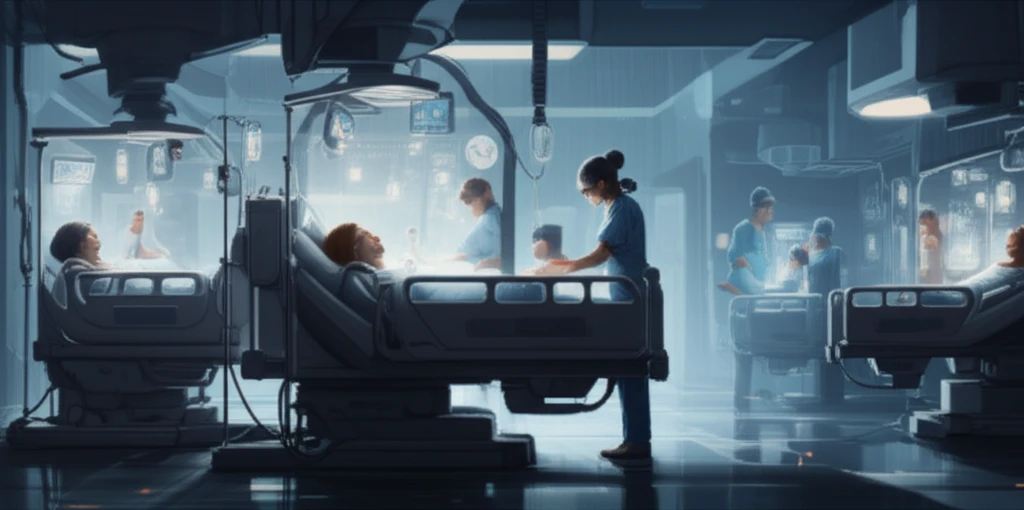
Finding Meaning in Care: How Spirituality Impacts Nurses in Critical Care

"Explore how nurses' personal spirituality influences their caregiving in intensive care units and the importance of addressing their emotional needs."
In the rapidly evolving world of healthcare, technological advancements often overshadow the deeply human aspects of care. As medical innovations surge forward, it's easy to focus solely on protocols, technical skills, and specialized equipment. Yet, for nurses in Intensive Care Units (ICUs), the essence of their work lies not just in these advancements, but in the profound connections they forge with patients and families during critical times.
These connections tap into something beyond the physical realm – a dimension of spirituality that influences how nurses deliver care and cope with the emotional demands of their profession. Recognizing this dimension is not about abandoning technology, but integrating it with a holistic understanding of patients' needs, including their spiritual well-being.
The World Health Organization acknowledges this shift by including Spirituality, Religiosity, and Personal Beliefs (SRPB) as crucial aspects of quality of life. But how does spirituality manifest in the daily realities of critical care nursing? And how does it affect both the care provided and the caregivers themselves? This article explores these questions, drawing on research into the experiences of nurses working in a high-pressure ICU environment.
Decoding Spirituality: What it Means to ICU Nurses
To understand how spirituality influences critical care nursing, researchers conducted in-depth interviews with 34 nurses and nursing technicians in a São Paulo ICU. The study aimed to identify the meanings they associated with spirituality and how those values affected their work. The results revealed a complex tapestry of beliefs and experiences, categorized into key themes:
- Faith and Religious Belief: For many, spirituality was closely intertwined with religious faith, providing a framework for understanding life's challenges and finding strength in a higher power.
- Belief in a Higher Force/Power: Others defined spirituality more broadly as a belief in something beyond the physical world, a source of support and meaning that transcended specific religious doctrines.
- Spiritual Well-being: This aspect focused on finding purpose and meaning in life, fostering a sense of inner peace and resilience.
- Attribute of the Spirit: Here, spirituality was seen as an inherent quality of the human spirit, influencing how individuals perceive and interact with the world.
Why Spirituality Matters in Critical Care
This research underscores that spirituality is not a monolithic concept, but a multifaceted dimension that significantly shapes the experiences of nurses in critical care. It influences their ability to connect with patients, cope with emotional challenges, and find meaning in their work.
However, the study also highlights the importance of acknowledging potential conflicts that can arise when personal values intersect with patient care. Recognizing these tensions and fostering open communication are crucial for providing ethical and compassionate care in diverse settings.
By understanding the diverse meanings of spirituality and addressing the emotional needs of nurses, healthcare institutions can create a more supportive and holistic environment for both caregivers and patients. Further research exploring the intersection of spirituality between professionals and patients can reveal new ways to improve healthcare.