
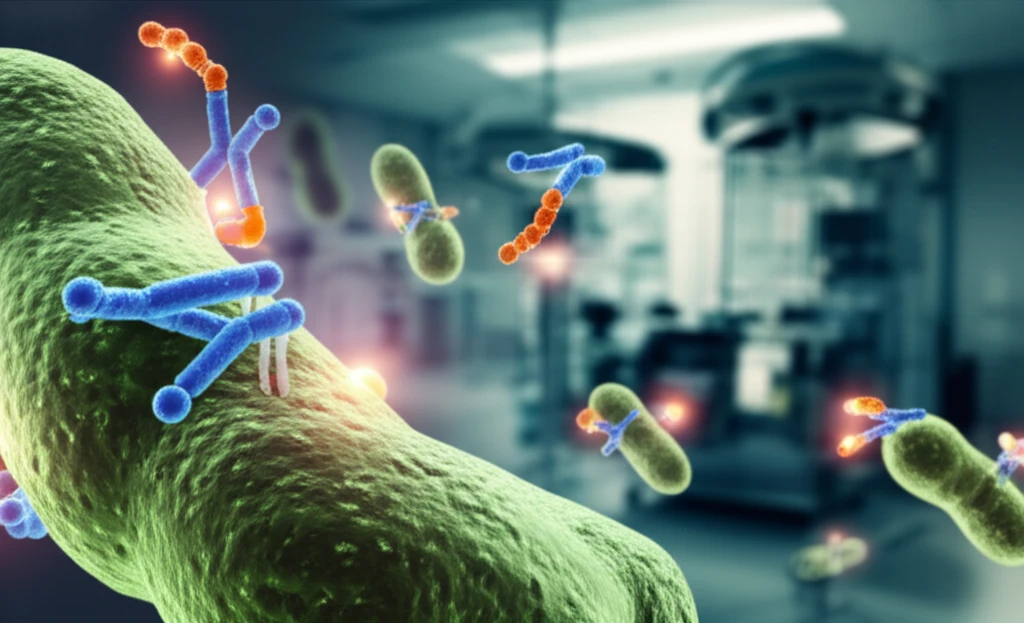
Illustration of ceftolozane-tazobactam targeting Pseudomonas aeruginosa bacteria in a cancer patient's body, symbolizing treatment and hope.

Fighting Infection: New Hope for Cancer Patients with Drug-Resistant Bacteria

"Groundbreaking research highlights the effectiveness of a new antibiotic in treating severe infections in individuals with hematologic malignancies."


Cancer patients, especially those with blood cancers like leukemia and lymphoma, often face a multitude of health challenges. Among these, severe infections caused by drug-resistant bacteria pose a significant threat, complicating treatment and impacting survival rates. The rise of antibiotic resistance has made these infections increasingly difficult to treat, leaving both patients and healthcare providers searching for effective solutions.

In a pivotal study, researchers have shed light on a promising new treatment option: ceftolozane-tazobactam. This antibiotic combination has shown remarkable efficacy in combating infections caused by Pseudomonas aeruginosa, a common and often drug-resistant bacterium that affects cancer patients. The findings are particularly encouraging, as they offer a new avenue for managing these complex and life-threatening infections.

This article delves into the study's key findings, exploring the impact of ceftolozane-tazobactam on patient outcomes. We'll examine the challenges of treating infections in cancer patients, the significance of this new treatment, and what it means for the future of cancer care. This information aims to provide a clear, compassionate, and informative overview of this critical advancement.

Understanding the Challenge: Infections in Cancer Patients

Illustration of ceftolozane-tazobactam targeting Pseudomonas aeruginosa bacteria in a cancer patient's body, symbolizing treatment and hope.

Cancer treatments, such as chemotherapy and stem cell transplants, can weaken the immune system, making patients highly susceptible to infections. The risk is further compounded by the frequent use of broad-spectrum antibiotics, which can inadvertently foster the growth of drug-resistant bacteria. This creates a vicious cycle, where infections become harder to treat, prolonging hospital stays and increasing the risk of serious complications.

Pseudomonas aeruginosa is a particularly troublesome bacterium in this context. It's often found in hospitals and can cause a range of infections, including pneumonia, bloodstream infections (bacteremia), and infections at the site of medical devices. The bacterium's ability to develop resistance to multiple antibiotics makes it a formidable foe, necessitating new and effective treatment strategies.

  • Weakened Immune Systems: Cancer treatments compromise the body's defenses.
  • Antibiotic Resistance: Overuse of antibiotics leads to resistant strains.
  • Pseudomonas aeruginosa: A common, drug-resistant bacterium causing severe infections.
  • Increased Risk: Infections complicate cancer treatment and reduce survival rates.
The study's findings offer a glimmer of hope in this challenging scenario. By highlighting the effectiveness of ceftolozane-tazobactam, it provides a new tool to combat these infections, improving patient outcomes, and offering a renewed sense of optimism for both patients and their families.

Looking Ahead: The Future of Treatment for Cancer Infections

The success of ceftolozane-tazobactam in this study is a significant step forward, but the fight against drug-resistant infections in cancer patients continues. Ongoing research will be crucial in refining treatment protocols, identifying optimal dosages, and understanding long-term effects. As we learn more, healthcare professionals can better equip themselves to tackle these challenging infections and improve the lives of cancer patients. This study not only provides immediate hope but also lays the groundwork for future advancements in the field of infectious disease management within cancer care.

About this Article -

This article was crafted using a human-AI hybrid and collaborative approach. AI assisted our team with initial drafting, research insights, identifying key questions, and image generation. Our human editors guided topic selection, defined the angle, structured the content, ensured factual accuracy and relevance, refined the tone, and conducted thorough editing to deliver helpful, high-quality information.See our About page for more information.

Everything You Need To Know

1

Why are cancer patients, especially those with blood cancers, at a higher risk of developing severe infections?

Cancer patients, particularly those with hematologic malignancies like leukemia and lymphoma, are highly susceptible to severe infections because cancer treatments such as chemotherapy and stem cell transplants weaken their immune systems. This immunosuppression makes it easier for opportunistic bacteria to cause infections. Furthermore, the frequent use of broad-spectrum antibiotics in these patients can lead to the development of drug-resistant bacteria, complicating treatment and increasing the risk of life-threatening infections. This creates a challenging cycle where infections become harder to treat.

2

What is ceftolozane-tazobactam, and why is it considered a promising treatment for cancer patients with drug-resistant infections?

Ceftolozane-tazobactam is a combination antibiotic that has demonstrated remarkable efficacy in combating infections caused by Pseudomonas aeruginosa, a common and often drug-resistant bacterium affecting cancer patients. Its effectiveness offers a new avenue for managing these complex and life-threatening infections, especially when other antibiotics fail. This is crucial because Pseudomonas aeruginosa is particularly troublesome due to its ability to develop resistance to multiple antibiotics, making infections exceedingly difficult to treat.

3

How does Pseudomonas aeruginosa complicate the treatment of cancer patients, and why is it a concern in healthcare settings?

Pseudomonas aeruginosa is a bacterium frequently found in hospital environments that can cause severe infections, including pneumonia, bloodstream infections (bacteremia), and infections related to medical devices. It is particularly problematic in cancer patients due to their weakened immune systems. The bacterium's ability to develop resistance to multiple antibiotics makes it a formidable challenge, necessitating new and effective treatment strategies to prevent prolonged hospital stays, serious complications, and reduced survival rates in this vulnerable population. This creates a need for novel treatments like Ceftolozane-tazobactam.

4

What are the long-term implications of the study on Ceftolozane-tazobactam, and what further research is needed in this area?

The success of ceftolozane-tazobactam is a significant advancement, pointing towards improved patient outcomes. However, ongoing research is essential to refine treatment protocols, determine optimal dosages, and understand the long-term effects of this antibiotic combination, including its impact on the gut microbiome and the potential for resistance development. Future studies should also explore the use of ceftolozane-tazobactam in combination with other antimicrobial agents and investigate strategies to prevent the emergence of resistance. Understanding these aspects will ensure the sustained effectiveness of ceftolozane-tazobactam in combating drug-resistant infections in cancer patients.

5

Beyond antibiotics, what other strategies are being explored to prevent and manage infections in cancer patients with compromised immune systems?

Besides antibiotic treatments like ceftolozane-tazobactam, several other strategies are under investigation to prevent and manage infections in cancer patients. These include prophylactic use of antiviral and antifungal medications, vaccination strategies to boost immunity against common pathogens, and the use of immunomodulatory agents to enhance the body's natural defenses. Strategies like improving hygiene protocols in healthcare settings, implementing antimicrobial stewardship programs to reduce antibiotic overuse, and exploring novel therapies such as phage therapy and immunotherapy, may also prevent and treat infections without relying solely on antibiotics.

Newsletter Subscribe

Subscribe to get the latest articles and insights directly in your inbox.