
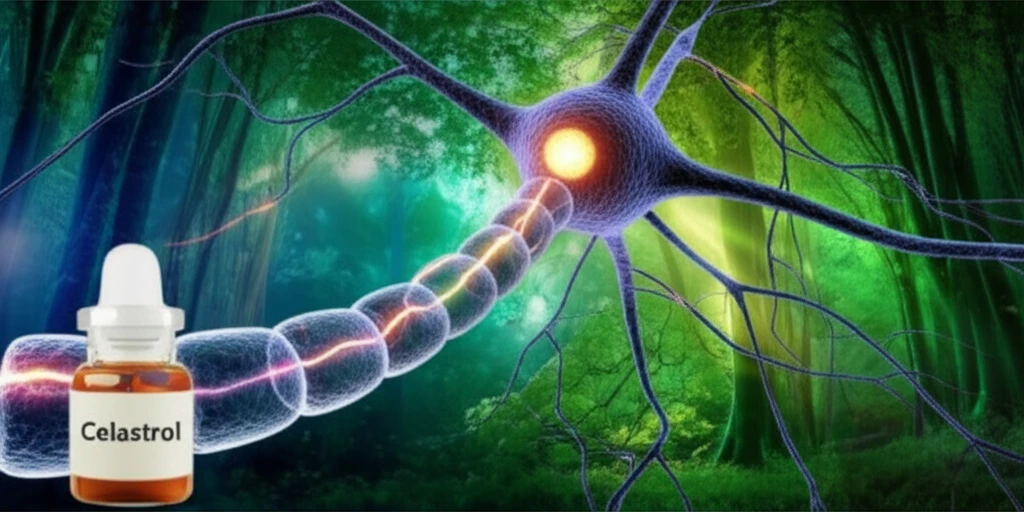
Illustration of nerve cells, inflammation and celastrol

Fighting Fire with Fire: How a Natural Compound Could Soothe Chronic Pain

"Discover how celastrol, a compound found in traditional medicine, is showing promise in the battle against chronic pain by targeting inflammation at its source."


Chronic pain is a pervasive issue, impacting the lives of millions around the globe. It's a complex condition, often stemming from underlying inflammation that can be relentless and debilitating. Traditional treatments sometimes fall short, leaving many individuals searching for alternatives. But what if the answer could be found in nature?

Celastrol, a compound derived from the Tripterygium wilfordii Hook vine, a plant used in traditional Chinese medicine, is emerging as a promising contender in the fight against chronic pain. This natural compound has demonstrated potent anti-inflammatory effects, leading researchers to investigate its potential as a therapeutic agent. This article delves into the science behind celastrol, exploring its mechanisms and potential benefits.

This isn't just about a new compound; it's about understanding the intricate relationship between inflammation and pain. By examining how celastrol interacts with the body's inflammatory pathways, we can gain insight into novel treatment strategies that could offer relief where other methods have failed. Let's explore how celastrol may be able to help people with chronic pain.

Unraveling the Mystery of Chronic Pain: Inflammation and the Dorsal Root Ganglion

Illustration of nerve cells, inflammation and celastrol

To understand celastrol's potential, we first need to grasp the role of inflammation in chronic pain. The dorsal root ganglion (DRG), a cluster of nerve cell bodies located near the spinal cord, acts as a critical hub for pain signals. When inflammation occurs in the DRG, it can lead to heightened pain sensitivity and chronic pain conditions. Inflammatory processes trigger the release of molecules that amplify pain signals, making it a key target for therapeutic intervention.

The inflammatory process within the DRG is complex, involving various signaling pathways and inflammatory mediators. One of the primary culprits is a protein called HMGB1, which promotes inflammation and contributes to the development of chronic pain. HMGB1 activates another pathway involving NF-κB, which further drives the production of inflammatory cytokines. These cytokines, in turn, exacerbate pain and perpetuate the inflammatory cycle. Understanding the role of these key players provides a foundation for exploring how celastrol may offer relief.

  • HMGB1 promotes inflammation in the DRG.
  • HMGB1 activates the NF-κB pathway.
  • NF-κB drives the production of inflammatory cytokines.
  • Cytokines amplify pain signals and perpetuate inflammation.
The research indicates that celastrol can interfere with these pathways, disrupting the inflammatory cycle. By targeting HMGB1 and NF-κB, celastrol may reduce the production of inflammatory cytokines, potentially alleviating pain and reducing pain sensitivity. This mechanism of action makes celastrol a promising candidate for treating chronic pain.

A New Hope for Chronic Pain Sufferers

The journey through chronic pain can be arduous, but the emerging research on celastrol offers a glimmer of hope. By targeting inflammation at its source, celastrol holds promise for alleviating pain and improving the quality of life for those who suffer. While further research is needed, celastrol represents an exciting step forward in our ongoing quest to understand and treat chronic pain. Remember to consult with your healthcare provider for treatment options.

About this Article -

This article was crafted using a human-AI hybrid and collaborative approach. AI assisted our team with initial drafting, research insights, identifying key questions, and image generation. Our human editors guided topic selection, defined the angle, structured the content, ensured factual accuracy and relevance, refined the tone, and conducted thorough editing to deliver helpful, high-quality information.See our About page for more information.

This article is based on research published under:

DOI-LINK: 10.1016/j.neulet.2018.11.002, Alternate LINK

Title: Celastrol Ameliorates Inflammatory Pain And Modulates Hmgb1/Nf-Κb Signaling Pathway In Dorsal Root Ganglion

Subject: General Neuroscience

Journal: Neuroscience Letters

Publisher: Elsevier BV

Authors: Xiumei Zhang, Wenpin Zhao, Xingfang Liu, Zhihua Huang, Reai Shan, Cheng Huang

Published: 2019-01-01

Everything You Need To Know

1

What is celastrol, and where does it come from?

Celastrol is a natural compound derived from the Tripterygium wilfordii Hook vine, a plant used in traditional Chinese medicine. It's being investigated for its potent anti-inflammatory properties and potential to combat chronic pain by targeting inflammation.

2

How does celastrol address chronic pain?

Celastrol addresses chronic pain by targeting inflammation at its source, specifically within the dorsal root ganglion (DRG). The DRG is a cluster of nerve cell bodies near the spinal cord critical for pain signaling. Celastrol interferes with inflammatory pathways in the DRG, potentially reducing pain sensitivity and alleviating chronic pain.

3

What role does HMGB1 play in the experience of chronic pain, and how does celastrol interact with it?

HMGB1 is a protein that promotes inflammation and contributes to the development of chronic pain. It activates the NF-κB pathway, which further drives the production of inflammatory cytokines. Celastrol is believed to target HMGB1 and NF-κB, potentially reducing the production of these inflammatory cytokines and, consequently, alleviating pain and reducing pain sensitivity. The specific binding mechanisms of celastrol to HMGB1, while implicated, still require further research to fully elucidate.

4

What is the NF-κB pathway, and why is it important in the context of celastrol and chronic pain?

The NF-κB pathway is a signaling pathway that drives the production of inflammatory cytokines. These cytokines exacerbate pain and perpetuate the inflammatory cycle within the dorsal root ganglion (DRG). Celastrol is thought to interfere with this pathway, reducing the production of inflammatory cytokines. By inhibiting the NF-κB pathway, celastrol may break the cycle of inflammation and pain, offering potential relief for chronic pain sufferers. However, the precise mechanisms and efficacy require further investigation.

5

Given that celastrol shows promise, what further research is needed before it can be widely used as a treatment for chronic pain?

While celastrol demonstrates potential, further research is necessary. Clinical trials are needed to evaluate its efficacy and safety in humans with chronic pain. Understanding the optimal dosage, delivery methods, and potential side effects is crucial. Additionally, research should explore the long-term effects of celastrol and its interactions with other medications. Further investigation is also needed to fully understand the specific mechanisms by which celastrol interacts with HMGB1 and the NF-κB pathway within the dorsal root ganglion (DRG). This comprehensive research will help determine celastrol's role in chronic pain management.

Newsletter Subscribe

Subscribe to get the latest articles and insights directly in your inbox.