
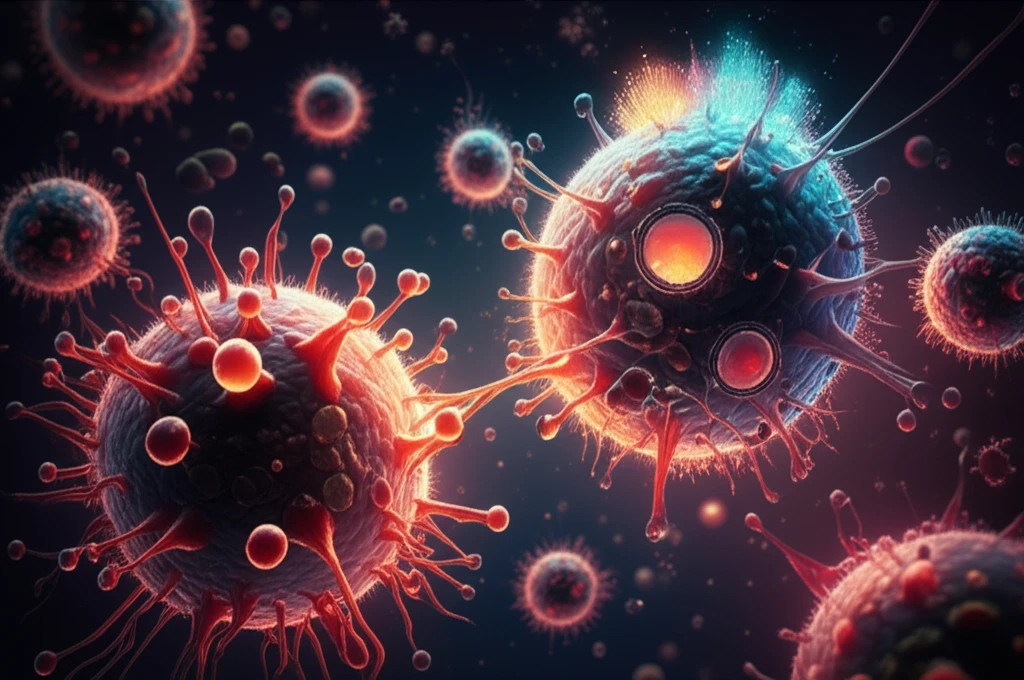
Illustration of an oncolytic virus attacking cancer cells, symbolizing a breakthrough in cancer treatment.

Fighting Cancer with Viruses? How Oncolytic Virotherapy is Revolutionizing Treatment

"Harnessing the Power of Viruses: A Deep Dive into Oncolytic Virotherapy and its Potential in the Battle Against Cancer"


Cancer, a formidable adversary, continues to challenge medical science. Traditional treatments, while effective, often come with significant side effects, and the search for more targeted and less invasive therapies is relentless. Amidst this quest, oncolytic virotherapy emerges as a beacon of hope. This innovative approach utilizes viruses, modified to selectively target and destroy cancer cells while sparing healthy ones, offering a promising new frontier in cancer treatment.

This article delves into the intricacies of oncolytic virotherapy, exploring its mechanisms, benefits, and the ongoing research that promises to revolutionize cancer care. We'll examine how scientists are harnessing the natural abilities of viruses to combat cancer, offering a glimpse into a future where treatments are more personalized and effective.

One particularly promising area of research involves the use of Newcastle disease virus (NDV), a virus that has shown remarkable oncolytic properties. We'll explore how NDV works at a cellular level, its impact on cancer cells, and the latest findings that could lead to new therapeutic strategies.

Unveiling Oncolytic Virotherapy: A New Approach to Cancer Treatment

Illustration of an oncolytic virus attacking cancer cells, symbolizing a breakthrough in cancer treatment.

Oncolytic virotherapy is a cutting-edge cancer treatment strategy that leverages the inherent ability of viruses to infect and replicate within cells. However, unlike traditional viruses that can cause disease, oncolytic viruses are engineered or naturally occurring viruses that are modified to specifically target and destroy cancer cells. This approach offers a unique advantage: the viruses can selectively attack cancer cells while leaving healthy cells unharmed. The process involves the virus entering the cancer cell, replicating within it, and ultimately causing the cell to burst, releasing more viruses to infect and destroy neighboring cancer cells. Moreover, the body's immune system can be activated, further enhancing the anti-cancer effect.

The journey of oncolytic virotherapy from concept to clinical application has been marked by significant advancements. Scientists have been able to modify viruses to enhance their cancer-killing abilities, reduce their potential for causing harm to healthy cells, and improve their ability to reach and infect tumors. This has led to a range of oncolytic viruses, each with its unique properties and mechanisms of action, being developed and tested in various clinical trials.

  • Selective Targeting: Oncolytic viruses are designed to target cancer cells specifically, reducing harm to healthy tissues.
  • Direct Cancer Cell Lysis: Viruses replicate within cancer cells, leading to their destruction.
  • Immune System Activation: The treatment can stimulate the body's immune system to recognize and attack cancer cells.
  • Versatility: Oncolytic virotherapy can be used in conjunction with other cancer treatments, such as chemotherapy and radiation therapy.
The potential of oncolytic virotherapy is vast, offering new possibilities for treating cancers that have been resistant to traditional therapies. With ongoing research and clinical trials, this innovative approach is poised to become a significant component of future cancer treatment strategies, providing hope and improved outcomes for patients worldwide.

The Future of Cancer Treatment: Embracing Oncolytic Virotherapy

Oncolytic virotherapy represents a paradigm shift in cancer treatment. By harnessing the power of viruses, researchers are developing highly targeted therapies that offer the potential for improved efficacy and reduced side effects. As research continues and clinical trials progress, the promise of oncolytic virotherapy grows, bringing hope to millions affected by cancer and paving the way for a future where cancer treatment is more effective, personalized, and life-saving.

About this Article -

This article was crafted using a human-AI hybrid and collaborative approach. AI assisted our team with initial drafting, research insights, identifying key questions, and image generation. Our human editors guided topic selection, defined the angle, structured the content, ensured factual accuracy and relevance, refined the tone, and conducted thorough editing to deliver helpful, high-quality information.See our About page for more information.

This article is based on research published under:

DOI-LINK: 10.18632/oncotarget.2219, Alternate LINK

Title: Mitophagy Promotes Replication Of Oncolytic Newcastle Disease Virus By Blocking Intrinsic Apoptosis In Lung Cancer Cells

Subject: Oncology

Journal: Oncotarget

Publisher: Impact Journals, LLC

Authors: Gang Meng, Mao Xia, Diancheng Wang, Aiping Chen, Yongshan Wang, Hongwei Wang, Decai Yu, Jiwu Wei

Published: 2014-07-15

Everything You Need To Know

1

What is oncolytic virotherapy, and how does it differ from traditional cancer treatments?

Oncolytic virotherapy is a cutting-edge cancer treatment that uses modified or naturally occurring viruses to selectively target and destroy cancer cells. Unlike traditional treatments like chemotherapy and radiation, which can harm both healthy and cancerous cells, oncolytic viruses are designed to infect and replicate primarily within cancer cells, leading to their destruction while sparing healthy tissues. The process involves the virus entering the cancer cell, replicating inside it, and causing it to burst, releasing more viruses to infect neighboring cancer cells. Furthermore, oncolytic virotherapy can activate the body's immune system to enhance the anti-cancer effect. This targeted approach aims to improve efficacy and reduce side effects compared to conventional methods. It's important to note that while oncolytic virotherapy shows promise, its effectiveness can vary, and it's often explored in conjunction with other cancer treatments.

2

How does Newcastle disease virus (NDV) work in oncolytic virotherapy, and why is it considered promising?

Newcastle disease virus (NDV) is a virus that has demonstrated remarkable oncolytic properties, making it a significant area of research in oncolytic virotherapy. NDV works by selectively infecting and replicating within cancer cells, leading to their lysis (destruction). It is considered promising because it can effectively target cancer cells while exhibiting a relatively low risk of causing harm to healthy human cells. NDV's oncolytic activity also stimulates the body's immune system, further enhancing the anti-cancer response. Researchers are actively exploring how to optimize NDV's use to develop new therapeutic strategies that could lead to more effective cancer treatments. Further studies are needed to fully understand NDV's potential and to determine the best methods for its clinical application.

3

What are the key benefits of using oncolytic virotherapy for cancer treatment?

Oncolytic virotherapy offers several key benefits in cancer treatment. First, it provides selective targeting, meaning the viruses are designed to target cancer cells specifically, reducing harm to healthy tissues. Second, it involves direct cancer cell lysis, where the viruses replicate within cancer cells, leading to their destruction. Third, the treatment can stimulate the body's immune system to recognize and attack cancer cells, enhancing the anti-cancer effect. Fourth, oncolytic virotherapy offers versatility, as it can be used in conjunction with other cancer treatments, such as chemotherapy and radiation therapy. These benefits make oncolytic virotherapy a promising approach for treating cancers that have been resistant to traditional therapies. However, it's important to consider that the success of oncolytic virotherapy can depend on factors such as the specific type of cancer, the patient's immune response, and the characteristics of the virus being used.

4

How is oncolytic virotherapy being developed and tested for clinical use?

The development and testing of oncolytic virotherapy for clinical use involve significant advancements in modifying viruses to enhance their cancer-killing abilities, reduce their potential for causing harm to healthy cells, and improve their ability to reach and infect tumors. Scientists engineer or select viruses that naturally target cancer cells, and then modify them to increase their selectivity and effectiveness. These modified viruses are then tested in preclinical studies, such as in vitro (cell-based) and in vivo (animal) models, to evaluate their safety and efficacy. If the results are promising, the viruses proceed to clinical trials, which involve testing the treatment in human patients with cancer. Clinical trials are conducted in phases, with each phase designed to assess safety, dosage, and effectiveness. The ultimate goal is to develop oncolytic viruses that can be safely and effectively used to treat cancer in patients, either as a standalone therapy or in combination with other treatments.

5

What is the future outlook for oncolytic virotherapy in cancer treatment, and what impact could it have on patients?

The future outlook for oncolytic virotherapy in cancer treatment is promising, as ongoing research and clinical trials continue to demonstrate its potential. It represents a paradigm shift in how cancer is treated, offering the possibility of improved efficacy and reduced side effects compared to traditional therapies. As research progresses, oncolytic virotherapy is expected to become a more significant component of cancer treatment strategies, providing new hope and improved outcomes for patients worldwide. The development of more personalized and effective treatments could significantly impact patients' lives, leading to better quality of life, increased survival rates, and potentially even cures for some types of cancer. However, further research and clinical trials are needed to fully realize the potential of oncolytic virotherapy and to address any challenges or limitations that may arise.

Newsletter Subscribe

Subscribe to get the latest articles and insights directly in your inbox.