
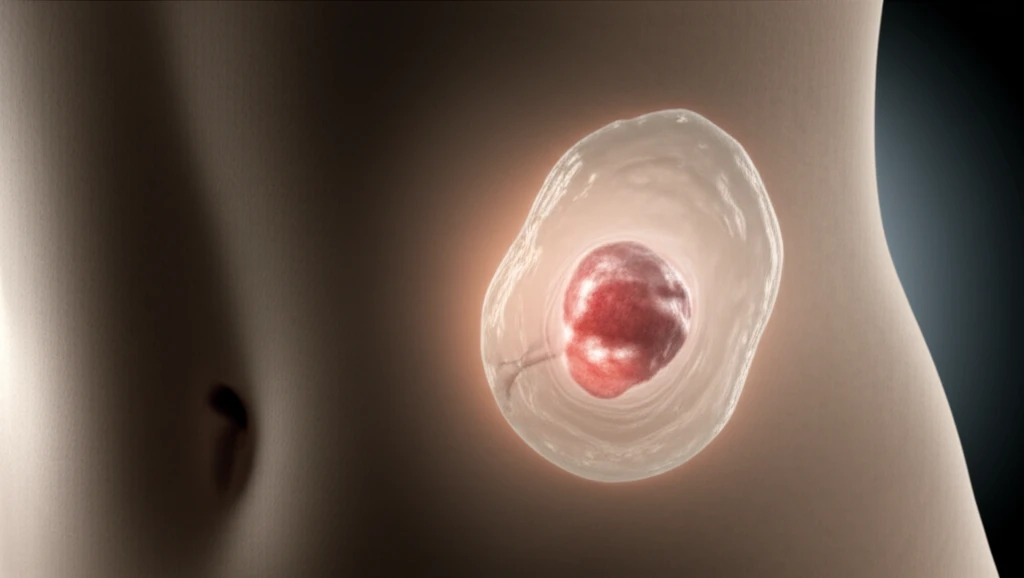
Illustration of ovaries with fibrin sealant protection

Fibrin Sealant: A Gentle Approach to Ovarian Endometrioma Excision?

"Discover how fibrin sealant (Tisseel) offers a safe, suture-free alternative in laparoscopic surgery, promoting quicker recovery and minimal tissue damage."


Ovarian endometriomas, cysts formed by endometrial tissue, affect many women, causing pain and potential fertility issues. Laparoscopic cystectomy (LC), the surgical removal of these cysts, is a common treatment, but it can come with risks. Traditional methods sometimes lead to damage to the ovaries, impacting future fertility.

Typical laparoscopic cystectomy involves stripping the cyst wall and using electrocautery to stop bleeding. However, electrocautery can harm the healthy ovarian tissue. Surgeons often suture the ovary to control bleeding, but this too can cause issues like adhesions (internal scar tissue) and further tissue damage. The challenge lies in finding a balance between effectively removing the endometrioma and preserving the delicate ovarian tissue.

Now, a new approach is emerging: the use of fibrin sealant, specifically Tisseel. This two-component sealant mimics the body's natural clotting process to control bleeding and aid tissue repair. A recent study published in the Taiwanese Journal of Obstetrics & Gynecology explores the potential benefits of Tisseel in laparoscopic cystectomy, suggesting it could minimize the need for electrocautery and sutures, leading to less ovarian damage and improved patient outcomes.

Tisseel: A Minimally Invasive Solution for Ovarian Health?

Illustration of ovaries with fibrin sealant protection

The study, conducted between January 2011 and December 2015, compared two groups of women undergoing laparoscopic cystectomy for ovarian endometriomas. One group (53 women) had Tisseel applied to the surgical site to control bleeding and repair the ovarian defect after cyst removal. The other group (221 women) underwent the traditional procedure using bipolar electrocautery and sutures.

Researchers collected data on various factors, including:

  • Operative time
  • Estimated blood loss (EBL)
  • Complications
  • Postoperative hospital stay
  • Size of the endometrioma
The results indicated that Tisseel was effective in achieving complete hemostasis (stopping bleeding) in all patients. While the group treated with Tisseel had larger endometriomas on average, there was no significant difference in operative time, blood loss, or length of hospital stay compared to the traditional method. Importantly, the study reported no major complications in either group, suggesting Tisseel is a safe and feasible alternative to electrocautery and sutures.

The Future of Endometrioma Surgery: A Gentler Approach

The study offers encouraging initial evidence for the use of Tisseel in laparoscopic cystectomy for ovarian endometriomas. By potentially reducing the need for electrocautery and sutures, Tisseel may help minimize ovarian damage, preserve fertility, and improve overall patient outcomes. Further research, including larger, randomized controlled trials, is needed to confirm these findings and explore the long-term benefits of this promising technique. For women facing ovarian endometrioma surgery, Tisseel represents a potential step towards a gentler, more tissue-sparing approach.

About this Article -

This article was crafted using a human-AI hybrid and collaborative approach. AI assisted our team with initial drafting, research insights, identifying key questions, and image generation. Our human editors guided topic selection, defined the angle, structured the content, ensured factual accuracy and relevance, refined the tone, and conducted thorough editing to deliver helpful, high-quality information.See our About page for more information.

This article is based on research published under:

DOI-LINK: 10.1016/j.tjog.2017.04.014, Alternate LINK

Title: The Use Of Fibrin Sealant (Tisseel) In Laparoscopic Excision Of Ovarian Endometrioma

Subject: Obstetrics and Gynecology

Journal: Taiwanese Journal of Obstetrics and Gynecology

Publisher: Elsevier BV

Authors: Yu-Cheng Liu, Yi-Chieh Li, Hsin-Hong Kuo, Chin-Jung Wang, Kai-Yun Wu

Published: 2017-06-01

Everything You Need To Know

1

What is Fibrin Sealant (Tisseel), and how is it used?

Fibrin sealant, specifically Tisseel, is a substance used in laparoscopic cystectomy to stop bleeding and help repair the ovarian defect after cyst removal. It mimics the body's natural clotting process, offering a suture-free and potentially electrocautery-free alternative. This approach aims to minimize tissue damage during the surgical removal of ovarian endometriomas, ultimately preserving fertility and improving patient outcomes.

2

What are ovarian endometriomas, and how are they treated?

Ovarian endometriomas are cysts formed by endometrial tissue that grow outside the uterus, often on the ovaries. Their presence can cause pain and can lead to potential fertility issues. Laparoscopic cystectomy (LC) is a surgical procedure to remove these cysts. The traditional approach often involves electrocautery and sutures. The use of Fibrin Sealant (Tisseel) offers a less invasive approach to address these endometriomas.

3

Why is using Fibrin Sealant (Tisseel) considered important in this context?

Tisseel is significant because it potentially reduces the need for electrocautery and sutures, which are traditional methods in laparoscopic cystectomy. Eletrocautery can cause harm to the healthy ovarian tissue, while sutures can lead to adhesions and further tissue damage. By using Tisseel, surgeons aim to minimize these risks, leading to less damage and improved patient outcomes, especially concerning fertility.

4

What was the study comparing, and what were the key findings?

Laparoscopic cystectomy (LC) is a surgical procedure to remove ovarian endometriomas. In the study, one group of women had Tisseel applied to the surgical site, while the other group underwent the traditional method involving bipolar electrocautery and sutures. The study evaluated various factors, including operative time, estimated blood loss, complications, postoperative hospital stay, and the size of the endometrioma. The results indicated that Tisseel was effective in achieving complete hemostasis (stopping bleeding) and was safe.

5

What are the potential implications of using Fibrin Sealant (Tisseel) for women's health?

Using Tisseel in laparoscopic cystectomy has implications for women's health by potentially reducing ovarian damage, preserving fertility, and improving overall patient outcomes. This approach represents a step toward a gentler, more tissue-sparing method. Further research is needed to confirm the long-term benefits and establish Tisseel as a standard practice, providing a better quality of life and future reproductive possibilities for women undergoing surgery for ovarian endometriomas.

Newsletter Subscribe

Subscribe to get the latest articles and insights directly in your inbox.