
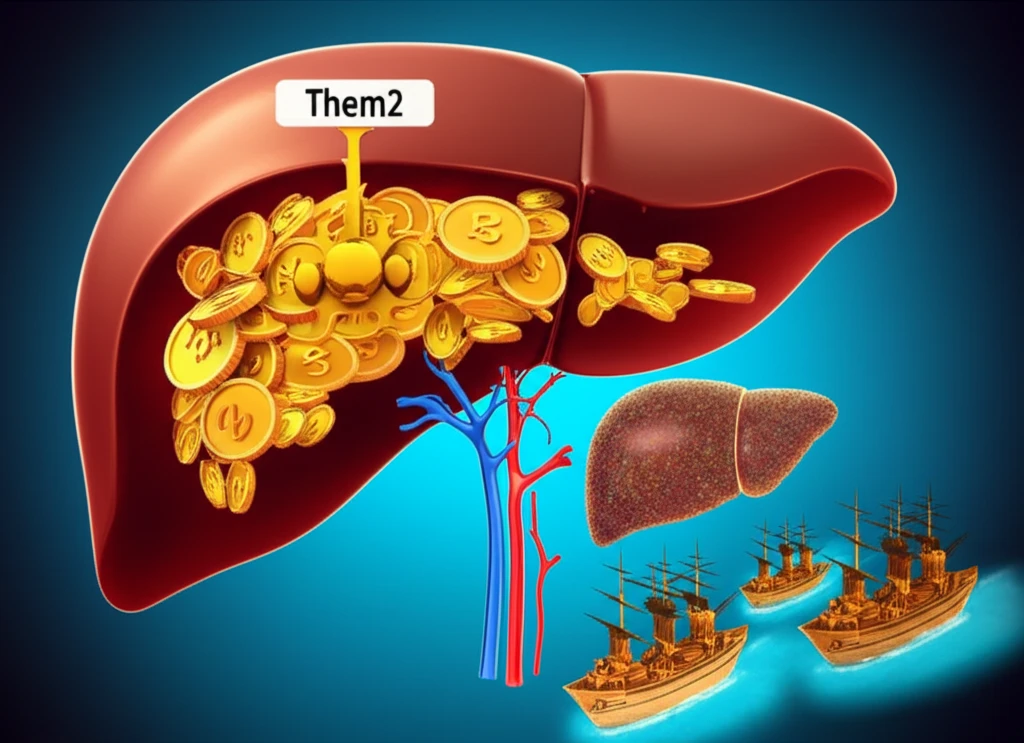
Fatty Liver Disease: Scientists Discover a New Pathway to a Healthier Liver

"Groundbreaking research reveals how a specific enzyme could revolutionize the treatment of non-alcoholic fatty liver disease (NAFLD) and other metabolic disorders."
Non-alcoholic fatty liver disease (NAFLD) is a growing global health concern, affecting millions worldwide. This condition, often linked to obesity, poor diet, and lack of exercise, can lead to serious liver damage and other health complications. Current treatments are limited, making the search for effective interventions a top priority.
Recent research published in a leading scientific journal has brought exciting news. Scientists have uncovered a new pathway in the liver that could be key to managing NAFLD. This pathway involves a specific enzyme, called Them2, which appears to play a critical role in how the liver processes fats.
This article will explore the findings of this research, explaining the role of Them2, and how its discovery could pave the way for new treatments and lifestyle changes to combat fatty liver disease and improve overall metabolic health.
Unveiling Them2: The Liver's Gatekeeper for Fat Metabolism
Them2, short for Thioesterase Superfamily Member 2, is an enzyme found in the liver and other tissues. The primary function of Them2 is to regulate how fatty acids are handled within the liver cells, known as hepatocytes. Specifically, it influences how these fats are either used for energy or stored.
- Them2 directs fatty acids towards triglyceride synthesis.
- Triglycerides are packaged into VLDL particles.
- VLDL transports fats out of the liver.
- Dysfunction in this process can lead to fat accumulation.
The Future of Liver Health: Hope on the Horizon
The discovery of Them2's role in liver health opens exciting new avenues for research and treatment. Scientists are now exploring ways to target Them2 to reduce fat accumulation in the liver, potentially preventing or reversing NAFLD and its complications. While more research is needed, this breakthrough offers a promising path toward improved liver health and overall well-being. Lifestyle changes, combined with potential targeted therapies, could be the key to fighting back against fatty liver disease.