
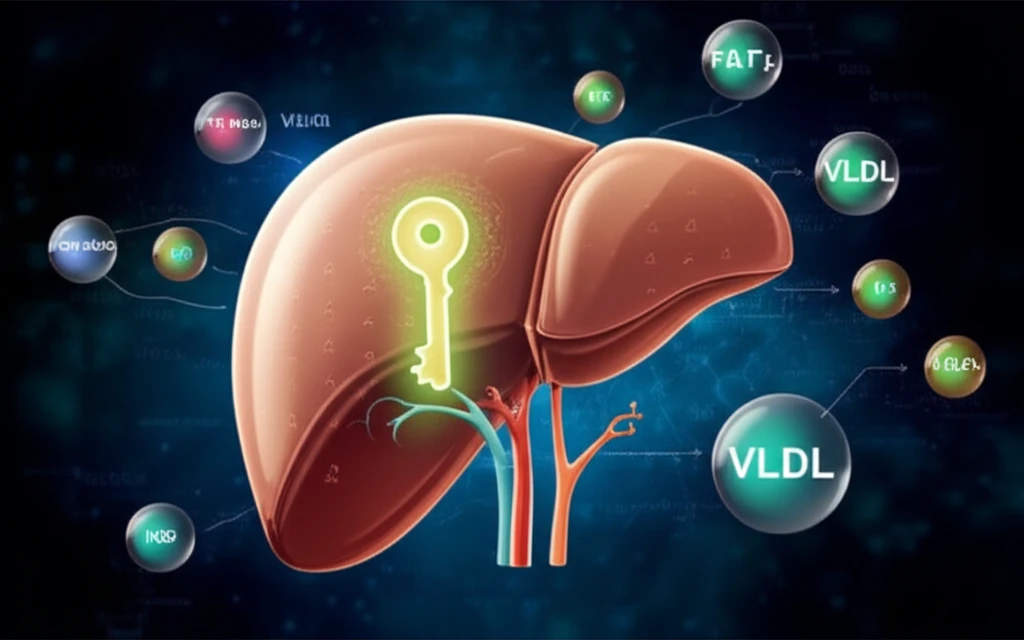
Illustration depicting the Them2 enzyme's role in liver metabolism.

Fatty Liver Breakthrough: New Research Reveals How a Tiny Enzyme Could Change Everything

"Scientists Discover a Key Player in Liver Health, Offering Hope for New Treatments and Prevention Strategies for Fatty Liver Disease."


The world of health is constantly evolving, with new discoveries emerging that have the potential to change lives. One area of ongoing research focuses on fatty liver disease, a condition that's becoming increasingly prevalent. It's a silent threat, often without noticeable symptoms in its early stages, yet it can lead to serious health complications like cirrhosis and liver failure. But what if a microscopic key could unlock a new understanding and potential treatments for this widespread ailment?

This is the promise of recent research focusing on Them2, a member of the thioesterase superfamily. Initially, the complexities surrounding fatty liver disease and its relationship with the liver's metabolism were a significant challenge. Now, scientists are delving deeper into the mechanisms behind the disease, and their findings are offering new insights and potential pathways for intervention. These discoveries could be a turning point for those at risk or already affected by fatty liver disease.

This article will delve into the recent breakthroughs surrounding Them2, the intricate role it plays in liver health, and the implications these findings have for future treatments and preventative strategies. We'll explore the science, its potential impact, and what it could mean for you or your loved ones. This research marks a new chapter in our understanding of liver health.

Unveiling the Role of Them2: A Deep Dive into Liver Metabolism

Illustration depicting the Them2 enzyme's role in liver metabolism.

At the core of this new understanding is the enzyme Them2, a key player in the liver's complex metabolic processes. The liver is a powerhouse, managing various functions, including processing nutrients, filtering toxins, and synthesizing essential substances. One of its critical tasks is the handling of fats, specifically triglycerides, which, when accumulated in excess, can lead to fatty liver disease. Them2 steps in to help regulate this process.

Them2's primary function involves regulating the way our bodies handle fatty acids. This is crucial, as fatty acids are the building blocks of fats, and their proper metabolism is vital for maintaining overall health. When fatty acids accumulate in the liver, they can lead to a condition known as hepatic steatosis, the hallmark of fatty liver disease. Them2's role in this metabolic process suggests it could influence the disease's progression and severity.

  • Fatty Acid Metabolism: Them2 influences how the liver processes and utilizes fatty acids.
  • Triglyceride Regulation: It is closely linked to the production and regulation of triglycerides, a major type of fat in the body.
  • VLDL Production: Them2 plays a role in Very Low-Density Lipoprotein (VLDL) secretion.
  • Disease Implications: Them2 is now being investigated for its role in the development and management of fatty liver disease and related metabolic disorders.
Understanding the mechanisms of Them2 and its involvement in fatty acid metabolism has opened up new avenues for research. The implications of the recent studies are considerable. This research represents a significant step forward in our understanding of liver health and provides new targets for interventions.

The Future of Fatty Liver Treatment: Hope and New Directions

The study of Them2 and its function in liver metabolism represents a significant advance in the fight against fatty liver disease. As the research continues, the scientific community anticipates the development of more effective and targeted treatments. For many, the prospect of improved therapies, combined with a better understanding of the disease, offers a sense of optimism and proactive engagement. The discovery of Them2’s critical role in liver health has sparked a renewed sense of hope and provides a strong foundation for the future of liver disease management.

About this Article -

This article was crafted using a human-AI hybrid and collaborative approach. AI assisted our team with initial drafting, research insights, identifying key questions, and image generation. Our human editors guided topic selection, defined the angle, structured the content, ensured factual accuracy and relevance, refined the tone, and conducted thorough editing to deliver helpful, high-quality information.See our About page for more information.

Everything You Need To Know

1

What is Them2 and why is it significant in liver health?

Them2 is an enzyme, a member of the thioesterase superfamily, and it plays a crucial role in the liver's metabolic processes. Its significance lies in its influence on fatty acid metabolism and triglyceride regulation. Scientists are investigating its role in the development and management of fatty liver disease, highlighting its potential as a target for future treatments and interventions. Proper Them2 function is vital for maintaining overall health and preventing hepatic steatosis.

2

How does Them2 affect fatty liver disease?

Them2 influences fatty acid metabolism, which is directly linked to the development of fatty liver disease. When fatty acids accumulate in the liver, hepatic steatosis occurs, marking the onset of the disease. Them2's role in processing fatty acids and regulating triglycerides suggests that it could influence the disease's progression and severity. Research focuses on how Them2 impacts Very Low-Density Lipoprotein (VLDL) secretion, a key process in fat transport.

3

What are the key functions of the liver that Them2 is involved in?

Them2 is involved in the liver's essential functions, especially in fat metabolism. The liver processes nutrients, filters toxins, and synthesizes substances. Them2 specifically regulates how the body handles fatty acids, the building blocks of fats, and the production and regulation of triglycerides, a major type of fat in the body. Additionally, Them2 plays a role in Very Low-Density Lipoprotein (VLDL) secretion.

4

What are the potential future implications of the research on Them2?

The research on Them2 offers hope for the development of more effective and targeted treatments for fatty liver disease and related metabolic disorders. The findings provide a strong foundation for the future of liver disease management. This research could lead to improved therapies and a better understanding of the disease. The discovery of Them2’s critical role in liver health has sparked a renewed sense of optimism, paving the way for proactive engagement and more effective treatments in the future. It also opens new avenues for research, leading to new insights and potential pathways for intervention.

5

What is the relationship between triglycerides, fatty acids, and Them2 in the context of liver health?

Them2 is closely linked to the production and regulation of triglycerides. Fatty acids are the building blocks of fats, and when their metabolism is disrupted, they can accumulate in the liver, leading to hepatic steatosis, the hallmark of fatty liver disease. Them2's primary function involves regulating how our bodies handle fatty acids. The enzyme plays a crucial role in managing triglycerides, thereby influencing liver health. Understanding how Them2 affects these elements is crucial for managing and preventing fatty liver disease and other related metabolic disorders.

Newsletter Subscribe

Subscribe to get the latest articles and insights directly in your inbox.