
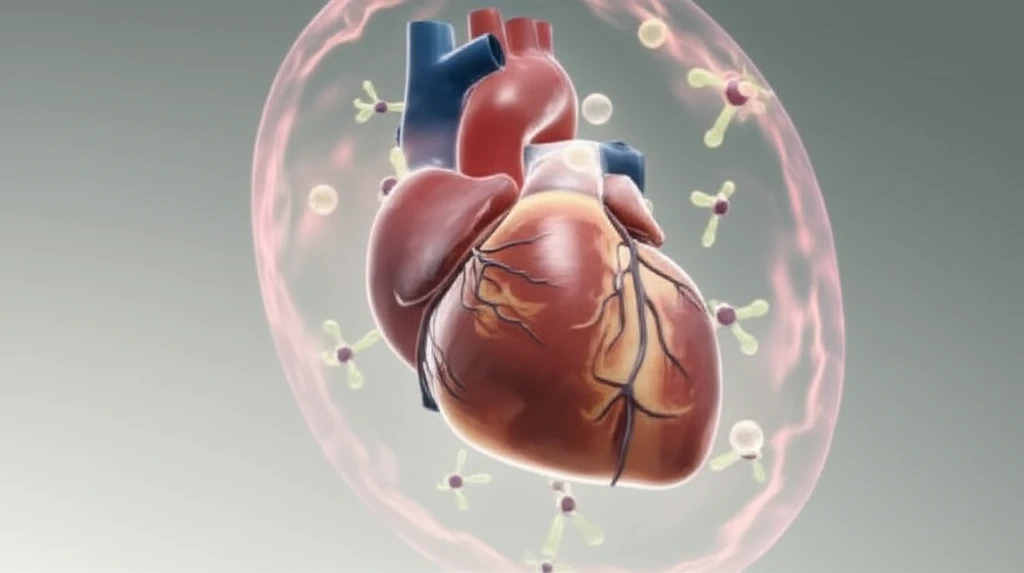
Abstract illustration of Fasudil protecting the heart.

Fasudil: A Heart-Saving Drug You Should Know About?

"Discover how this Rho-kinase inhibitor could revolutionize the treatment of myocardial ischemia/reperfusion injury."


A heart attack, or acute myocardial infarction (AMI), is a leading cause of death worldwide. When the heart muscle is deprived of oxygen due to a blocked artery, rapid treatment to restore blood flow is essential. However, the very act of restoring blood flow, known as reperfusion, can paradoxically cause further damage – a phenomenon called ischemia/reperfusion (I/R) injury.

While current treatments like thrombolysis, percutaneous coronary intervention (PCI), and coronary artery bypass grafting (CABG) effectively restore blood flow, they don't completely eliminate the risk of I/R injury. This has spurred the search for new therapies that can protect the heart during this critical period.

One promising candidate is Fasudil, a Rho-kinase inhibitor already used to treat cerebral vasospasm after brain hemorrhage. Emerging research suggests that Fasudil has significant cardioprotective effects. This article dives into a meta-analysis and review of preclinical studies examining Fasudil's potential to reduce damage and improve outcomes in animal models of myocardial I/R injury.

How Fasudil Fights Heart Damage: Promising Research

Abstract illustration of Fasudil protecting the heart.

A systematic review analyzed nineteen preclinical studies involving 400 animals to evaluate Fasudil's effectiveness in animal models of myocardial ischemia/reperfusion (I/R) injury. These studies explored the impact of Fasudil on various factors, including infarct size, levels of cardiac enzymes, heart function, and ST-segment changes. The methodological quality of each study was rigorously assessed using the CAMARADES checklist.

The meta-analysis revealed a consistent trend: Fasudil treatment significantly improved outcomes compared to control groups. Specifically, animals treated with Fasudil experienced:

  • Reduced myocardial infarct size (P < 0.05)
  • Lower levels of cardiac enzymes and cardiac troponin T (P < 0.05), indicating less heart muscle damage.
  • Improved systolic and diastolic functions (P < 0.05)
  • Increased degree of decline in the ST-segment (P < 0.05), a marker of improved electrical activity in the heart.
These findings suggest that Fasudil exerts a protective effect on the heart during and after an ischemic event. Further investigation is needed to translate these results to human clinical trials.

The Future of Fasudil in Heart Health

The meta-analysis points to several mechanisms by which Fasudil may protect the heart, including:

<ul> <li>Improvement in coronary vasodilation, ensuring better blood flow.</li> <li>Inhibition of apoptosis and oxidative stress, reducing cell death and damage from free radicals.</li> <li>Relieving inflammation, a key contributor to I/R injury.</li> <li>Reduction in endoplasmic reticulum stress and improved metabolism, supporting overall cellular health.</li> </ul>

While these results are encouraging, it’s important to remember that this research is preclinical. Further studies are needed to confirm Fasudil's effectiveness and safety in humans. However, this research offers a promising new avenue for developing more effective treatments for myocardial I/R injury, potentially improving outcomes and quality of life for those at risk of heart damage following a heart attack.

About this Article -

This article was crafted using a human-AI hybrid and collaborative approach. AI assisted our team with initial drafting, research insights, identifying key questions, and image generation. Our human editors guided topic selection, defined the angle, structured the content, ensured factual accuracy and relevance, refined the tone, and conducted thorough editing to deliver helpful, high-quality information.See our About page for more information.

This article is based on research published under:

DOI-LINK: 10.3389/fphar.2018.01083, Alternate LINK

Title: Fasudil, A Rho-Kinase Inhibitor, Exerts Cardioprotective Function In Animal Models Of Myocardial Ischemia/Reperfusion Injury: A Meta-Analysis And Review Of Preclinical Evidence And Possible Mechanisms

Subject: Pharmacology (medical)

Journal: Frontiers in Pharmacology

Publisher: Frontiers Media SA

Authors: Yue-Yue Huang, Jian-Ming Wu, Tong Su, Song-Yue Zhang, Xiao-Ji Lin

Published: 2018-10-01

Everything You Need To Know

1

What is Fasudil and why is it being researched for heart conditions?

Fasudil is a Rho-kinase inhibitor. It's being investigated for its potential to protect the heart from damage following a heart attack. Specifically, research suggests it can minimize damage from myocardial ischemia/reperfusion injury.

2

What exactly is myocardial ischemia/reperfusion injury and why is it a problem?

Myocardial ischemia/reperfusion (I/R) injury refers to the damage that occurs when blood flow is restored to the heart muscle after a period of oxygen deprivation, such as during a heart attack. While restoring blood flow is essential, the process itself can paradoxically cause further injury to the heart.

3

What benefits has Fasudil shown in preclinical studies related to heart health?

Preclinical studies, including a meta-analysis of nineteen studies, suggest that Fasudil can reduce myocardial infarct size, lower levels of cardiac enzymes and cardiac troponin T, improve systolic and diastolic functions, and increase the degree of decline in the ST-segment. These findings indicate less heart muscle damage and improved heart function in animal models of myocardial ischemia/reperfusion injury.

4

How does Fasudil differ from existing treatments for heart attacks?

Current treatments such as thrombolysis, percutaneous coronary intervention (PCI), and coronary artery bypass grafting (CABG) primarily focus on restoring blood flow to the heart. While effective at this, they don't completely eliminate the risk of ischemia/reperfusion injury. Fasudil offers a potential additional layer of protection by directly addressing the damage caused by reperfusion itself.

5

According to research, how does Fasudil protect the heart at a mechanistic level, and why is this important?

The meta-analysis suggests that Fasudil protects the heart by influencing infarct size, levels of cardiac enzymes, heart function, and ST-segment changes. More research is needed to fully understand these mechanisms and how they translate to human clinical trials. Understanding these mechanisms more fully is important, because it could allow for more refined and targeted therapies in the future.

Newsletter Subscribe

Subscribe to get the latest articles and insights directly in your inbox.