
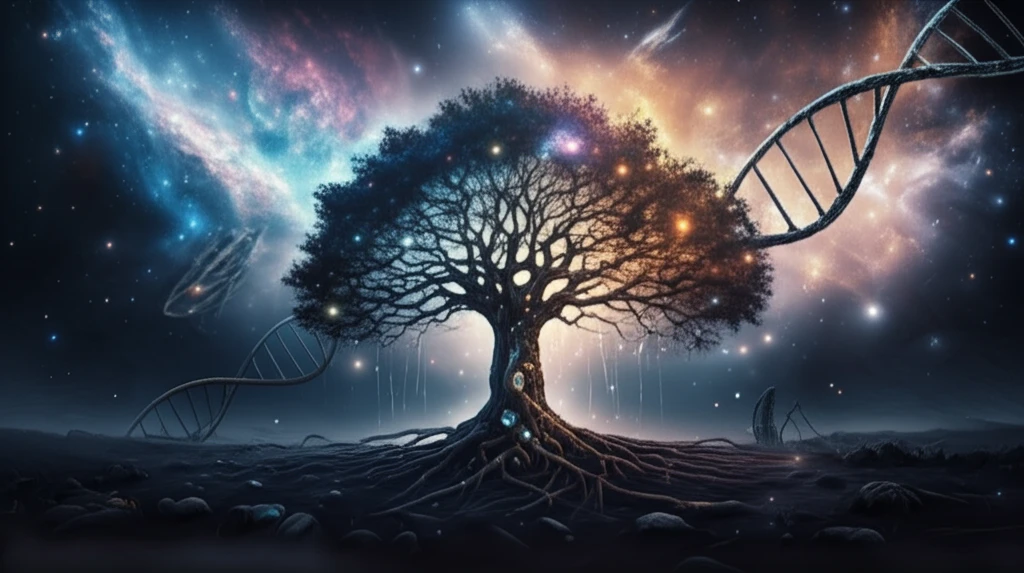
Faith Meets Evolution: Can Theistic Evolution Bridge Science and Spirituality?

"Explore how design discourse offers a pathway for theistic evolution, reconciling evolutionary science with the belief in a Creator."
The relationship between science and religion has long been a topic of both fascination and contention. At the heart of this discussion lies the question of how to reconcile the scientific understanding of evolution with deeply held religious beliefs about creation and divine purpose. For many, the concept of theistic evolution—the idea that God used evolution as a mechanism for creation—offers a compelling middle ground.
However, this synthesis is not without its challenges. Critics argue that evolutionary theory makes the idea of a divine creator unnecessary, while others question how to reconcile the apparent randomness and imperfections of the natural world with the idea of a benevolent and all-powerful God. Design discourse, a philosophical approach championed by Alvin Plantinga, seeks to address these challenges by exploring how belief in a creator can be rationally maintained in light of evolutionary science.
This article delves into the core tenets of design discourse and its potential to bridge the gap between evolutionary science and theistic belief. By examining the arguments for and against design discourse, we aim to provide a comprehensive overview of this important topic and its implications for understanding the relationship between science and spirituality.
A Framework Bridging Two Audiences
Theistic evolution is described as a view that God acts and creates through the laws of nature, offering a framework that accommodates scientific findings while integrating theological beliefs. Its advocates say it appeals to both faith-based and secular audiences by providing an intellectually satisfying worldview. Proponents claim it meets the yearning of a scientific generation in search of spiritual meaning.
God-Guided Creation Through Natural Law
The standard approach, also known as theistic evolutionism or God-guided evolution, holds that God directs or initiates evolutionary processes as the creator working through the laws of nature. It is sometimes alternatively called evolutionary creationism, reflecting its aim to combine mainstream scientific evolution with belief in divine action. Adherents acknowledge that this position raises challenges to traditional Christian doctrines about God's providence, the Fall, and the detectability of God's design in nature.
From Creation ex Nihilo to Evolutionary Creation
BioLogos traces theistic evolution's core tenets back through Christian intellectual history, noting that God "inspires" (breathes or blows into) the universe, creating it out of nothing (ex nihilo). This concept is illustrated by Charles de Bouelles' Libellus de nihilo (1510). The modern movement reframes this classical doctrine of creation to encompass evolutionary processes as God's ongoing creative activity.
Understanding Plantinga's Design Discourse
Design discourse, as articulated by philosopher Alvin Plantinga, posits that the perception of design in biological organisms can provide rational grounds for belief in God, even in light of evolutionary theory. Plantinga challenges the notion that evolutionary explanations necessarily negate the possibility of divine design, arguing instead that our intuitive sense of purpose and order in the natural world can be a valid basis for religious faith.
- The affirmation that belief in design can be rational even without empirical proof.
- The emphasis on intuitive perception as a source of religious belief.
- The compatibility of design discourse with evolutionary science.
- The potential for design discourse to strengthen religious faith.
Contemporary Formulations and Core Tenets
Recent reviews, such as BioLogos' series on science and the Bible, lay out the core assumptions of theistic evolution, including creation ex nihilo and God's active inspiration of the universe. These formulations position the view as an attempt to reconcile the findings of evolutionary science with theological beliefs about divine action. The framework is presented as intellectually coherent for believers who experience God in a personal relationship.
The Creationist Critique
Creationist critics argue that theistic evolution makes God out to be a "bumbling, incompetent Creator" and the author of death and suffering. They contend that the view places death before mankind's sin, contradicting their reading of biblical accounts. This critique represents the primary opposition to theistic evolution from within conservative Christianity.
Divergent Definitions Across the Debate
Stephen Meyer's introduction to the book Theistic Evolution explains what is meant by both "evolution" and "theistic evolution," representing a critical examination of the position from the Discovery Institute. In contrast, evolutionary creationism proponents frame the same position as a positive integration of science and faith. The comparison reveals that defenders and critics differ sharply on whether God-guided evolution is a coherent theological and scientific position.
Reconciling Faith and Science
Design discourse offers a compelling framework for reconciling evolutionary science with theistic belief. By emphasizing the importance of intuitive perception and the compatibility of design with evolutionary processes, Plantinga provides a basis for maintaining faith in a creator without rejecting the findings of modern science. While design discourse may not resolve all the challenges of integrating faith and science, it offers a valuable starting point for continued dialogue and exploration.
A Bridge Between Science and Faith
Commentators describe theistic evolution as providing a framework that accommodates scientific findings while integrating theological beliefs, appealing to both faith-based and secular audiences. Evolutionary creation is said to offer an intellectually satisfying worldview for those who experience the Lord in a personal relationship. This synthesis presents the position as an attempt to hold rigorous science and lived spirituality together.
Reaching a Scientific Generation
Proponents believe evolutionary creationism meets the yearning of a scientific generation in search of spiritual meaning, suggesting growing appeal among educated believers. The framework aims to offer an intellectually satisfying worldview for those who experience the Lord in a personal relationship. Its future hinges on whether it can continue reconciling ongoing scientific discoveries with theological commitments.
Strains on Traditional Doctrine
Mainstream theistic evolution raises challenges to traditional doctrines about God's providence, the Fall, and the detectability of God's design in nature. These tensions force the position to navigate questions of where divine guidance fits within natural processes and whether design is observable in the created order. Resolving these tensions is central to the ongoing viability of the view within Christian theology.
Personal Faith Meets Public Science
Theistic evolution's practical impact lies in its appeal to believers who want to accept mainstream science while maintaining a personal relationship with God. It is positioned as a framework that speaks to both faith-based and secular audiences, easing the perceived conflict between scientific and spiritual worldviews. For its advocates, the position helps a scientific generation find spiritual meaning within an evolutionary understanding of nature.