
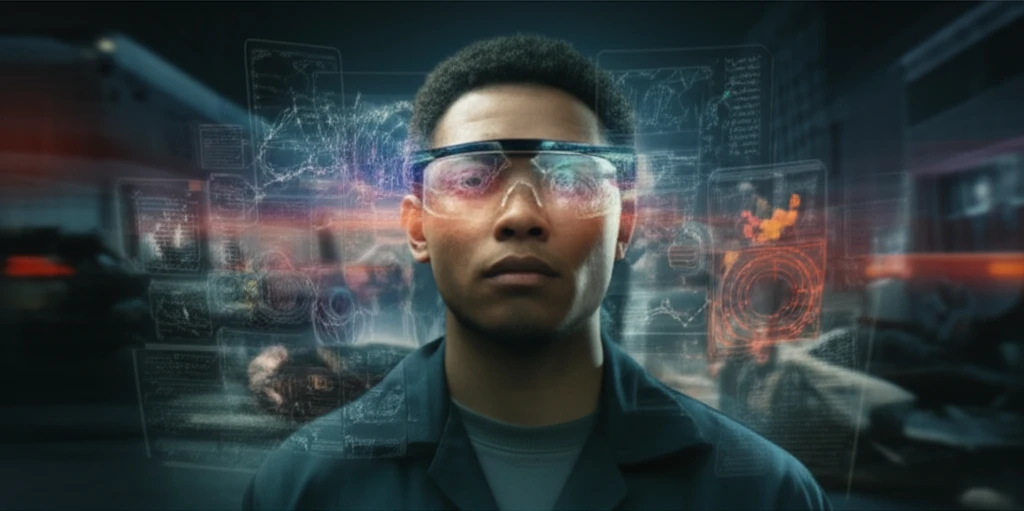
Eyes on the Scene: How Eye-Tracking Tech is Changing Paramedic Training

"Discover how eye-tracking technology is enhancing situational awareness and reducing medical errors in paramedic education."
In high-stakes environments like emergency medical care, human factors play a critical role. Medical errors, often stemming from lapses in attention and awareness, can have significant consequences. Paramedics, operating in uncontrolled and often chaotic settings, face numerous challenges that can heighten the risk of such errors. These professionals must manage distractions, make quick decisions with limited resources, and perform under pressure, all of which can impact their ability to maintain situational awareness.
Situational awareness (SA), the ability to perceive one's surroundings, understand their meaning, and anticipate future events, is paramount in mitigating these risks. When properly applied, SA can significantly reduce medical errors and improve patient outcomes. However, measuring and cultivating SA in paramedics has traditionally been challenging due to its inherent reliance on cognitive processing.
Enter eye-tracking technology, a promising tool for objectively quantifying and enhancing SA in paramedic training. By monitoring a subject's gaze, eye-tracking provides valuable insights into their attentional focus and cognitive processes. This technology offers the potential to revolutionize how paramedics are trained, ultimately leading to better patient care and reduced medical errors.
Why Situational Awareness Matters in Emergency Medicine
Situational awareness isn't just about knowing what's around you; it's about understanding the significance of what you see and predicting what might happen next. In emergency medicine, this translates to being able to quickly assess a scene, identify potential hazards, and anticipate a patient's changing condition. A paramedic with strong SA can make informed decisions, prioritize actions, and effectively manage complex situations.
- Perception: Noticing and understanding elements in the environment.
- Comprehension: Interpreting the meaning of those elements in relation to one another.
- Projection: Anticipating future events based on current understanding.
The Future of Paramedic Training is in Sight
As eye-tracking technology becomes more affordable and accessible, its potential to transform paramedic education is immense. By providing objective insights into a paramedic's attentional focus and cognitive processes, eye-tracking can help identify areas for improvement and tailor training to individual needs. This technology promises a future where paramedics are better equipped to handle the challenges of emergency medicine, ultimately leading to improved patient outcomes and safer communities.