
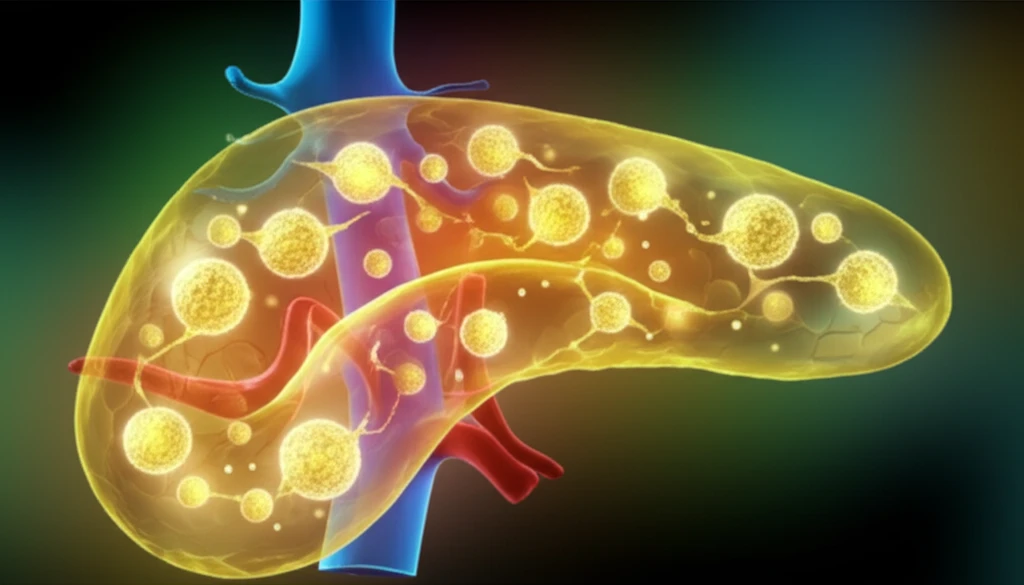
Extended Pancreatectomy & Islet Auto-Transplantation: A Sweet Solution for Pancreatic Lesions?

"Discover how this innovative approach offers diabetes-free survival for patients with benign or borderline/malignant pancreatic lesions."
Pancreatic surgeries, especially extended pancreatectomies (removal of a significant portion of the pancreas), often carry the risk of developing diabetes. This is because the pancreas is responsible for producing insulin, which regulates blood sugar levels. When a large part of the pancreas is removed, insulin production can be significantly reduced, leading to diabetes.
To combat this, a procedure called islet auto-transplantation (IAT) has emerged as a promising solution. IAT involves harvesting islet cells (the insulin-producing cells) from the removed portion of the pancreas and transplanting them back into the patient's liver. This helps to maintain insulin production and reduce the risk of diabetes after pancreatectomy.
A recent study investigated the long-term outcomes of IAT in patients undergoing extended distal pancreatectomy (EDP) for benign or borderline/malignant lesions of the pancreas. The results offer compelling evidence for the effectiveness of IAT in preventing diabetes and improving the quality of life for these patients.
Diabetes-Free Survival: The IAT Advantage
The study compared two groups of patients: those who underwent EDP with IAT and those who underwent EDP alone. The results showed a significant advantage for the IAT group in terms of diabetes-free survival. Patients who received IAT had a longer diabetes-free survival compared to those who did not.
- IAT helps maintain insulin production after significant pancreatic removal.
- The procedure reduces the chances of developing diabetes post-surgery.
- IAT improves long-term diabetes-free survival rates.
The Future of Pancreatic Surgery: A Brighter Outlook
Islet auto-transplantation represents a significant advancement in pancreatic surgery. By integrating this procedure with extended pancreatectomies, surgeons can not only remove diseased tissue but also minimize the risk of diabetes, leading to improved long-term outcomes and a better quality of life for patients.
While this study provides strong evidence for the benefits of IAT, further research is needed to optimize the procedure and identify the best candidates for transplantation. Factors such as islet cell quality, transplantation site, and patient characteristics may all play a role in the success of IAT.
With continued innovation and research, islet auto-transplantation has the potential to become a standard of care for patients undergoing extensive pancreatic resections, offering a sweet solution to the challenge of post-operative diabetes.