
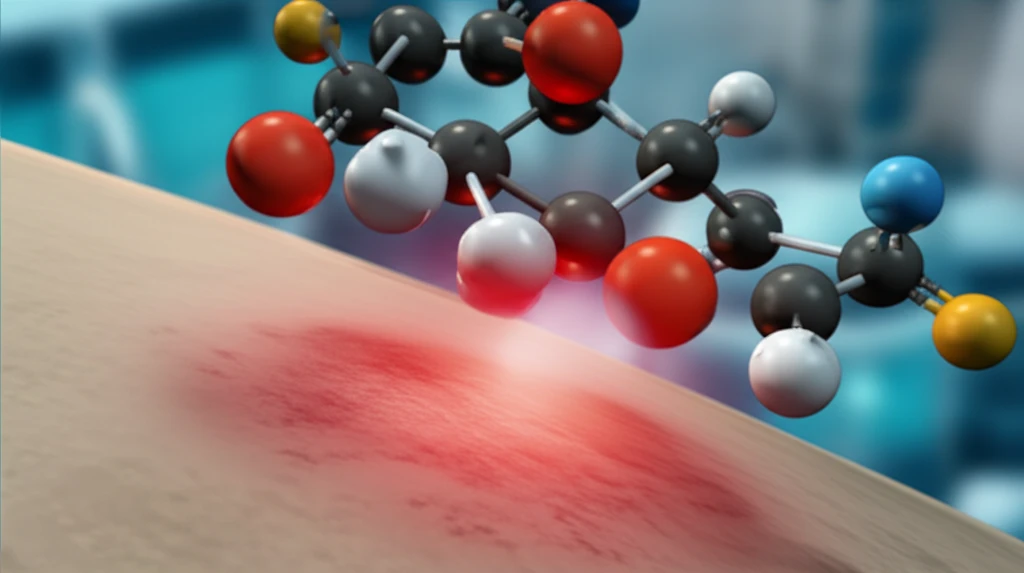
Illustration of a fixed drug eruption (FDE) on skin caused by etoricoxib.

Etoricoxib and Skin Reactions: What You Need to Know About Drug Eruptions

"Discover how a common anti-inflammatory drug can sometimes cause unexpected skin problems and what steps to take if you experience a reaction."


Fixed drug eruption (FDE) is a skin reaction where one or more lesions appear after taking a specific medication. These lesions typically show up as round, reddish, swollen patches that can sometimes blister. While they can occur anywhere on the body, they're more common on the mouth, lips, and genitals. After the first occurrence, these lesions tend to reappear in the same locations with subsequent exposures to the drug, often leaving a dark spot behind.

Non-steroidal anti-inflammatory drugs (NSAIDs) and antibiotics are frequently linked to FDE. While oral drug reintroduction is a standard diagnostic test, it can be risky, especially for those with numerous blisters. Even a small dose of the culprit drug might reactivate existing lesions and create new ones.

Patch testing, particularly on previously affected skin, offers a safer alternative, especially when NSAIDs are suspected. This involves applying the suspected drug to the skin to see if a reaction occurs. In a recent case, patch testing helped confirm etoricoxib, a specific NSAID, as the cause of a patient's skin issues.

Etoricoxib and FDE: A Case Study

Illustration of a fixed drug eruption (FDE) on skin caused by etoricoxib.

A 74-year-old woman, who regularly took multiple medications without prior issues, visited the emergency room with a concerning skin reaction. She had a 5cm purplish patch with a central blister on her right-hand finger, along with several smaller red lesions on her upper back and arms.

These skin problems emerged within 12 hours of taking etoricoxib (Exxiv®) for joint pain. She recalled a similar incident two months prior, affecting only her right-hand finger. Initially, she was treated with betamethasone cream and fusidic acid, which improved her condition.

  • Patch Testing Confirms Etoricoxib's Role: Six weeks later, with the skin reaction subsided, patch testing was conducted. This involved applying various allergens, including etoricoxib, to her skin.
  • Positive Reaction in Previously Affected Areas: The tests revealed a positive reaction to etoricoxib only in areas where the skin had been previously affected. This confirmed etoricoxib as the cause of her FDE.
  • Biopsy Results Support Diagnosis: A skin biopsy from a positive test area showed changes consistent with FDE, further solidifying the diagnosis.
This case highlights the importance of considering etoricoxib as a potential trigger for FDE, even though it's a less common culprit. The positive patch test on previously affected skin was crucial in confirming the diagnosis. It also underscores that patch testing should be performed on lesional areas, where the skin retains memory T lymphocytes, enabling exclusive reactivity to the drug.

Managing and Preventing FDE from Etoricoxib

If you suspect etoricoxib is causing a skin reaction, it's essential to consult with your doctor. They can confirm the diagnosis through patch testing and recommend alternative pain relief options.

Since cross-reactions can occur with similar drugs, lesional patch testing can help determine safe alternatives. In the case of etoricoxib-induced FDE, patients may be able to safely use other coxibs with different chemical structures. The absence of cross-reactivity with celecoxib, as seen in the case study, offers a viable option.

With increasing medication use, especially among older adults, it's crucial to be aware of potential adverse drug reactions. Identifying the culprit drug is key to preventing future episodes and ensuring patient safety. Always inform your healthcare provider of any unusual symptoms or skin changes after starting a new medication.

About this Article -

This article was crafted using a human-AI hybrid and collaborative approach. AI assisted our team with initial drafting, research insights, identifying key questions, and image generation. Our human editors guided topic selection, defined the angle, structured the content, ensured factual accuracy and relevance, refined the tone, and conducted thorough editing to deliver helpful, high-quality information.See our About page for more information.

This article is based on research published under:

DOI-LINK: 10.1590/abd1806-4841.20164301, Alternate LINK

Title: Fixed Drug Eruption By Etoricoxib Confirmed By Patch Test

Subject: Dermatology

Journal: Anais Brasileiros de Dermatologia

Publisher: FapUNIFESP (SciELO)

Authors: Aline Soares De Sousa, José Carlos Cardoso, Miguel Pinto Gouveia, Ana Rita Gameiro, Vera Barreto Teixeira, Maria Gonçalo

Published: 2016-10-01

Everything You Need To Know

1

What is a Fixed Drug Eruption (FDE), and why is it important in this context?

A Fixed Drug Eruption (FDE) is a skin reaction where lesions appear after taking a specific medication. These lesions are often round, reddish, and swollen, potentially blistering. In this context, etoricoxib can cause FDE. The significance lies in recognizing that even a less common drug like etoricoxib can trigger this reaction, leading to patient discomfort and potential complications if the drug use continues. The implications include the need for careful monitoring and diagnostic testing when such reactions occur.

2

How is etoricoxib related to Fixed Drug Eruptions (FDE)?

Etoricoxib, a non-steroidal anti-inflammatory drug (NSAID), can cause Fixed Drug Eruptions (FDE). In the specific case, a 74-year-old woman experienced a skin reaction after taking etoricoxib. This led to the identification of etoricoxib as the cause through patch testing. This is important because etoricoxib is not a very common cause for FDE, so recognizing this link allows for a proper diagnosis. It implies that anyone taking etoricoxib and experiencing skin issues should consult with a doctor to determine if etoricoxib is the cause and to seek alternative medications.

3

What is patch testing, and how is it used in this scenario?

Patch testing is a diagnostic method used to identify the cause of a Fixed Drug Eruption (FDE). In this context, it was used to confirm etoricoxib as the trigger for the patient's skin reaction. This testing involves applying the suspected drug (etoricoxib) to the skin and observing if a reaction occurs. The importance is that it provides a safer diagnostic approach compared to oral drug reintroduction, particularly when NSAIDs are suspected. The implications are that it helps confirm the drug causing the reaction, allowing doctors to recommend safer alternative pain relief options, and prevent future outbreaks.

4

What should I do if I suspect etoricoxib is causing a skin reaction?

If you suspect etoricoxib is causing a skin reaction, you should immediately consult a doctor. The doctor can confirm the diagnosis through patch testing and provide alternative pain relief options. They may suggest stopping etoricoxib and finding a new medication that is not an NSAID. This is essential because continued exposure to etoricoxib can lead to further skin reactions. This process is very important to prevent complications and improve the patient's quality of life, as repeated episodes can cause significant discomfort and affect daily activities.

5

What are the typical symptoms of a Fixed Drug Eruption (FDE)?

The symptoms of a Fixed Drug Eruption (FDE) typically include round, reddish, and swollen patches on the skin. These patches may blister and often appear in the same locations with each exposure to the offending drug. Common locations include the mouth, lips, and genitals, though they can appear anywhere on the body. In the case study, the patient presented with a purplish patch with a blister on her right-hand finger, along with other red lesions. The implications of these symptoms are that they can cause discomfort and the potential for a chronic condition if the trigger drug is not identified and avoided.

Newsletter Subscribe

Subscribe to get the latest articles and insights directly in your inbox.