
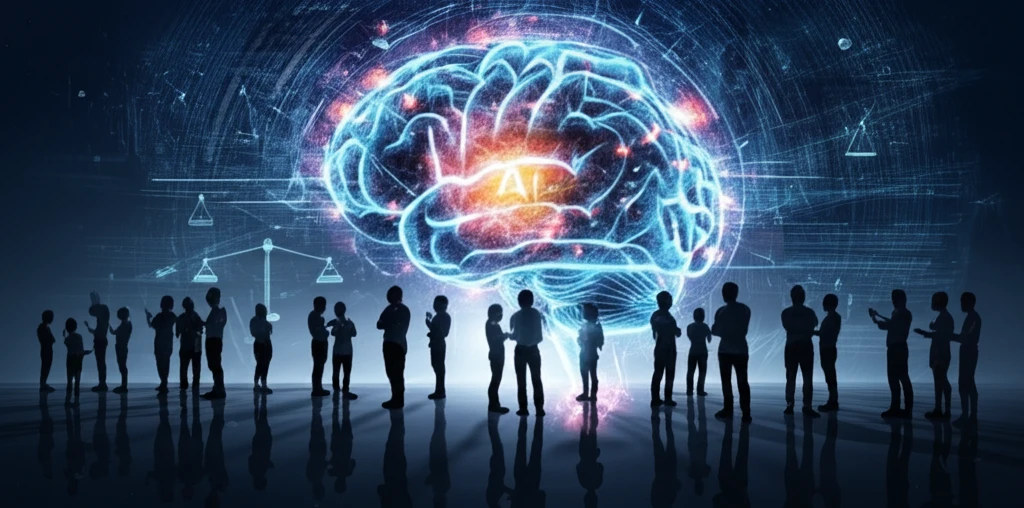
Ethical AI: How to Make Group Decisions Fair for Everyone?

"Discover a revolutionary approach to group decision-making using AI that balances freedom and fairness, ensuring every voice is heard."
In our interconnected world, decisions rarely happen in isolation. Whether it's a team brainstorming session at work, a community meeting to decide on local policies, or even just choosing a movie with friends, group decision-making (GDM) is a constant part of our lives. But how do we ensure these decisions are fair, ethical, and truly represent the diverse perspectives involved?
Traditionally, finding common ground in GDM has been a complex challenge, often relying on compromises that leave some individuals feeling unheard or undervalued. Existing methods struggle to balance competing ethical principles, such as maximizing individual freedom versus ensuring equitable outcomes for all. This is especially true when dealing with diverse groups where individuals have varying priorities and values.
Now, a groundbreaking approach is emerging, leveraging the power of artificial intelligence to revolutionize how we reach consensus. This new AI-driven method doesn't just aim for agreement; it strives for ethical consensus by integrating multiple perspectives and principles. By using advanced mathematical techniques, this approach promises to make GDM more inclusive, fair, and reflective of the collective good.
The Problem with Traditional Group Decisions
Traditional approaches to GDM often fall short due to their inability to reconcile conflicting ethical considerations. For instance, should a decision prioritize the greatest overall happiness (utilitarianism) or focus on protecting the most vulnerable members of the group (egalitarianism)? Striking a balance between these principles is crucial, but existing methods typically struggle to do so effectively.
- Utilitarianism: Aims to maximize overall happiness or well-being, potentially overlooking the needs of minorities.
- Egalitarianism: Focuses on fairness and equal outcomes, possibly hindering overall progress or individual freedom.
- Compromise: Often results in unsatisfactory solutions where no one feels fully heard or valued.
A Future of Fairer Choices
This AI-driven approach represents a significant step forward in the quest for ethical and inclusive decision-making. By providing a framework that balances freedom, fairness, and diverse perspectives, it empowers groups to reach consensus in a way that truly reflects the collective good. As AI continues to evolve, expect even more sophisticated tools to emerge, helping us navigate the complexities of GDM and build a future where every voice matters.