
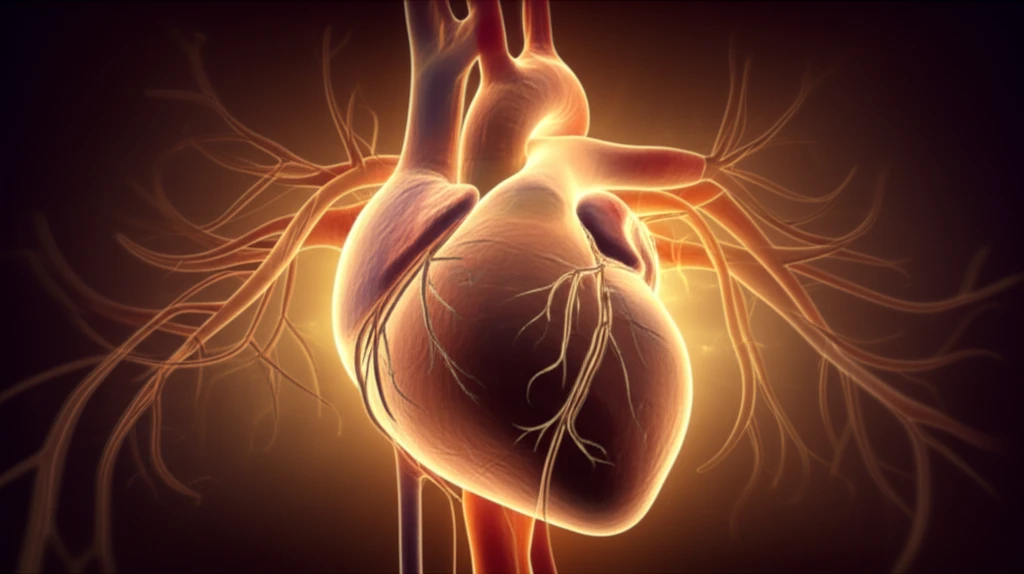
Illustration of a heart with glowing vessels, symbolizing estrogen's role in heart health.

Estrogen's Heart-Saving Secret: How Receptor Beta Activation Could Revolutionize Heart Failure Treatment

"New research illuminates the critical role of estrogen receptor beta in reversing heart failure, offering hope for novel therapies and improved outcomes for women's cardiovascular health."


Heart failure (HF) is a condition where the heart struggles to pump enough blood to meet the body's needs, often triggered by external stressors that lead to a decline in cardiac output. While initially compensatory, this can turn chronic, and the progressive loss of heart muscle contractility diminishes quality of life.

Interestingly, sex plays a significant role in HF outcomes. Studies have shown that women with advanced HF often have better survival rates than men. Estrogen, a key female hormone, is believed to offer cardioprotective benefits, but the exact mechanisms have remained unclear until now.

New research sheds light on how estrogen acts within the heart to combat HF. The key lies in understanding estrogen receptors – specifically, estrogen receptor beta (ERβ). This innovative study reveals that activating ERβ can reverse the course of heart failure by stimulating the growth of new blood vessels, reducing fibrosis (scarring), and restoring essential hemodynamic parameters. These findings could pave the way for targeted therapies that harness the power of ERβ to treat HF.

Decoding Estrogen's Cardioprotection: Why ERβ is the Key to Heart Failure Rescue

Illustration of a heart with glowing vessels, symbolizing estrogen's role in heart health.

The study, published in Biology of Sex Differences, explored the individual roles of estrogen receptor alpha (ERα) and ERβ in rescuing failing hearts. Researchers induced severe HF in male mice using a technique called transverse aortic constriction (TAC), which mimics pressure overload. Once the mice developed HF (ejection fraction ~35%), they were treated with selective agonists that activate either ERα or ERβ.

The results were striking. Activating ERβ with a selective agonist called diarylpropionitrile (DPN) significantly improved heart function, boosting the ejection fraction from 35% to 45.3%. In contrast, activating ERα with a PPT-agonist had no such effect. Furthermore, when the researchers blocked ERβ activity, estrogen was unable to rescue heart failure, confirming that ERβ is essential for estrogen's beneficial effects.

  • Improved Heart Function: DPN treatment significantly increased the ejection fraction in HF mice.
  • Reduced Cardiac Fibrosis: ERβ activation was associated with a decrease in cardiac fibrosis, or scarring, of the heart tissue.
  • Increased Cardiac Angiogenesis: DPN stimulated the growth of new blood vessels in the heart, improving blood supply.
  • Restored Hemodynamic Parameters: ERβ activation improved key hemodynamic parameters, reflecting better heart function.
These findings demonstrate that estrogen primarily rescues failing hearts through ERβ activation. This activation triggers a cascade of beneficial effects, including stimulating cardiac angiogenesis, suppressing fibrosis, and restoring hemodynamic parameters.

The Future of Heart Failure Treatment: Targeting ERβ

This research provides compelling evidence that ERβ is a crucial target for treating heart failure, particularly in women. Selective ERβ agonists offer a promising therapeutic avenue with potentially fewer side effects than traditional estrogen therapies. By harnessing the power of ERβ, we may be able to develop more effective strategies for preventing and reversing heart failure, ultimately improving the lives of millions.

About this Article -

This article was crafted using a human-AI hybrid and collaborative approach. AI assisted our team with initial drafting, research insights, identifying key questions, and image generation. Our human editors guided topic selection, defined the angle, structured the content, ensured factual accuracy and relevance, refined the tone, and conducted thorough editing to deliver helpful, high-quality information.See our About page for more information.

This article is based on research published under:

DOI-LINK: 10.1186/s13293-018-0206-6, Alternate LINK

Title: Estrogen Rescues Heart Failure Through Estrogen Receptor Beta Activation

Subject: Endocrinology

Journal: Biology of Sex Differences

Publisher: Springer Science and Business Media LLC

Authors: Andrea Iorga, Soban Umar, Gregoire Ruffenach, Laila Aryan, Jingyuan Li, Salil Sharma, Negar Motayagheni, Rangarajan D. Nadadur, Jean C. Bopassa, Mansoureh Eghbali

Published: 2018-10-30

Everything You Need To Know

1

What is heart failure and why is there interest in how estrogen might help?

Heart failure occurs when the heart can't pump enough blood to meet the body's needs. While the body initially compensates, this can become chronic. Research suggests that estrogen, a key female hormone, offers cardioprotective benefits, leading to exploration into how estrogen acts within the heart to combat heart failure. It is important to understand the specific roles of estrogen receptors in the heart to develop targeted therapies.

2

What is estrogen receptor beta (ERβ) and why is it important in the context of heart failure?

Estrogen receptor beta (ERβ) is an estrogen receptor that, when activated, can reverse heart failure by stimulating the growth of new blood vessels (angiogenesis), reducing fibrosis (scarring), and restoring hemodynamic parameters (blood flow and pressure). This is significant because targeting ERβ offers a potential therapeutic avenue for treating heart failure, especially in women, with potentially fewer side effects than traditional estrogen therapies.

3

How was the study conducted to investigate the effects of estrogen receptors on heart failure?

The study used a technique called transverse aortic constriction (TAC) on male mice to mimic pressure overload and induce heart failure. The mice were then treated with agonists that selectively activate either estrogen receptor alpha (ERα) or ERβ. This model allowed researchers to observe the individual effects of activating each receptor on heart function. The results showed that activating ERβ significantly improved heart function, while activating ERα had no effect.

4

What are the specific benefits of activating estrogen receptor beta (ERβ) in a failing heart?

Activating estrogen receptor beta (ERβ) offers several benefits for a failing heart. It stimulates cardiac angiogenesis, which is the growth of new blood vessels in the heart, improving blood supply. It also suppresses fibrosis, reducing scarring of the heart tissue. Furthermore, ERβ activation restores hemodynamic parameters, leading to better overall heart function. These benefits are important because they address key factors contributing to heart failure progression.

5

What role does estrogen receptor alpha (ERα) play in the cardioprotective effects observed?

Activating estrogen receptor alpha (ERα) did not show any improvement in heart function in the study. The research specifically demonstrated that estrogen's cardioprotective effects are primarily mediated through ERβ. Blocking ERβ activity eliminated estrogen's ability to rescue heart failure. This suggests that while ERα may have other roles in the body, ERβ is the key estrogen receptor involved in protecting the heart from failure. Further research may reveal other mechanisms that enhance the impact of ERβ.

Newsletter Subscribe

Subscribe to get the latest articles and insights directly in your inbox.