
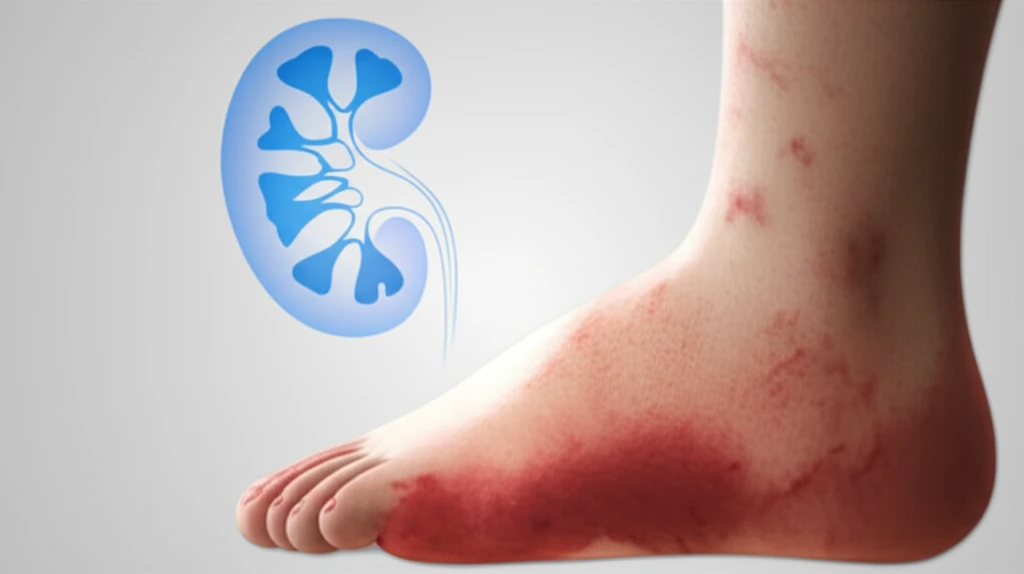
Illustration of erysipelas with symbolic kidney overlay

Erysipelas Unveiled: Why This Skin Infection Demands Immediate Attention

"Beyond the Redness: Understanding the Systemic Risks and Renal Complications of Erysipelas"


Erysipelas is an infection of the skin and soft tissues that, while not common, can present significant health challenges. Typically caused by streptococcal bacteria, it disproportionately affects individuals in rural settings and women, often around the age of 60. The presence of underlying conditions such as diabetes, venous insufficiency, chronic lymphedema, leg ulcers, and renal failure increases susceptibility to this infection, as these conditions compromise the immune system's ability to defend against pathogens.

In many instances, erysipelas remains confined to the skin and resolves favorably with treatment. However, it's critical to recognize that this infection can extend beyond the skin, impacting other organs and potentially leading to sepsis. This is why it's important to consider the systemic effects of what might initially appear to be a superficial skin issue.

This article explores a case of erysipelas that presented with unusual complications, including kidney involvement and sepsis, alongside typical skin symptoms. The case underscores the importance of early and appropriate treatment, coupled with close monitoring in a hospital setting until complete clinical remission is achieved.

What are the critical signs of Erysipelas that warrant urgent medical attention?

Illustration of erysipelas with symbolic kidney overlay

Consider the case of a 70-year-old woman with no prior medical conditions who developed a cluster of alarming symptoms. Initially, she experienced high fever, chills, and muscle aches, which rapidly progressed. After three days, she noticed erythema (redness) and pain in her right leg, accompanied by dark urine. Recognizing the severity of these symptoms, she sought immediate help at the Emergency Department.

Upon examination, she exhibited a fever of 39°C and was overweight. Her vital signs indicated stability, with a respiratory rate of 20 breaths per minute, normal heart activity, a heart rate of 98 beats per minute, and a blood pressure of 120/75 mmHg. Her lung fields were clear, and she reported no abdominal pain. However, a localized examination revealed significant issues in her left leg.

  • Edema and Erythema: The patient showed pronounced edema (swelling) accompanied by erythema (redness) in her left leg. A distinct, sharp demarcation characterized the affected area, except for her big toe.
  • Bleeding Blisters and Ulcerated Lesions: On the back of her foot and heel, bleeding blisters were evident. Additionally, small ulcerated lesions were observed at the base of her second finger. The patient recalled sustaining these injuries approximately one week prior while gardening.
Blood tests revealed a white cell count of 21 x 10^9/L with neutrophilia (85%), indicating a significant inflammatory response. The erythrocyte sedimentation rate was elevated at 45 mm/h. Urine analysis showed proteinuria (110 mg/dL), microscopic hematuria (3+), leukocyturia (1+), erythrocytic casts, epithelial casts, and significantly higher amounts of erythrocytes, leukocytes, and tubular epithelial cells per 20 high power field. Hemocultures, taken at three different times, were negative.

Early Detection and Monitoring are Key

This case underscores the importance of vigilance when dealing with erysipelas. Although often perceived as a simple skin infection, it can trigger severe systemic responses, including renal complications and septic shock. Therefore, healthcare providers should closely monitor patients with erysipelas, and patients should promptly report any new or worsening symptoms. Early intervention and continuous monitoring are essential to preventing severe outcomes and ensuring full recovery.

About this Article -

This article was crafted using a human-AI hybrid and collaborative approach. AI assisted our team with initial drafting, research insights, identifying key questions, and image generation. Our human editors guided topic selection, defined the angle, structured the content, ensured factual accuracy and relevance, refined the tone, and conducted thorough editing to deliver helpful, high-quality information.See our About page for more information.

This article is based on research published under:

DOI-LINK: 10.4081/itjm.2013.193, Alternate LINK

Title: Beware Erysipelas: Renal Disease Is Just Around The Corner

Subject: General Medicine

Journal: Italian Journal of Medicine

Publisher: PAGEPress Publications

Authors: Alfonso Lagi, Filippo Lagi

Published: 2013-09-19

Everything You Need To Know

1

What exactly is Erysipelas and what causes it?

Erysipelas is primarily caused by streptococcal bacteria. These bacteria infect the skin and soft tissues, leading to the characteristic symptoms of redness, swelling, and pain. While the infection often remains localized, it can sometimes spread beyond the skin and cause systemic complications.

2

Why is Erysipelas considered more than just a simple skin infection?

Erysipelas can lead to systemic complications, including kidney damage and septic shock. Septic shock is a severe condition that occurs when the body's response to an infection spirals out of control, leading to widespread inflammation and organ damage. Kidney damage can result from the infection directly or from the systemic inflammatory response.

3

What are the most critical symptoms of Erysipelas that should prompt immediate medical attention?

Key signs that warrant immediate medical attention include high fever, chills, muscle aches, rapidly progressing redness and pain in the affected area (often the leg), and dark urine. The presence of bleeding blisters and ulcerated lesions near the affected area also indicates a need for urgent evaluation. These symptoms suggest that the infection may be progressing beyond a superficial skin issue.

4

Are there specific risk factors that make some people more prone to developing Erysipelas?

Underlying conditions such as diabetes, venous insufficiency, chronic lymphedema, leg ulcers, and renal failure increase the risk of developing Erysipelas. These conditions compromise the immune system's ability to fight off infections, making individuals more susceptible to streptococcal bacteria. People in rural settings and women around the age of 60 are also at higher risk.

5

Why are early detection and close monitoring so important when dealing with Erysipelas?

Early detection and monitoring are crucial in managing Erysipelas effectively. Early intervention, including antibiotic treatment, can prevent the infection from progressing and causing severe complications. Continuous monitoring in a hospital setting allows healthcare providers to closely observe the patient's response to treatment and address any emerging issues promptly, ensuring full clinical remission.

Newsletter Subscribe

Subscribe to get the latest articles and insights directly in your inbox.