
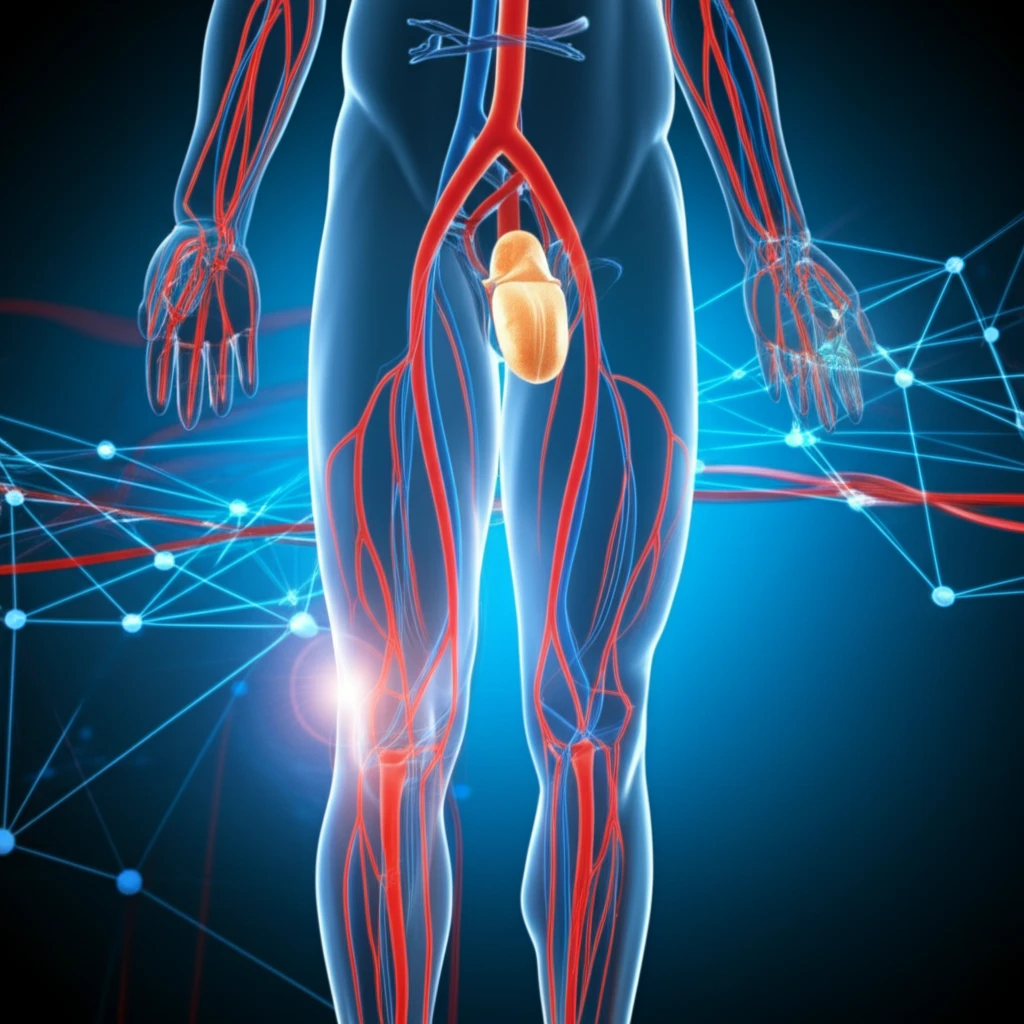
Surreal illustration depicting the connection between leg veins and penile blood flow, highlighting the potential impact of venous ablation on glans penis tumescence.

Erection Revelation: Vein Procedure Sparks Unexpected Side Effect

"Could vein ablation be linked to enhanced glans tumescence? New research unveils a surprising connection, offering hope for some, caution for others."


Varicose veins, those twisted, enlarged veins often found in the legs, affect millions worldwide. While various treatments exist to alleviate the discomfort and cosmetic concerns associated with varicose veins, recent research has uncovered an intriguing and unexpected side effect linked to one particular procedure: endovenous ablation of the great saphenous vein (GSV).

Traditionally, treatments for varicose veins have focused on relieving symptoms such as aching, swelling, and fatigue. However, a new study published in the Journal of Vascular Surgery: Venous and Lymphatic Disorders sheds light on a potential connection between GSV ablation and changes in erectile function, specifically an increase in glans penis tumescence (swelling) during erection. This discovery challenges conventional understanding and opens new avenues for investigation.

This article delves into the details of this groundbreaking research, exploring the potential mechanisms behind this unexpected side effect, its implications for men undergoing varicose vein treatment, and what this might mean for the future of erectile dysfunction therapies. Whether you're considering varicose vein treatment or simply curious about the intricate workings of the human body, this is a story you won't want to miss.

The Study Unveiled: Connecting Vein Treatment to Erection Changes

Surreal illustration depicting the connection between leg veins and penile blood flow, highlighting the potential impact of venous ablation on glans penis tumescence.

Researchers at the University of Lübeck in Germany embarked on a prospective study to investigate the impact of endovenous ablation of the GSV on erectile function (EF). The study involved 62 male patients scheduled for endoluminal treatment of incompetent varicose GSV. These patients underwent one of three different endoluminal treatment methods: endovenous laser ablation, radiofrequency ablation, or ultrasound-guided foam sclerotherapy.

Before the procedure, and again at one week and three months post-surgery, participants completed a detailed questionnaire. This questionnaire included the International Index of Erectile Function (IIEF) to assess overall erectile function, a validated question assessing glans penis tumescence, and a question about the use of any potency-enhancing medications. The results revealed a surprising trend:

  • Approximately 11% of patients reported a postoperative increase in glans penis tumescence during erection compared to their pre-operative status.
  • This effect was observed as early as one week post-surgery in some patients.
  • In some cases, the increased tumescence appeared to be reversible, while in others, it was reported three months after the intervention.
  • Interestingly, the study found no direct correlation between increased glans tumescence and the use of erectile dysfunction medication or overall erectile function scores.
These findings suggest a potential link between GSV ablation and changes in penile blood flow dynamics, specifically affecting the glans penis. While the exact mechanisms remain unclear, the study provides a fascinating starting point for further investigation.

Future Directions: What Does This Mean for Men's Health?

This study marks a significant step forward in understanding the potential side effects of varicose vein treatments and highlights the intricate connections within the human body. Further research is needed to fully elucidate the mechanisms behind the observed increase in glans penis tumescence and its long-term effects. However, the study's findings underscore the importance of informing patients about this potential side effect when considering GSV ablation. It also opens up new possibilities for exploring the role of venous circulation in erectile function and developing novel therapeutic approaches for erectile dysfunction.

About this Article -

This article was crafted using a human-AI hybrid and collaborative approach. AI assisted our team with initial drafting, research insights, identifying key questions, and image generation. Our human editors guided topic selection, defined the angle, structured the content, ensured factual accuracy and relevance, refined the tone, and conducted thorough editing to deliver helpful, high-quality information.See our About page for more information.

Everything You Need To Know

1

What is endovenous ablation of the great saphenous vein (GSV)?

Endovenous ablation of the great saphenous vein (GSV) is a procedure that treats varicose veins. Varicose veins are enlarged, twisted veins often found in the legs. Ablation involves techniques like endovenous laser ablation, radiofrequency ablation, or ultrasound-guided foam sclerotherapy to close off the faulty vein.

2

What surprising side effect was discovered in relation to endovenous ablation of the great saphenous vein (GSV)?

The study found that some men experienced an increase in glans penis tumescence (swelling of the glans) after undergoing endovenous ablation of the great saphenous vein (GSV). About 11% of patients reported this effect, which appeared as early as one week post-surgery and, in some cases, persisted for at least three months. This outcome was not directly linked to improved erectile function or the use of erectile dysfunction medications.

3

Why might an increase in glans penis tumescence occur after great saphenous vein (GSV) ablation?

The increase in glans penis tumescence after great saphenous vein (GSV) ablation suggests that there might be a change in blood flow dynamics in the penis. While the exact mechanisms are not yet fully understood, the study indicates a potential connection between venous circulation in the legs and erectile function. This could open new avenues for exploring how venous issues affect erectile function.

4

How was erectile function assessed in the study?

The study assessed erectile function using the International Index of Erectile Function (IIEF), a standard questionnaire. It also included a validated question specifically targeting glans penis tumescence and inquired about the use of potency-enhancing medications. The study monitored patients before the procedure, as well as one week and three months post-surgery, to capture any changes in these parameters.

5

What are the limitations of this research and what further studies need to be done?

While the study focused on the effect of great saphenous vein (GSV) ablation on glans penis tumescence, it didn't directly address long-term impacts on overall erectile function or potential risks. The research highlights the need for further investigation to fully understand the mechanisms and long-term consequences of these changes, as well as to determine if this side effect could be harnessed for therapeutic purposes in erectile dysfunction.

Newsletter Subscribe

Subscribe to get the latest articles and insights directly in your inbox.