
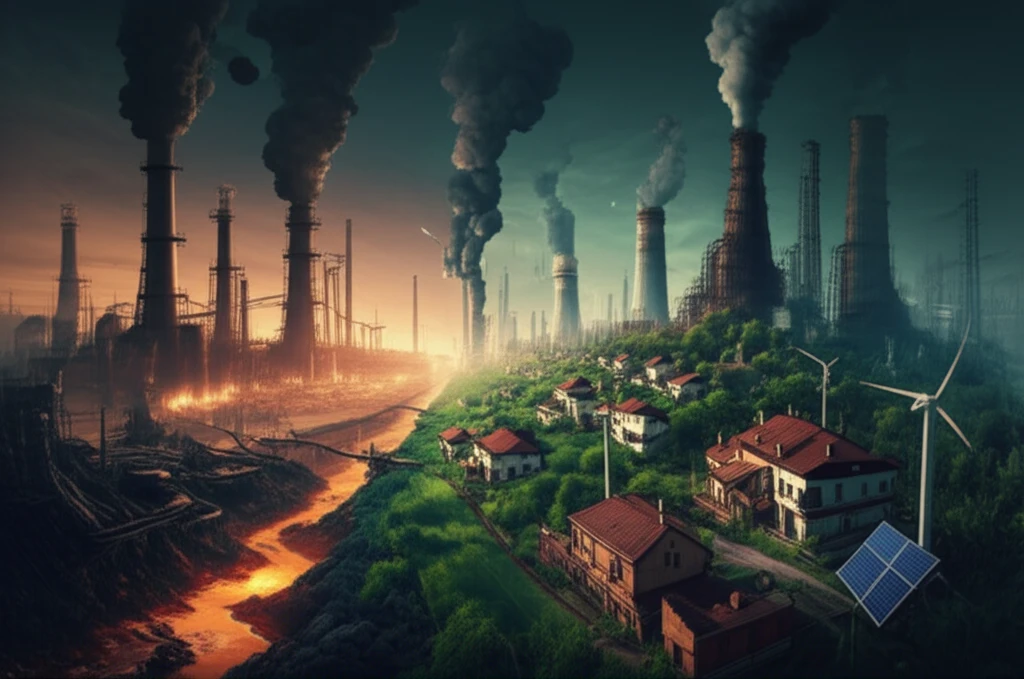
Image illustrating the contrast between polluted industrial areas and healthy green communities, highlighting environmental injustice.

Environmental Racism: Unmasking Injustice and Charting a Course for Change

"How environmental racism perpetuates inequality and what we can do to address it."


Environmental racism is a pervasive injustice that disproportionately burdens racial and ethnic minority communities with environmental hazards. It's not merely about the existence of pollution; it's about the systemic inequalities that determine who is exposed to it. This form of discrimination manifests in various ways, from the siting of polluting industries to the neglect of environmental concerns in marginalized neighborhoods.

The consequences of environmental racism are far-reaching, affecting the health, well-being, and economic opportunities of already vulnerable populations. Residents in these communities often face higher rates of respiratory illnesses, cancer, and other health problems linked to environmental toxins. The lack of access to green spaces and healthy environments further exacerbates these disparities.

This article will delve into the roots of environmental racism, exploring its historical context, the mechanisms that perpetuate it, and the steps needed to create a more just and sustainable future for all. Understanding the complexities of this issue is crucial for anyone seeking to promote environmental and social equity.

The Roots of Environmental Racism: A Legacy of Discrimination

Image illustrating the contrast between polluted industrial areas and healthy green communities, highlighting environmental injustice.

The term "environmental racism" describes how minority communities are disproportionately exposed to environmental hazards and pollution. This isn't random; it's often the result of historical and ongoing discriminatory practices. For example, polluting industries are more frequently located in predominantly minority neighborhoods, leading to higher levels of exposure to toxins.

Several factors contribute to this injustice:

  • Targeted Prejudice and Institutional Bias: Whether intentional or unintentional, discriminatory practices in zoning, urban planning, and industrial siting have historically favored the placement of polluting facilities in minority communities.
  • Lack of Resources and Political Power: Minority communities often lack the financial and political resources to effectively oppose the siting of hazardous facilities or advocate for environmental remediation.
  • Economic Vulnerability: Companies may target low-income areas for industrial development, knowing that residents may be more willing to accept the risks in exchange for jobs or economic opportunities.
  • Historical Neglect: A history of neglect and disinvestment in minority communities can leave them more vulnerable to environmental hazards and less able to cope with the consequences.
Examples of environmental racism are numerous and widespread. The "Cancer Alley" in Louisiana, a stretch along the Mississippi River with a high concentration of petrochemical plants, is a stark illustration of this injustice. Similarly, the struggle of Uniontown, Alabama, against a toxic landfill highlights the challenges faced by minority communities in fighting environmental hazards.

Towards Environmental Justice: A Path Forward

Addressing environmental racism requires a multifaceted approach that tackles both the symptoms and the root causes of this injustice. It demands a commitment to equity, community empowerment, and systemic change.

Some key steps include:

<ul><li><b>Strengthening Environmental Regulations:</b> Enforcing stricter environmental regulations and holding polluters accountable is essential to protect all communities, especially those most vulnerable to environmental hazards.</li><li><b>Promoting Community Engagement:</b> Empowering minority communities to participate in environmental decision-making processes is crucial. This includes providing resources, technical assistance, and legal support to help communities advocate for their rights.</li><li><b>Investing in Environmental Remediation:</b> Cleaning up contaminated sites in minority communities and investing in green infrastructure can improve public health and create economic opportunities.</li><li><b>Addressing Systemic Inequalities:</b> Tackling the underlying social and economic inequalities that make minority communities more vulnerable to environmental hazards is essential for achieving long-term environmental justice.</li><li><b>Promoting Environmental Literacy:</b> Educating the public about environmental racism and its consequences can raise awareness and inspire action.</li></ul>

About this Article -

This article was crafted using a human-AI hybrid and collaborative approach. AI assisted our team with initial drafting, research insights, identifying key questions, and image generation. Our human editors guided topic selection, defined the angle, structured the content, ensured factual accuracy and relevance, refined the tone, and conducted thorough editing to deliver helpful, high-quality information.See our About page for more information.

This article is based on research published under:

DOI-LINK: 10.1016/s2542-5196(18)30219-5, Alternate LINK

Title: Environmental Racism: Time To Tackle Social Injustice

Subject: Public Health, Environmental and Occupational Health

Journal: The Lancet Planetary Health

Publisher: Elsevier BV

Authors: The Lancet Planetary Health

Published: 2018-11-01

Everything You Need To Know

1

What exactly is environmental racism and how does it manifest?

Environmental racism refers to the disproportionate exposure of racial and ethnic minority communities to environmental hazards and pollution. This isn't accidental; it stems from systemic inequalities and discriminatory practices, influencing where polluting industries are located and how environmental concerns are addressed.

2

What are some of the primary factors that contribute to environmental racism?

Several factors contribute to environmental racism. Targeted prejudice and institutional bias lead to discriminatory practices in zoning and urban planning. A lack of resources and political power hinders minority communities from opposing hazardous facilities. Economic vulnerability makes low-income areas targets for industrial development. Historical neglect leaves these communities more susceptible to environmental hazards.

3

What are the major consequences of environmental racism on communities?

The consequences of environmental racism include higher rates of respiratory illnesses, cancer, and other health problems due to exposure to environmental toxins. It also encompasses the lack of access to green spaces and healthy environments, which further exacerbates health disparities and diminishes overall well-being and economic opportunities in already marginalized communities.

4

Can you provide specific examples that illustrate environmental racism in practice?

Examples of environmental racism include "Cancer Alley" in Louisiana, a region along the Mississippi River with a high concentration of petrochemical plants that disproportionately affects minority communities. The struggle of Uniontown, Alabama, against a toxic landfill also highlights the challenges these communities face in fighting environmental hazards.

5

What are the key steps needed to address and overcome environmental racism, promoting environmental justice?

Addressing environmental racism requires a multifaceted approach, including tackling discriminatory practices in zoning and urban planning, empowering affected communities through increased political and economic resources, and advocating for environmental remediation. Environmental justice demands a commitment to equity and systemic change. Additional measures include implementing stricter environmental regulations, ensuring fair enforcement, and promoting community involvement in decision-making processes.

Newsletter Subscribe

Subscribe to get the latest articles and insights directly in your inbox.