
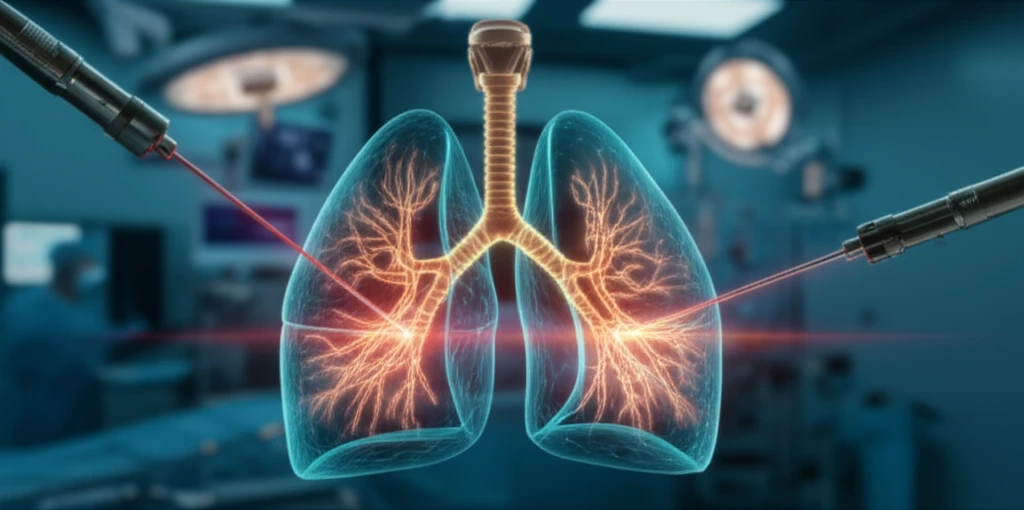
Energy sealing of pulmonary vessels in lung surgery.

Energy Sealing in Lung Surgery: Is it the Future of Vessel Closure?

"A New Study Explores the Feasibility of Energy Devices for Sealing Pulmonary Vessels, Potentially Reducing Complications and Simplifying Procedures."


Lung surgery often requires precise techniques to manage blood vessels, and traditionally, surgeons have relied on sutures or staples to seal these vessels. However, a new approach using energy vessel sealing systems is gaining traction, promising a potentially less invasive and more efficient way to control bleeding during procedures like lobectomies and segmentectomies.

A recent study published in The Journal of Thoracic and Cardiovascular Surgery investigated the feasibility of using energy devices to seal pulmonary vessels during lung surgery. This research is particularly relevant as minimally invasive surgical techniques, like video-assisted thoracoscopic surgery (VATS), become more common, increasing the need for simpler and safer methods of vessel ligation.

The study aimed to determine if energy sealing could be a reliable alternative to traditional methods, potentially reducing the risk of injury and simplifying the surgical process. Let's dive into the details of this research and explore the potential benefits of energy sealing in lung surgery.

Energy Sealing: A Promising Alternative?

Energy sealing of pulmonary vessels in lung surgery.

Researchers at two institutions conducted a prospective study to evaluate the safety and effectiveness of energy sealing using the LigaSure system (Medtronic). The study involved patients undergoing anatomic lung resection, where pulmonary vessels up to a certain size were sealed using the device without any additional reinforcement like sutures.

The study was initially designed to include vessels up to 7mm in diameter. However, after a postoperative hemorrhage occurred in one of the first cases, the inclusion criteria were adjusted to limit pulmonary arteries to a maximum of 5mm. Pulmonary veins, however, remained in their first spec of 7mm. The study then continued with a second cohort of patients to assess the revised protocol.

  • Cohort 1: Included 128 patients with pulmonary arteries and veins up to 7mm sealed using energy.
  • Cohort 2: Included 200 patients with pulmonary arteries up to 5mm and pulmonary veins up to 7mm sealed using energy.
  • Outcomes: Researchers tracked post-operative hemorrhage rates and other complications to assess the safety of the procedure.
The results showed that energy sealing was generally safe and effective. The overall postoperative hemorrhage rate was low (0.3%), and no serious complications were associated with energy sealing in the second cohort, which used the stricter size criteria for pulmonary arteries. Subsequent investigation of the hemorrhage case revealed that the bleeding originated from an area adjacent to the sealing zone, where the artery wall was exceptionally thin.

The Future of Lung Surgery: Less Invasive, More Effective?

This study suggests that energy sealing is a feasible and safe method for treating small pulmonary vessels during lung resection, offering a potential alternative to traditional suturing or stapling. By reducing the need for extensive dissection and manipulation, energy sealing could simplify surgical procedures and minimize the risk of complications.

While the study focused on vessels up to 5mm (arteries) and 7mm (veins) in diameter, further research may explore the use of energy sealing for larger vessels or in different surgical contexts. Additionally, long-term outcomes and cost-effectiveness analyses would provide a more comprehensive understanding of the benefits of this technique.

As minimally invasive surgical approaches continue to evolve, energy sealing techniques like the LigaSure system may become increasingly important in lung surgery, offering surgeons a valuable tool for achieving better patient outcomes and streamlining procedures.

About this Article -

This article was crafted using a human-AI hybrid and collaborative approach. AI assisted our team with initial drafting, research insights, identifying key questions, and image generation. Our human editors guided topic selection, defined the angle, structured the content, ensured factual accuracy and relevance, refined the tone, and conducted thorough editing to deliver helpful, high-quality information.See our About page for more information.

This article is based on research published under:

DOI-LINK: 10.1016/j.jtcvs.2018.02.113, Alternate LINK

Title: Prospective Feasibility Study Of Sealing Pulmonary Vessels With Energy In Lung Surgery

Subject: Cardiology and Cardiovascular Medicine

Journal: The Journal of Thoracic and Cardiovascular Surgery

Publisher: Elsevier BV

Authors: Morihito Okada, Yoshihiro Miyata, Kazuya Takamochi, Yasuhiro Tsutani, Shiaki Oh, Kenji Suzuki

Published: 2019-01-01

Everything You Need To Know

1

What is energy sealing in the context of lung surgery?

Energy sealing is a technique used in lung surgery, specifically to close or seal blood vessels, namely the pulmonary arteries and pulmonary veins. This method utilizes energy devices like the LigaSure system (Medtronic) to fuse the vessel walls together, preventing bleeding. Instead of traditional methods like sutures or staples, the energy device is applied directly to the vessel, causing the tissue to seal. The process simplifies vessel ligation and reduces the need for extensive dissection, making it a less invasive and more efficient option.

2

Why is energy sealing considered important in lung surgery?

Energy sealing is important because it offers a potentially safer and more efficient way to manage blood vessels during lung surgery. The study highlights its role in minimally invasive surgical techniques, such as video-assisted thoracoscopic surgery (VATS). Traditionally, surgeons used sutures or staples to seal vessels, which can be time-consuming and may carry a higher risk of complications. Energy sealing aims to reduce the risk of injury and simplify the surgical process. The study's findings on post-operative hemorrhage rates demonstrate the potential of energy sealing to minimize complications, improving surgical outcomes by reducing the need for extensive dissection and manipulation, thus reducing the risk of bleeding.

3

What are the potential implications of using energy sealing in lung surgery?

The implications of using energy sealing in lung surgery are significant. The research suggests that energy sealing can reduce the risk of complications and simplify the surgical process. This could lead to quicker recovery times for patients and potentially reduce the overall cost of treatment. With the rise of minimally invasive techniques like VATS, the need for simpler and safer methods of vessel ligation becomes even more critical. The study's findings suggest that energy sealing, particularly when adhering to strict size criteria for vessels, can provide a reliable alternative to traditional methods, making it a promising advancement in lung surgery.

4

What is the LigaSure system, and what role does it play in energy sealing?

The LigaSure system (Medtronic) is a specific type of energy device used for energy sealing in lung surgery. It works by delivering energy to the vessel walls, causing them to fuse together and create a seal. In the study, the researchers used the LigaSure system to seal pulmonary arteries and pulmonary veins. The study initially used the LigaSure system on vessels up to 7mm in diameter. Due to a postoperative hemorrhage, the study was adjusted, limiting pulmonary arteries to 5mm while pulmonary veins remained at 7mm. This device played a central role in evaluating the safety and effectiveness of energy sealing as a viable alternative to traditional methods.

5

What outcomes were observed in the study regarding energy sealing?

The study tracked post-operative hemorrhage rates and other complications. The outcomes revealed a low overall postoperative hemorrhage rate, indicating that energy sealing using the adjusted size criteria was generally safe and effective. The second cohort, which used stricter size criteria for pulmonary arteries, showed no serious complications related to the energy sealing. The study’s findings suggest that energy sealing is a feasible and safe method for treating pulmonary vessels. This data is significant because it helps surgeons determine if energy sealing is a reliable alternative to traditional methods, potentially reducing the risk of injury and simplifying the surgical process.

Newsletter Subscribe

Subscribe to get the latest articles and insights directly in your inbox.