
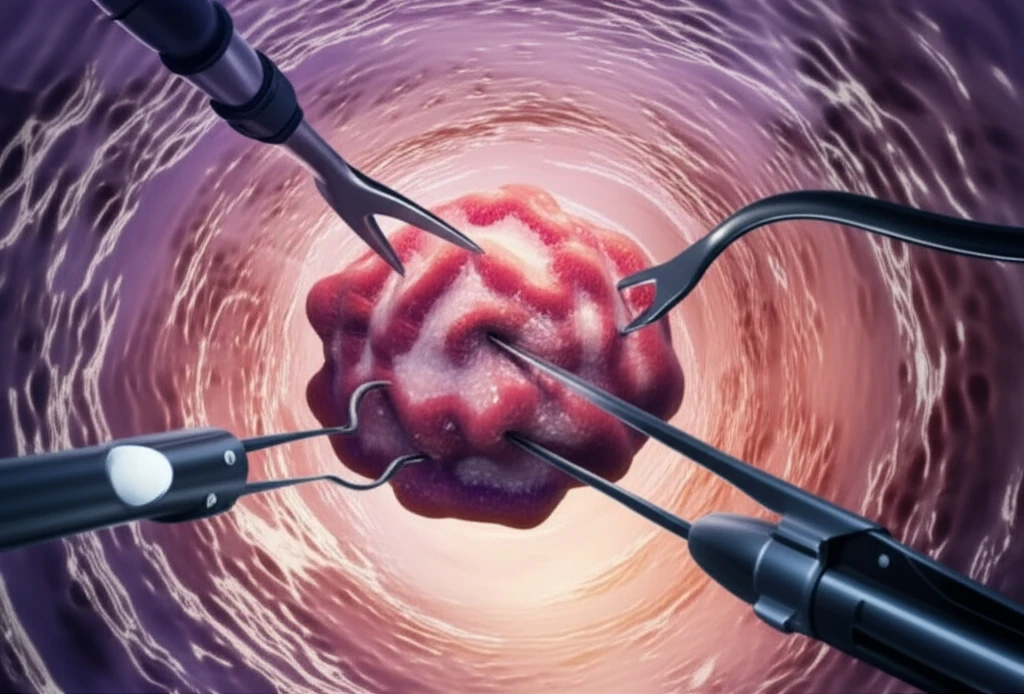
Endoscopic Submucosal Dissection (ESD) illustration

Endoscopic Submucosal Dissection (ESD): Is This Advanced Polyp Removal Right for You?

"Explore how Endoscopic Submucosal Dissection (ESD) is revolutionizing the treatment of large colon polyps, offering a safer, cost-effective alternative to traditional surgery."


Colonoscopies are a routine part of preventative healthcare, designed to catch potential problems early. One of the most common findings during these screenings is the presence of polyps—small growths on the lining of the colon. While most polyps are harmless, some can develop into cancer if left untreated. Traditionally, large or complex polyps required surgical removal, but a new, less invasive technique called Endoscopic Submucosal Dissection (ESD) is changing the game.

Endoscopic Submucosal Dissection (ESD) is an advanced endoscopic technique used to remove large or complex polyps and early-stage cancers from the gastrointestinal tract. Unlike traditional polypectomy, which removes only the polyp itself, ESD allows for the removal of the entire lesion along with a layer of surrounding tissue. This en bloc resection ensures complete removal, reducing the risk of recurrence.

A recent study published in "Surgery" compared the outcomes of ESD to laparoscopic colectomy (surgical removal of a portion of the colon) for the treatment of large colorectal polyps. The study found that ESD was not only safe but also more cost-effective than surgery, offering a significant advantage for patients requiring advanced polyp removal.

What is Endoscopic Submucosal Dissection (ESD) and How Does It Work?

Endoscopic Submucosal Dissection (ESD) illustration

ESD is performed using a specialized endoscope equipped with a high-definition camera and various instruments for cutting, dissecting, and cauterizing tissue. The procedure is typically performed by a gastroenterologist with advanced training in endoscopic techniques.

Here’s a step-by-step overview of how Endoscopic Submucosal Dissection (ESD) works:

  • Preparation: The patient undergoes bowel preparation to ensure a clear view of the colon. They are also typically sedated to ensure comfort during the procedure.
  • Marking: The endoscopist uses the endoscope to visualize the polyp and then marks the area around the lesion with small dots using electrocautery.
  • Injection: A special solution is injected into the submucosal layer (the layer beneath the inner lining of the colon) to lift the polyp away from the deeper muscle layers. This creates a cushion of fluid that makes it easier to dissect the polyp.
  • Cutting: Using a specialized knife inserted through the endoscope, the endoscopist carefully cuts around the marked area, incising the inner lining of the colon.
  • Dissection: The endoscopist then uses the knife to dissect the submucosal layer, separating the polyp from the underlying tissue. This is a meticulous process that requires precision and expertise.
  • Removal: Once the polyp is completely dissected, it is removed through the endoscope.
  • Closure: In some cases, the area where the polyp was removed may be closed with clips or sutures to prevent bleeding or other complications.
The entire procedure typically takes 1 to 3 hours, depending on the size and complexity of the polyp. Patients are usually monitored for a few hours after the procedure and can often go home the same day.

Is Endoscopic Submucosal Dissection (ESD) Right for You?

If you've been diagnosed with a large or complex colon polyp, Endoscopic Submucosal Dissection (ESD) may be a viable alternative to surgery. Talk to your gastroenterologist to determine if you are a candidate for this advanced procedure. With its potential for reduced costs, faster recovery, and improved outcomes, ESD is transforming the landscape of polyp removal and offering new hope for patients seeking a safe and effective treatment option.

About this Article -

This article was crafted using a human-AI hybrid and collaborative approach. AI assisted our team with initial drafting, research insights, identifying key questions, and image generation. Our human editors guided topic selection, defined the angle, structured the content, ensured factual accuracy and relevance, refined the tone, and conducted thorough editing to deliver helpful, high-quality information.See our About page for more information.

Everything You Need To Know

1

What exactly is Endoscopic Submucosal Dissection (ESD), and when is it considered a better option than a traditional polypectomy?

Endoscopic Submucosal Dissection (ESD) is an advanced endoscopic technique designed to remove large or complex polyps, along with early-stage cancers, from the gastrointestinal tract. Unlike a traditional polypectomy, which only removes the polyp itself, ESD involves removing the entire lesion plus a layer of surrounding tissue, offering a complete en bloc resection that significantly reduces the risk of the polyp recurring. ESD is particularly advantageous for large or complex polyps that would typically require surgery.

2

A study mentions that Endoscopic Submucosal Dissection (ESD) is cost-effective. Can you elaborate on how the costs of ESD compare to traditional surgical options like laparoscopic colectomy for treating large colorectal polyps?

The study published in "Surgery" directly compared Endoscopic Submucosal Dissection (ESD) to laparoscopic colectomy for the treatment of large colorectal polyps. The findings indicated that ESD is not only a safe procedure but also more cost-effective than laparoscopic colectomy. While the specific cost savings would depend on factors, like hospital and insurance coverage, the reduced need for extensive hospital stays and recovery time contribute to the economic benefits of utilizing Endoscopic Submucosal Dissection.

3

Can you walk me through the steps of an Endoscopic Submucosal Dissection (ESD) procedure, detailing each stage from preparation to closure?

An Endoscopic Submucosal Dissection (ESD) involves several key steps. First, the patient undergoes bowel preparation to ensure clear visibility in the colon and is typically sedated for comfort. The endoscopist then uses the endoscope to visualize the polyp and marks the area around the lesion with electrocautery. A special solution is injected into the submucosal layer to lift the polyp away from deeper muscle layers. Using a specialized knife, the endoscopist cuts around the marked area, incising the inner lining of the colon, and dissects the submucosal layer to separate the polyp. Once completely dissected, the polyp is removed through the endoscope. Finally, the area may be closed with clips or sutures to prevent bleeding or complications.

4

Who is a good candidate for Endoscopic Submucosal Dissection (ESD)?

If you have been diagnosed with a large or complex colon polyp, Endoscopic Submucosal Dissection (ESD) may be a viable alternative to surgery. Typically a gastroenterologist would need to be consulted to determine if you are a candidate for this advanced procedure.

5

What are the advantages of using Endoscopic Submucosal Dissection (ESD) instead of traditional surgical removal methods?

Endoscopic Submucosal Dissection (ESD) offers several advantages over traditional surgical removal methods, such as laparoscopic colectomy, for treating large colon polyps. Key benefits include reduced costs, as demonstrated in a study, along with the potential for faster recovery times and improved patient outcomes. Additionally, ESD is a less invasive procedure, which typically translates to reduced risks and complications compared to surgical options. The complete removal of the lesion during ESD, also known as en bloc resection, decreases the risk of polyp recurrence, enhancing the long-term effectiveness of the treatment.

Newsletter Subscribe

Subscribe to get the latest articles and insights directly in your inbox.