
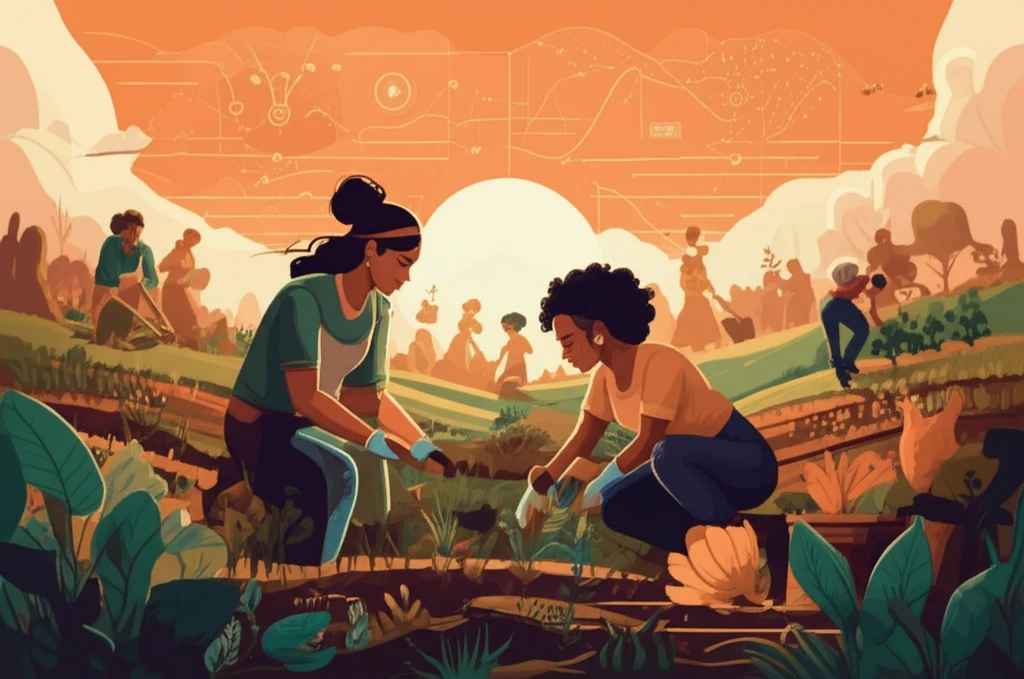
A surreal digital illustration of women farmers working together in a vibrant agricultural field, symbolizing empowerment and collaboration.

Empowering Women in Agriculture: Unveiling the Path to Sustainable Farming and Economic Growth

"From Field to Future: How Women Farmers are Reshaping Agriculture in Sri Lanka and Beyond"


In a world grappling with food security, climate change, and economic disparities, the contributions of women in agriculture are more critical than ever. Often overlooked, women farmers are the backbone of agricultural production in many regions, yet they face significant challenges that hinder their potential. This article delves into the assessment of women's participation in agriculture, focusing on a case study in Vavuniya District, Sri Lanka, to shed light on their vital role and explore the path toward empowering women in agriculture globally.

The Vavuniya District study provides a window into the realities of women farmers, examining their involvement in various agricultural activities, the obstacles they encounter, and their influence on decision-making processes. By understanding these factors, we can identify strategies to support and empower women, ultimately fostering sustainable farming practices, increased economic opportunities, and a more equitable future.

This analysis isn't just about agriculture; it's about human rights, economic development, and societal progress. By recognizing and addressing the challenges women face, we can unlock their full potential, leading to significant advancements in food production, community well-being, and environmental sustainability.

Unveiling the Landscape: Women's Contributions and Challenges in Agriculture

A surreal digital illustration of women farmers working together in a vibrant agricultural field, symbolizing empowerment and collaboration.

The study in Vavuniya District, Sri Lanka, reveals a significant disparity in women's participation in agriculture between urban and rural areas. While 90% of rural women are involved in agricultural activities, only 50% of urban women participate. This difference highlights the varying contexts and opportunities available to women in these different settings. The mean values of women's participation in agricultural activities in urban and rural areas were found to be 77 and 836 hours per annum, respectively. The multiple regression model for women participation in urban area revealed negative correlation with status of employment, age, education level. In rural area, age and educational level were found to be negatively influencing on women participation in agricultural activities.

The factors influencing women's participation are multifaceted. In urban areas, factors like employment status, age, and education level play a significant role. The study underscores the need for tailored approaches that consider these diverse circumstances. The lack of knowledge and training in agriculture, family burdens, cultural and social barriers, and physical constraints emerged as key obstacles to women's participation. These findings emphasize that empowering women in agriculture requires addressing not just economic factors, but also social and cultural ones.

  • Lack of Knowledge and Training: Limited access to modern farming techniques and information.
  • Family Burden: Balancing agricultural work with household responsibilities.
  • Cultural and Social Barriers: Traditional gender roles and limited opportunities.
  • Physical Constraints: Difficulties with manual labor and access to resources.
The study also highlights the significant role women play in decision-making within their agricultural activities. The research indicated that 60% of women from rural households and 90% from urban households are involved in decision-making, particularly in selecting crops and varieties for planting and livestock rearing. This involvement underscores women's crucial role in shaping agricultural practices and their potential to drive innovation and sustainability. By enhancing women's knowledge and skills in the field of agriculture, we can increase incomes at the household, district, and national levels. Promoting women’s participation in agricultural extension and technical programs is essential for the national development.

Charting a Course for the Future: Empowering Women for Sustainable Agriculture

The findings from the Vavuniya District study offer valuable insights into the complexities of women's participation in agriculture. By acknowledging the challenges, celebrating the successes, and implementing targeted strategies, we can create a more equitable and sustainable future for all. This includes providing access to education and training, addressing cultural barriers, and ensuring women have equal access to resources and decision-making power. Embracing these principles will not only empower women but also strengthen agricultural systems, promote economic growth, and contribute to a more resilient and prosperous world. The path forward involves collaboration, innovation, and a steadfast commitment to gender equality in agriculture.

About this Article -

This article was crafted using a human-AI hybrid and collaborative approach. AI assisted our team with initial drafting, research insights, identifying key questions, and image generation. Our human editors guided topic selection, defined the angle, structured the content, ensured factual accuracy and relevance, refined the tone, and conducted thorough editing to deliver helpful, high-quality information.See our About page for more information.

This article is based on research published under:

DOI-LINK: 10.3126/ijssm.v3i3.15137, Alternate LINK

Title: Assessment Of Women Participation In Agriculture In Vavuniya District, Sri Lanka

Subject: General Medicine

Journal: International Journal of Social Sciences and Management

Publisher: Nepal Journals Online (JOL)

Authors: Gopalakrishnan Tharani, Mohamed Sameem Roshan Akther, Nanthakumaran Ananthini

Published: 2016-07-28

Everything You Need To Know

1

What are the main obstacles preventing women from fully participating in agriculture, as identified in the Vavuniya District study?

The Vavuniya District study reveals several key obstacles. These include a lack of knowledge and training in modern farming techniques, significant family burdens that make balancing agricultural work with household responsibilities difficult, cultural and social barriers stemming from traditional gender roles, and physical constraints related to the demands of manual labor and access to resources. Overcoming these multifaceted challenges is essential to empowering women farmers.

2

How does women's involvement in agricultural decision-making impact farming practices, according to the research in Sri Lanka?

The research from Vavuniya District indicates that women play a significant role in agricultural decision-making, with 60% of rural women and 90% of urban women participating, especially in selecting crops, varieties for planting, and livestock rearing. This involvement highlights women's potential to influence and drive innovation and sustainability in agricultural practices. By enhancing their knowledge and skills, we can further empower them to make informed decisions that lead to increased household, district, and national incomes.

3

In what specific agricultural activities do women participate in Vavuniya District, and how does this differ between urban and rural areas?

In Vavuniya District, women's participation in agriculture varies significantly between urban and rural settings. A striking 90% of rural women are engaged in agricultural activities, compared to only 50% of urban women. The mean values of women's participation in agricultural activities in urban and rural areas were found to be 77 and 836 hours per annum, respectively. This disparity highlights the different contexts and opportunities available to women based on their location, with rural women generally more involved due to the nature of rural livelihoods. The multiple regression model for women participation in urban area revealed negative correlation with status of employment, age, education level. In rural area, age and educational level were found to be negatively influencing on women participation in agricultural activities.

4

What are the broader implications of empowering women in agriculture beyond just increased food production?

Empowering women in agriculture has implications that extend far beyond increased food production. It is intrinsically linked to human rights, economic development, and overall societal progress. By addressing the challenges women face in agriculture, we unlock their full potential, leading to significant advancements in community well-being, environmental sustainability, and a more equitable society. It's about fostering a resilient and prosperous world where everyone benefits from gender equality.

5

How can promoting women’s participation in agricultural extension and technical programs contribute to national development?

Promoting women’s participation in agricultural extension and technical programs is essential for national development because it directly enhances their knowledge and skills in agriculture. By equipping women with modern farming techniques and information, it leads to increased incomes at the household, district, and national levels. Furthermore, empowering women in agriculture promotes sustainable farming practices, increases economic opportunities, and contributes to a more equitable and resilient future for the entire nation.

Newsletter Subscribe

Subscribe to get the latest articles and insights directly in your inbox.