
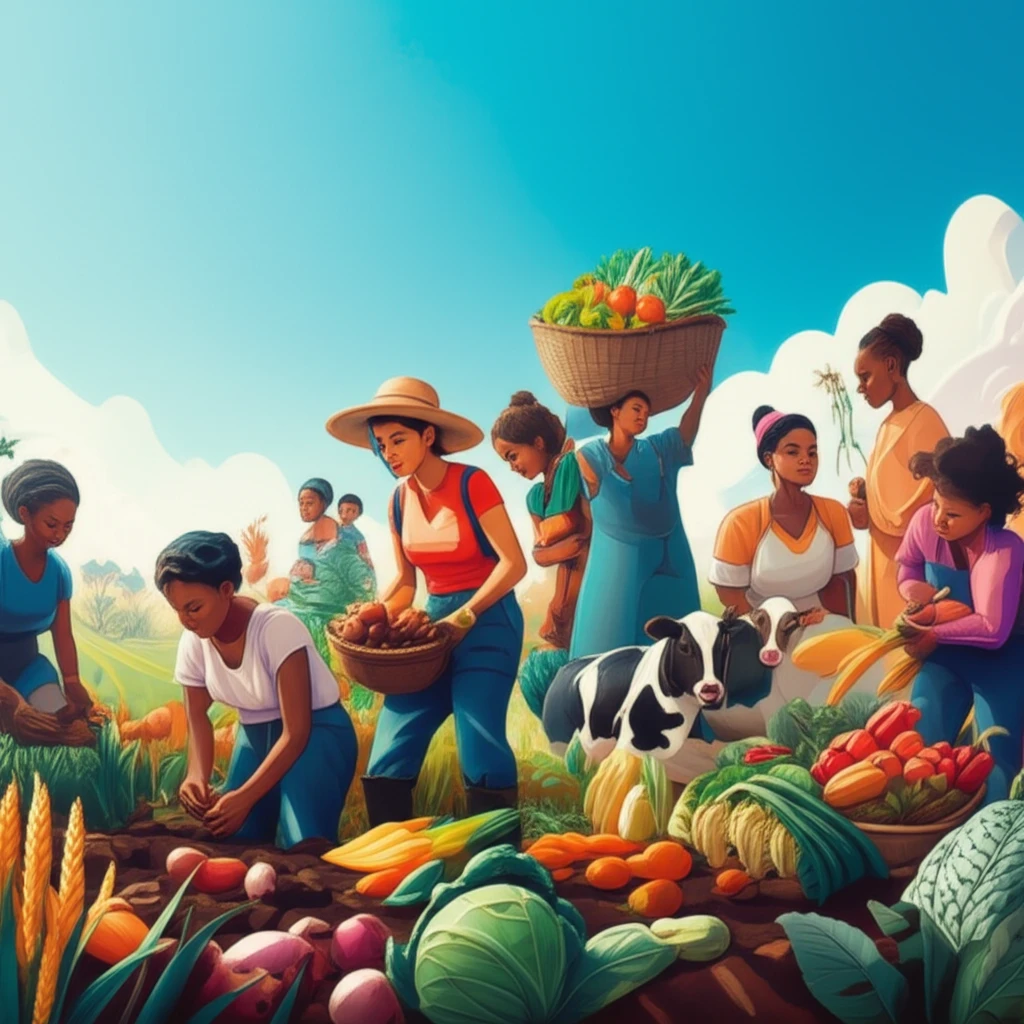
Empowering Women in Agriculture: Unveiling the Impact and Overcoming the Challenges

"From Field to Table: Examining the Vital Role of Women in Agriculture and the Path to a More Equitable Future"
Agriculture, the backbone of global food systems, relies heavily on the contributions of women. Across the world, women play a crucial role in various aspects of farming, from planting and harvesting to livestock rearing and decision-making. Despite their significant contributions, women often face numerous challenges that hinder their full participation and limit their potential to improve their livelihoods and contribute to food security.
This article focuses on the Vavuniya district in Sri Lanka, where agriculture is a major source of livelihood. It examines the extent of women's involvement in agricultural activities, the factors that encourage or discourage their participation, and the constraints they encounter. By understanding these dynamics, we can work towards creating a more equitable and empowering environment for women in agriculture.
The study aims to identify the factors contributing to women's involvement in agriculture, pinpoint the challenges they face, and evaluate their role in decision-making. Through this exploration, we seek to contribute to the development of strategies that support women's empowerment and enhance the sustainability of agricultural practices.
Unpacking Women's Roles in Agriculture: A Deep Dive into Vavuniya District
The research, conducted in the Vavuniya district, provides valuable insights into the reality of women's participation in agriculture. The study selected 60 farm families from both rural and urban areas to gather data on their involvement in various agricultural activities. The study utilized questionnaires to collect data on the women's participation levels, the factors influencing their engagement, and the obstacles they faced in agricultural activities.
- Factors Influencing Participation: In urban areas, factors such as employment status, age, and education levels negatively affect women's participation. In rural areas, age and education level also play a role in limiting women's involvement.
- Obstacles to Involvement: Women face a range of obstacles, including a lack of knowledge and training, family responsibilities, cultural and social barriers, and physical constraints.
- Decision-Making Roles: Women are actively involved in decision-making processes, particularly in rural areas, where they play a significant role in selecting crops, managing livestock, and making other critical decisions.
Charting a Course for Empowerment: Recommendations and Future Directions
The study's findings offer valuable insights for creating a more inclusive and supportive agricultural sector. Enhancing women's access to knowledge, training, and resources is essential. Targeted interventions, such as providing access to education, promoting supportive policies, and addressing cultural and social barriers, can help empower women and enhance their contributions to agriculture. By recognizing and addressing the unique challenges women face, we can build a more equitable and sustainable future for all.