
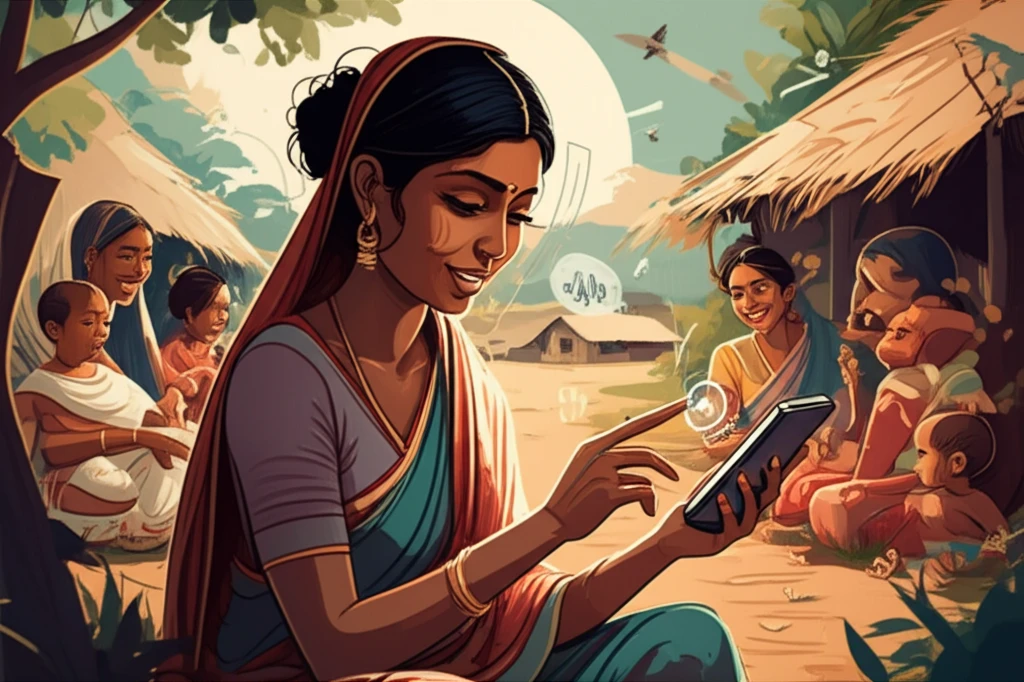
Empowering Mothers and Saving Babies: How Mobile Health is Revolutionizing Healthcare in Tribal India

"Discover how innovative mHealth programs are boosting the skills of frontline health workers, leading to significant improvements in maternal and child health outcomes in remote areas of Gujarat."
In the heart of rural India, where access to healthcare is often a significant challenge, a quiet revolution is underway. It's a revolution driven by mobile technology, specifically mHealth, which is transforming the way healthcare is delivered to mothers and newborns. This innovative approach is not just about providing information; it's about empowering the very people on the ground – the Accredited Social Health Activists (ASHAs) – with the knowledge and skills they need to make a real difference.
India faces persistent challenges in maternal and child health, including high maternal mortality rates and infant mortality rates. Recognizing the critical role of ASHAs, the National Rural Health Mission (NRHM) has enlisted them to provide essential healthcare services in villages. However, the need for ongoing capacity building and training for these health workers remains a significant challenge. This is where mHealth steps in, offering a promising solution to bridge the gap and improve healthcare outcomes.
This article delves into a study conducted in Gujarat, India, that explores the effectiveness of an mHealth intervention called ImTeCHO (Innovative Mobile Health Technology for Community Health Operations). The study's findings highlight the potential of mHealth in improving the knowledge and skills of ASHAs, ultimately leading to better maternal, newborn, and child health (MNCH) care in the tribal areas of the region.
The ImTeCHO Intervention: Enhancing ASHA Skills for Improved MNCH Care
The ImTeCHO intervention is a prime example of how technology can be strategically used to strengthen healthcare systems. This mHealth program equips ASHAs with mobile phone applications that contain health education videos, diagnostic algorithms for identifying complications, and training tools. This comprehensive approach provides ASHAs with readily accessible information and support, empowering them to deliver better care.
- Knowledge Enhancement: ASHAs in the intervention group showed significantly higher knowledge of pregnancy and newborn complications compared to the control group.
- Skill Improvement: The intervention group demonstrated improved skills in measuring newborn temperature, a critical skill for identifying potential health issues.
- Comprehensive Training: The mHealth program includes modules on various aspects of MNCH care, such as antenatal care, newborn care, and exclusive breastfeeding, providing a holistic approach to skill development.
The Future of mHealth in Tribal Healthcare
The success of the ImTeCHO intervention highlights the transformative potential of mHealth in improving healthcare delivery. By leveraging mobile technology, we can empower frontline health workers with the knowledge and skills they need to provide better care to mothers and newborns, especially in areas where healthcare access is a challenge. As mobile technology continues to evolve, mHealth interventions are poised to play an increasingly vital role in creating a healthier future for communities in tribal India and beyond.