
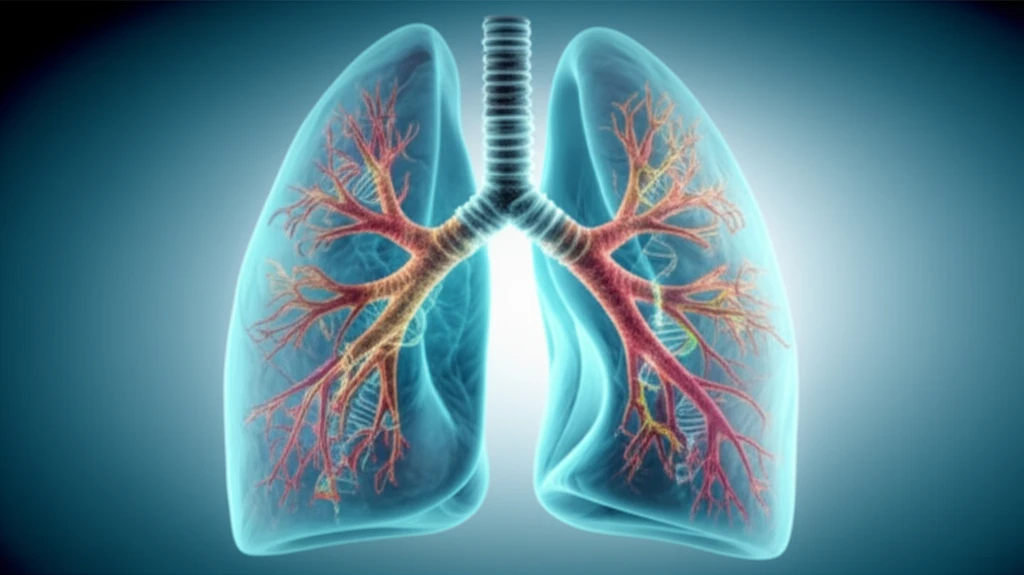
Eluforsen Breakthrough: A Promising New Treatment for F508del Cystic Fibrosis

"Groundbreaking research shows that eluforsen, an antisense oligonucleotide, significantly improves CFTR function in patients with F508del cystic fibrosis, paving the way for more effective therapies."
Cystic fibrosis (CF) is a genetic disorder caused by mutations in the CF transmembrane conductance regulator (CFTR) gene. These mutations lead to the production of a faulty CFTR protein, which disrupts the normal flow of salt and water across cell membranes. This disruption results in the buildup of thick mucus in the lungs, pancreas, and other organs, leading to chronic infections, inflammation, and impaired organ function. One of the most common and challenging mutations is the F508del mutation, present in nearly 90% of CF patients.
Traditionally, CF management has focused on treating the symptoms and complications of the disease. However, recent advances in molecular therapies aim to correct the underlying CFTR defect. Eluforsen, also known as QR-010, represents a novel approach to treating CF. It’s an antisense oligonucleotide designed to bind specifically to the mutated mRNA region around the F508del deletion. By doing so, it helps to restore CFTR protein function in the airway epithelium. This innovative RNA-based therapy offers the potential to address the root cause of the disease.
A new study published in the Journal of Cystic Fibrosis explores the efficacy of eluforsen in improving CFTR function. The study focuses on patients with the F508del mutation and assesses the impact of intranasal eluforsen administration on CFTR biological activity using Nasal Potential Difference (NPD) measurements. The findings provide encouraging insights into the potential of eluforsen as a disease-modifying therapy.
How Does Eluforsen Improve CFTR Function?
The study was designed as a multi-center, exploratory, open-label trial. It included adult participants with CF who were either homozygous or compound heterozygous for the F508del-CFTR mutation. The participants received intranasal eluforsen three times weekly for four weeks. The primary endpoint was the change in total chloride transport (Cl-free+iso) from baseline, measured by NPD.
- Baseline Measurement: The initial electrical potential difference is measured under normal conditions using Ringer's solution.
- Amiloride Perfusion: Amiloride blocks epithelial sodium channels (ENaC), reducing sodium transport and allowing CFTR-mediated chloride transport to be more clearly assessed.
- Chloride-Free Solution: Perfusing the nasal cavity with a chloride-free solution creates an electrochemical gradient, stimulating chloride efflux through CFTR channels.
- Isoproterenol Infusion: Isoproterenol stimulates cyclic adenosine monophosphate (cAMP)-dependent chloride secretion, further activating CFTR.
- ATP Stimulation: Adenosine triphosphate (ATP) is used as a positive control to verify the integrity of the epithelial membrane.
What Does This Mean for Cystic Fibrosis Treatment?
The study provides encouraging evidence that eluforsen can improve CFTR function in patients with the F508del mutation. Specifically, homozygous subjects showed increased total chloride transport, supported by improved sodium transport. These findings suggest that eluforsen could potentially address the underlying defect in CF, rather than just managing the symptoms. This is particularly significant because the F508del mutation is highly prevalent, making eluforsen a potentially widely applicable therapy. While more research is needed to confirm these findings and assess long-term benefits, eluforsen represents a promising new avenue for cystic fibrosis treatment. Further studies using inhaled pulmonary delivery are warranted to confirm these findings, and ensure that those who are homozygous for the F508del-CFTR mutation benefit from therapeutic interventions.