
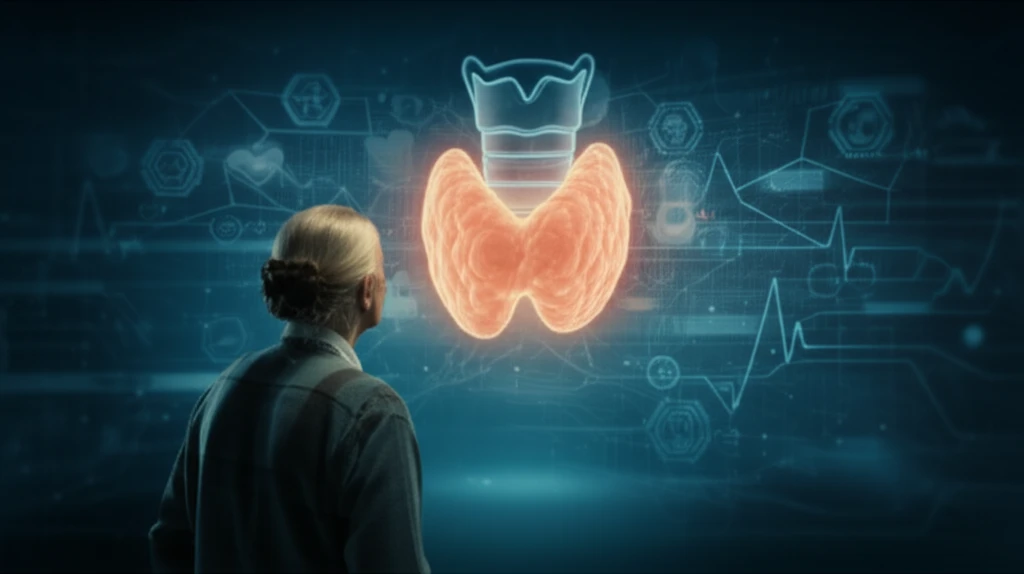
Elderly person contemplating thyroid cancer treatment.

Elderly Thyroid Cancer: Is Surgery the Right Choice?

"New research examines the risks and benefits of thyroid surgery in older adults, revealing key insights for patients and doctors."


Thyroid cancer, while generally boasting excellent survival rates, presents a unique challenge when it comes to elderly patients. Often, these individuals undergo less aggressive treatment, despite potentially having more advanced forms of the disease. This can lead to increased health problems and a lower quality of life.

For years, the go-to treatment for thyroid cancer has been thyroidectomy – surgical removal of the thyroid gland. But is this always the best option for older adults? A new study dives deep into this question, comparing the outcomes of surgery versus other approaches in this specific population.

This analysis seeks to quantify the risks elderly patients face when undergoing thyroidectomy. By examining factors like survival rates, cancer recurrence, and post-surgical complications, the study aims to provide a clearer picture of whether the benefits of surgery outweigh the potential harms for this vulnerable group.

What are the risks of thyroid surgery for seniors?

Elderly person contemplating thyroid cancer treatment.

The study, which combined data from multiple sources, revealed some important insights. Elderly patients undergoing thyroidectomy showed a higher risk of cancer recurrence compared to their younger counterparts. This included both the return of cancer in the lymph nodes and the development of distant metastases (cancer spreading to other parts of the body).

The research also indicated a greater chance of complications following surgery in older adults. While the study didn't delve into the specifics of each complication, this finding underscores the need for careful consideration when recommending surgery for this age group.

  • Increased risk of cancer recurrence.
  • Higher chance of post-operative complications.
  • Reduced overall and disease-free survival.
Perhaps most concerning, the study suggested that elderly patients may experience reduced overall survival and disease-free survival after thyroidectomy. This implies that, for some individuals, surgery might not extend life expectancy or prevent the cancer from returning.

The future of thyroid cancer treatment in older adults

This study highlights the complexities of treating thyroid cancer in the elderly. While surgery remains a viable option for many, it's crucial for doctors and patients to have open discussions about the potential risks and benefits. Further research is needed to explore alternative treatment strategies and develop personalized approaches that maximize well-being and extend survival for this growing population. This includes a careful assessment of individual health status, cancer stage, and patient preferences when making treatment decisions.

About this Article -

This article was crafted using a human-AI hybrid and collaborative approach. AI assisted our team with initial drafting, research insights, identifying key questions, and image generation. Our human editors guided topic selection, defined the angle, structured the content, ensured factual accuracy and relevance, refined the tone, and conducted thorough editing to deliver helpful, high-quality information.See our About page for more information.

Everything You Need To Know

1

What is the primary treatment for thyroid cancer, and what does the research say about its use in elderly patients?

The standard treatment for thyroid cancer is thyroidectomy, which is the surgical removal of the thyroid gland. Research suggests that while thyroidectomy is a viable option, it presents challenges in elderly patients. A recent study reveals a higher risk of cancer recurrence and post-operative complications in this group compared to younger individuals. Furthermore, there is a suggestion that thyroidectomy may lead to reduced overall and disease-free survival for some elderly patients.

2

What are the main risks associated with thyroidectomy in older adults, according to the study?

The study highlights several key risks. Elderly patients undergoing thyroidectomy have a higher risk of cancer recurrence, including cancer in the lymph nodes and distant metastases. They also face a greater chance of post-operative complications. Most concerning, the study indicates that elderly patients might experience reduced overall survival and disease-free survival after thyroidectomy. These findings emphasize the need for careful consideration when deciding on surgery for this age group.

3

Why is personalized care important in treating thyroid cancer in the elderly?

Personalized care is crucial because elderly patients are a diverse group with varying health conditions and preferences. While thyroidectomy remains a treatment option, its risks and benefits need to be carefully weighed for each individual. This involves a thorough assessment of the patient's overall health status, the stage of their cancer, and their personal preferences. Further research is needed to explore alternative treatment strategies to maximize well-being and extend survival for this growing population.

4

How does cancer recurrence manifest in elderly patients after thyroidectomy, and what are the implications?

Cancer recurrence in elderly patients after thyroidectomy can involve the return of cancer in the lymph nodes or the development of distant metastases, where the cancer spreads to other parts of the body. This recurrence implies that the surgery may not have completely eradicated the cancer, potentially leading to further health problems. The implications include the need for additional treatments, such as radiation or chemotherapy, and a reduced chance of long-term survival. It highlights the importance of careful patient selection and post-operative monitoring.

5

What factors should be considered when deciding between thyroidectomy and alternative treatments for elderly thyroid cancer patients?

When deciding between thyroidectomy and alternative treatments, several factors should be carefully considered. These include the elderly patient's overall health status, the specific stage of their thyroid cancer, and their individual preferences. The potential benefits of surgery, such as complete cancer removal, must be weighed against the increased risks of complications, cancer recurrence, and reduced survival rates. Alternative treatments might be considered based on the patient's health. The goal is to develop a personalized approach that maximizes the patient's well-being and extends their survival, based on their unique circumstances and values.

Newsletter Subscribe

Subscribe to get the latest articles and insights directly in your inbox.