
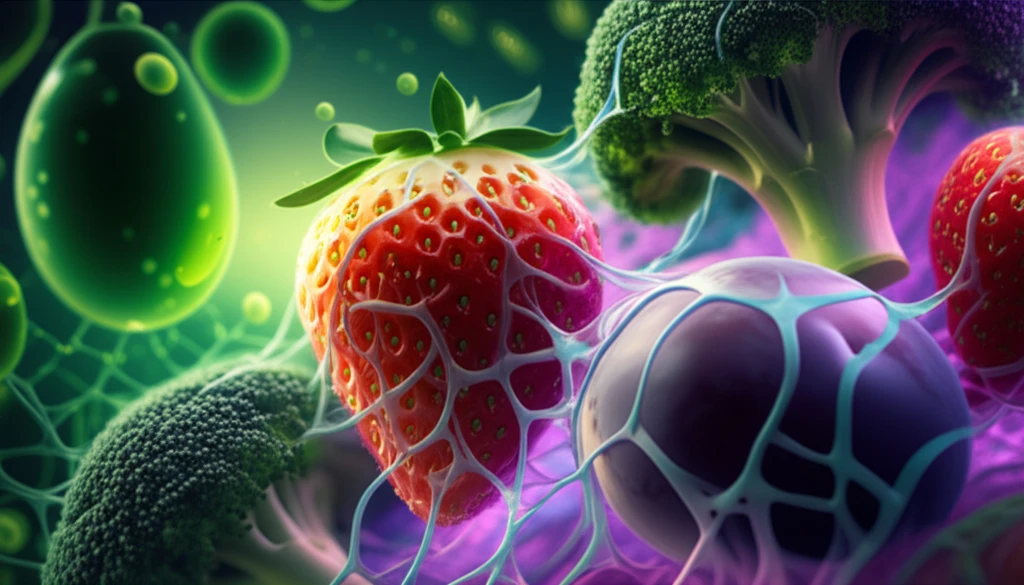
Microscopic nanofiber strands protect fresh produce with vibrant microalgae in the background.

Edible Innovation: How Microalgae Nanofibers are Revolutionizing Food Packaging

"Discover the groundbreaking potential of polyhydroxybutyrate (PHB) nanofibers derived from microalgae in creating sustainable, antibacterial food packaging."


The quest for sustainable and safe food packaging solutions has led researchers to explore innovative materials that can replace traditional plastics. Among the most promising contenders are nanofibers derived from microalgae, particularly polyhydroxybutyrate (PHB), a biodegradable polymer synthesized by organisms like Spirulina. These nanofibers offer a unique combination of environmental friendliness and functional properties, paving the way for a new era in food preservation and packaging.

Traditional food packaging often relies on petrochemical-based polymers, which contribute to environmental pollution and pose potential health risks. In response, scientists have been investigating biopolymers like PHB, which can be produced from renewable resources and degrade naturally. However, harnessing PHB for food packaging requires overcoming challenges related to its mechanical and thermal properties. Nanofibers offer a potential solution, enhancing PHB's performance while maintaining its biodegradability.

This article delves into the exciting research surrounding microalgae-derived PHB nanofibers and their application in food packaging. We will explore how these nanofibers are created, what properties make them suitable for packaging, and how they can be enhanced with antibacterial compounds to extend shelf life and improve food safety. Join us as we uncover the potential of this groundbreaking technology to revolutionize the food industry and create a more sustainable future.

Microalgae Nanofibers: A Sustainable Packaging Solution

Microscopic nanofiber strands protect fresh produce with vibrant microalgae in the background.

Microalgae, such as Spirulina, are single-celled organisms capable of producing a variety of valuable bioproducts, including PHB. PHB is a biodegradable polymer with mechanical and thermal properties similar to conventional plastics, making it an attractive alternative for food packaging. However, PHB can be brittle and may not provide the necessary barrier properties for certain food products. By processing PHB into nanofibers, researchers can enhance its strength, flexibility, and barrier properties, making it a more effective packaging material.

The process of creating PHB nanofibers typically involves electrospinning, a technique that uses an electric field to draw charged threads of polymer solution into fibers. These fibers can then be collected to form a non-woven fabric suitable for packaging. To further enhance the functionality of PHB nanofibers, researchers often incorporate active compounds, such as phenolic compounds, which have antibacterial and antioxidant properties. These compounds can help to extend the shelf life of food products by inhibiting microbial growth and preventing spoilage.

  • Sustainable Source: PHB derived from microalgae offers a renewable alternative to petrochemical-based polymers.
  • Enhanced Properties: Processing PHB into nanofibers improves its strength, flexibility, and barrier properties.
  • Antibacterial Action: Incorporating phenolic compounds provides antibacterial protection, extending food shelf life.
  • Biodegradable: PHB nanofibers are biodegradable, reducing environmental impact.
Studies have shown that PHB nanofibers containing phenolic compounds exhibit significant antibacterial activity against common foodborne pathogens, such as Staphylococcus aureus. These nanofibers can also provide a barrier against moisture and oxygen, helping to prevent spoilage and maintain food quality. The combination of biodegradability, enhanced properties, and antibacterial action makes microalgae-derived PHB nanofibers a promising solution for sustainable and safe food packaging.

The Future of Food Packaging is Green

Microalgae-derived PHB nanofibers represent a significant step forward in the development of sustainable and safe food packaging solutions. By harnessing the power of these microscopic organisms, researchers are creating materials that not only protect food but also reduce environmental impact. As consumer demand for eco-friendly products continues to grow, microalgae nanofibers are poised to play a key role in shaping the future of the food industry.

Further research is needed to optimize the production and application of PHB nanofibers for various food products. However, the potential benefits are clear: reduced reliance on fossil fuels, decreased waste, and improved food safety. With ongoing innovation and investment, microalgae nanofibers could become a mainstream packaging material, transforming the way we package and preserve food.

Embracing these innovative, natural solutions paves the way for a food industry that’s not only more efficient and safe but also deeply committed to the health of our planet. As we move forward, the humble microalga may just be one of our most powerful allies in creating a sustainable future for food.

About this Article -

This article was crafted using a human-AI hybrid and collaborative approach. AI assisted our team with initial drafting, research insights, identifying key questions, and image generation. Our human editors guided topic selection, defined the angle, structured the content, ensured factual accuracy and relevance, refined the tone, and conducted thorough editing to deliver helpful, high-quality information.See our About page for more information.

This article is based on research published under:

DOI-LINK: 10.1016/j.ijbiomac.2018.03.002, Alternate LINK

Title: Polyhydroxybutyrate And Phenolic Compounds Microalgae Electrospun Nanofibers: A Novel Nanomaterial With Antibacterial Activity

Subject: Molecular Biology

Journal: International Journal of Biological Macromolecules

Publisher: Elsevier BV

Authors: Suelen Goettems Kuntzler, Ana Claudia Araujo De Almeida, Jorge Alberto Vieira Costa, Michele Greque De Morais

Published: 2018-07-01

Everything You Need To Know

1

How are polyhydroxybutyrate nanofibers actually created from microalgae, and what benefits does this process offer?

Microalgae, specifically types like Spirulina, naturally produce polyhydroxybutyrate, or PHB. This PHB can then be processed into nanofibers using techniques like electrospinning. This process enhances the PHB's mechanical properties and makes it suitable for creating more durable and effective food packaging. The enhanced nanofibers offer improved strength, flexibility, and barrier properties compared to standard PHB.

2

How do polyhydroxybutyrate nanofibers extend the shelf life of food, and what specific properties contribute to this?

Polyhydroxybutyrate nanofibers offer a unique advantage by incorporating active compounds such as phenolic compounds. These compounds provide antibacterial and antioxidant properties, significantly extending the shelf life of food products. By inhibiting microbial growth and preventing spoilage, polyhydroxybutyrate nanofibers ensure that food stays fresher for longer periods. This approach aligns with the growing demand for packaging solutions that actively contribute to food preservation.

3

What are the environmental benefits of using polyhydroxybutyrate nanofibers in food packaging compared to traditional plastics?

Traditional food packaging often relies on petrochemical-based polymers, contributing to environmental pollution and potential health risks. Polyhydroxybutyrate nanofibers, derived from microalgae, present a biodegradable alternative. These nanofibers break down naturally, reducing environmental impact compared to conventional plastics. This shift towards using polyhydroxybutyrate nanofibers addresses concerns related to sustainability and promotes a circular economy by minimizing waste.

4

What are the main advantages of using polyhydroxybutyrate nanofibers in food packaging?

The advantages of using polyhydroxybutyrate nanofibers in food packaging include sustainable sourcing, enhanced material properties, antibacterial action, and biodegradability. Polyhydroxybutyrate derived from microalgae offers a renewable alternative to petrochemical-based polymers, reducing reliance on fossil fuels. Processing Polyhydroxybutyrate into nanofibers improves its strength, flexibility, and barrier properties, making it more effective for packaging applications. The incorporation of phenolic compounds provides antibacterial protection, extending food shelf life and enhancing food safety. Furthermore, Polyhydroxybutyrate nanofibers are biodegradable, reducing environmental impact and promoting a more sustainable approach to packaging.

5

What other factors such as environmental impact, regulation compliance, types of microalgae are important to consider when evaluating the potential of polyhydroxybutyrate nanofibers?

While the focus is on polyhydroxybutyrate nanofibers, it's important to consider other related aspects. For example, life cycle assessments can provide a comprehensive analysis of the environmental impacts associated with producing and using polyhydroxybutyrate nanofibers, from resource extraction to end-of-life disposal. Additionally, research into different types of microalgae and optimization of PHB production processes can further enhance the sustainability and cost-effectiveness of using polyhydroxybutyrate nanofibers in food packaging. Also, the regulatory landscape surrounding biodegradable food packaging is evolving. Compliance with standards and certifications related to biodegradability and food safety is crucial for widespread adoption of polyhydroxybutyrate nanofibers.

Newsletter Subscribe

Subscribe to get the latest articles and insights directly in your inbox.