
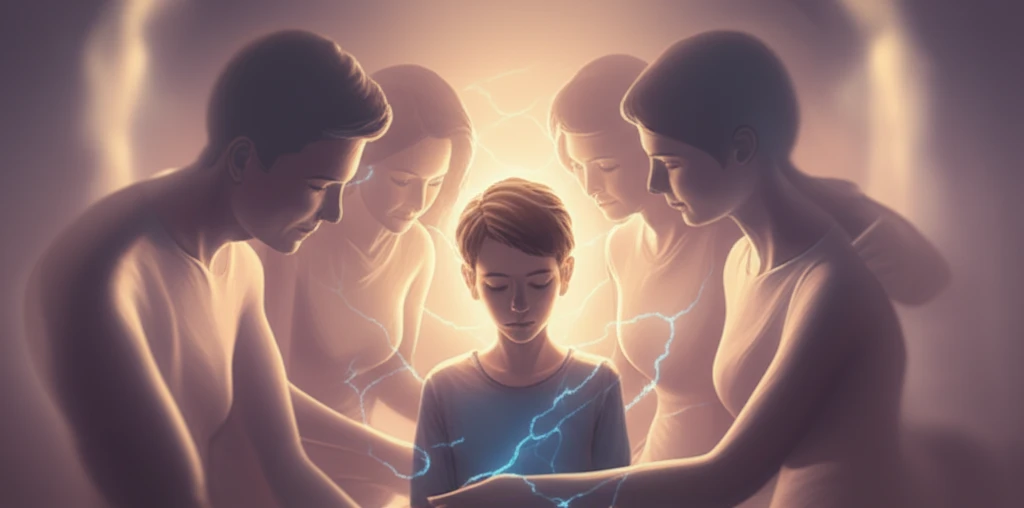
Supportive family surrounding an adolescent during ECT

ECT and Teens: What Parents Need to Know About Electroconvulsive Therapy

"A groundbreaking study explores parental experiences with adolescent electroconvulsive therapy (ECT), revealing critical insights for families and healthcare professionals."


Electroconvulsive therapy (ECT) is a treatment that often stirs strong feelings, especially when it comes to young people. In simple terms, ECT involves sending a small, controlled electrical pulse to the brain to trigger a brief seizure. This can help to quickly relieve symptoms of certain severe mental health conditions, especially when other treatments haven't worked. Despite its potential benefits, many people have concerns about ECT, particularly its possible effects on the developing brains of children and teenagers.

Recognizing these concerns, a recent study delved into the experiences of parents whose adolescents underwent ECT for severe mental illnesses. The study aimed to understand parents' perspectives, from their initial reactions to the therapy to their overall satisfaction with the outcomes. This research sheds light on the parental decision-making process, offering valuable insights for other families facing similar challenges.

The information we are looking into comes from a study titled 'A qualitative study of experience of parents of adolescents who received ECT,' conducted by Sandeep Grover, Natarajan Varadharajan, and Ajit Avasthi at the Department of Psychiatry, Post Graduate Institute of Medical Education and Research in Chandigarh, India. Their work provides a crucial perspective on a complex and often misunderstood treatment option.

Why Is ECT Considered for Adolescents?

Supportive family surrounding an adolescent during ECT

In cases of severe mental illness, ECT can be considered. Parents in the study indicated that ECT was typically considered only after medications and other treatments had proven ineffective. These adolescents often experienced extreme symptoms, such as:

  • Severe depression with psychotic symptoms
  • Mania with psychotic symptoms
  • Catatonia
  • Schizophrenia
  • Schizoaffective disorder

Key signs that lead families and doctors to consider ECT include a lack of response to medications, difficulty managing the adolescent's behavior, and the severity of the symptoms impacting daily life.
Before starting ECT, doctors thoroughly explained the procedure to the parents, providing information booklets and answering questions. While some parents initially felt scared or conflicted, they generally reported feeling supported and not coerced into making a decision. This open communication helped ease their concerns and allowed them to make informed choices about their child's treatment.

Making Informed Decisions About ECT

Understanding the experiences of other parents can be incredibly helpful when considering ECT for your adolescent. By weighing the potential benefits and risks, and by engaging in open communication with healthcare professionals, families can make informed decisions that prioritize their child's well-being. The experiences highlighted in this study underscore the importance of thorough education, shared decision-making, and a supportive treatment environment.

About this Article -

This article was crafted using a human-AI hybrid and collaborative approach. AI assisted our team with initial drafting, research insights, identifying key questions, and image generation. Our human editors guided topic selection, defined the angle, structured the content, ensured factual accuracy and relevance, refined the tone, and conducted thorough editing to deliver helpful, high-quality information.See our About page for more information.

Everything You Need To Know

1

What is Electroconvulsive Therapy (ECT), and how does it work?

Electroconvulsive Therapy (ECT) is a medical treatment involving the administration of a small, controlled electrical pulse to the brain, inducing a brief seizure. This process is designed to provide rapid relief from severe mental health conditions. ECT is typically considered when other treatments, such as medications, have failed to provide adequate relief. The electrical stimulation is believed to affect brain chemistry, helping to alleviate symptoms of conditions like severe depression, mania, catatonia, schizophrenia, or schizoaffective disorder. The goal of ECT is to offer a quick resolution when the severity of the adolescent's condition necessitates immediate intervention.

2

When is ECT typically considered for adolescents, and what conditions might it treat?

ECT is generally considered for adolescents when other treatments, including medications, have proven ineffective in managing severe mental health conditions. The decision to use ECT often arises when the adolescent experiences extreme symptoms that significantly impact their daily life. Specific conditions for which ECT might be considered include severe depression with psychotic symptoms, mania with psychotic symptoms, catatonia, schizophrenia, and schizoaffective disorder. In each of these cases, the goal is to provide rapid symptom relief, particularly if the adolescent's condition has not responded to other available treatments.

3

What are some key signs that might lead families and doctors to consider ECT?

Several key signs can prompt families and doctors to consider ECT for adolescents. A primary indicator is the lack of response to medications and other treatments, which means the symptoms persist despite previous interventions. Difficulty in managing the adolescent's behavior is another significant factor, as severe symptoms may make it challenging for the adolescent to function in their daily life. The severity of the symptoms impacting daily life serves as a critical determinant. If the adolescent's condition is severe enough to cause substantial disruption, ECT may be considered as a method of intervention, especially when other methods prove insufficient.

4

How do parents typically feel about ECT, and what support do they receive?

Parents often have a range of initial feelings about ECT, which may include fear or conflict. The study highlighted that although these initial reactions are common, parents generally report feeling supported and not coerced into making a decision. Healthcare professionals typically explain the ECT procedure thoroughly to the parents, providing detailed information through booklets and answering any questions the parents may have. This open communication helps alleviate parents' concerns and enables them to make informed decisions about their child's treatment. The supportive environment and comprehensive explanations play a vital role in helping parents navigate the complexities of adolescent ECT.

5

What are the key takeaways from the study on parental experiences with adolescent ECT?

The study, 'A qualitative study of experience of parents of adolescents who received ECT,' offers crucial insights. The research underscores the importance of thorough education, shared decision-making, and a supportive treatment environment. The findings highlight how parents can benefit from understanding the experiences of other parents facing similar situations. By weighing the potential benefits and risks of ECT, and by engaging in open communication with healthcare professionals, families can make well-informed decisions. This process is especially important when considering that ECT is often reserved for severe cases where other treatments have failed, emphasizing the necessity of careful consideration and supportive care.

Newsletter Subscribe

Subscribe to get the latest articles and insights directly in your inbox.