
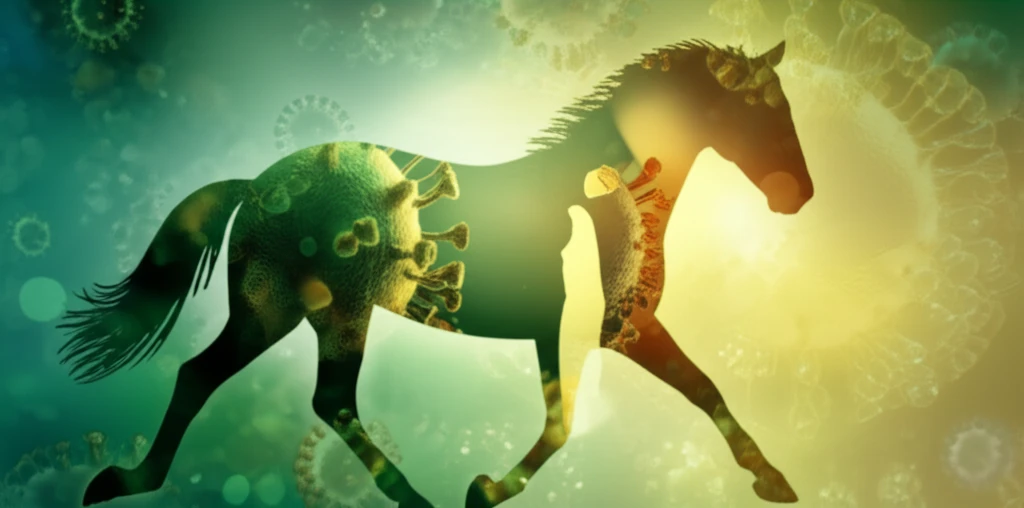
Ebola's New Defender? Equine Immunoglobulin Shows Promise

"Innovative research highlights how equine-origin immunoglobulin fragments could revolutionize Ebola treatment, offering hope even in advanced stages of the disease."
Ebola virus (EBOV) continues to pose a significant threat to global health, marked by severe hemorrhagic fever and alarmingly high fatality rates, often reaching 90%. The urgency for effective treatments is clear, especially given the limitations of current therapies. While monoclonal antibody (mAb)-based products have shown promise, their high cost and limited availability hinder widespread use, particularly in regions where Ebola is most prevalent.
Recent research has explored an alternative approach: utilizing polyclonal immunoglobulin fragments derived from horses. This method offers potential advantages in terms of cost, scalability, and ease of production. The study focuses on how these equine-origin fragments could neutralize Ebola, even in advanced stages of the disease, providing a more accessible therapeutic option.
This article examines the findings of a compelling study that investigates the effectiveness of equine-origin immunoglobulin fragments in combating Ebola. We'll delve into how these fragments were developed, their mechanism of action, and the promising results observed in nonhuman primates, offering a beacon of hope for a more accessible and effective Ebola treatment strategy.
Equine Immunoglobulin: A New Hope for Ebola Treatment?
Researchers have successfully generated Ebola-specific polyclonal immunoglobulin fragments, F(ab')2, from horses hyperimmunized with an Ebola vaccine. These F(ab')2 fragments demonstrated potent neutralizing capabilities against both West and Central African strains of EBOV in laboratory settings, suggesting a strong potential for therapeutic application.
- Cost-Effectiveness: Compared to monoclonal antibodies, equine-derived immunoglobulin fragments offer a more affordable production pathway, making treatment more accessible in resource-limited settings.
- Scalability: Horses can produce large quantities of antisera, allowing for the generation of substantial treatment doses, crucial for combating widespread outbreaks.
- Efficacy in Advanced Stages: The study demonstrated that F(ab')2 treatment remained effective even when initiated in symptomatic animals, suggesting a broader therapeutic window.
Toward Accessible Ebola Treatment: The Future of Equine Immunoglobulin
The research presented builds a strong case for further exploration and development of equine-origin immunoglobulin fragments as a therapeutic intervention for Ebola. Its potential for cost-effectiveness, scalability, and efficacy in advanced disease stages makes it a promising candidate for addressing the limitations of current treatment options.
While further studies are needed to fully understand the long-term effects and optimal usage of F(ab')2 treatment, the findings provide a compelling rationale for accelerating clinical trials. The implementation of this approach could significantly impact the management of Ebola outbreaks, particularly in regions with limited resources.
As Ebola remains a persistent threat, the development of accessible and effective treatments is paramount. Equine immunoglobulin fragments represent a significant step forward in this endeavor, offering hope for improved outcomes and a more equitable approach to combating this devastating disease.