
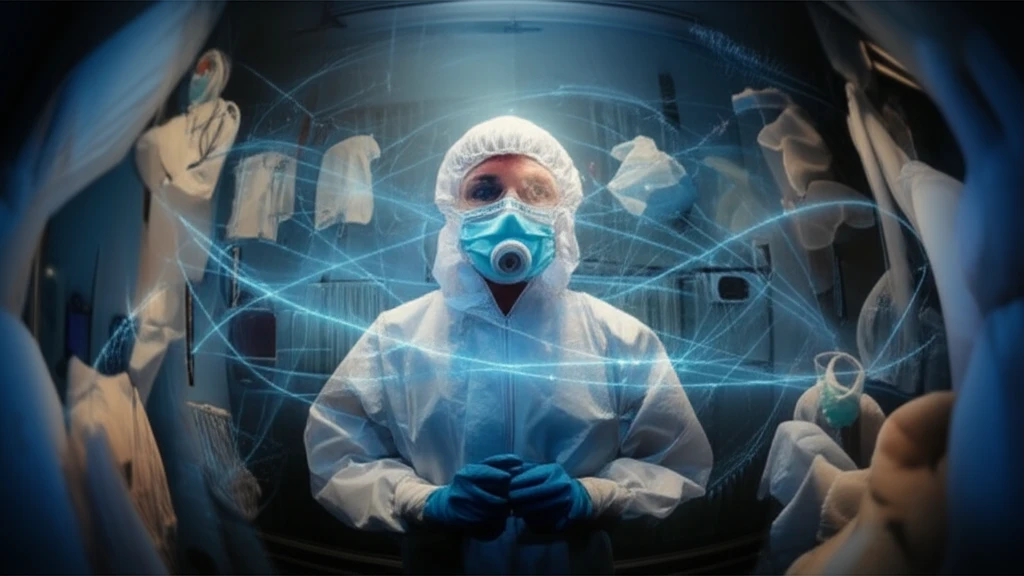
Healthcare worker surrounded by protective gear

Ebola to COVID: Lessons in Healthcare Preparedness for the Next Pandemic

"Healthcare workers share what they've learned about contamination and preventing disease transmission."


The world is interconnected, so public health crises can spread rapidly. Stories from healthcare workers highlight the critical need to learn from past events, like the Ebola outbreak, to prepare for future pandemics.

Several studies have highlighted essential lessons, particularly in preventing contamination and ensuring the safety of healthcare personnel. These lessons are vital for developing effective strategies to combat new threats like COVID-19 and beyond.

The insights of experts guide efforts to implement proactive measures and strategies to strengthen healthcare systems globally. Improving our preparedness can save lives and reduce the impact of future health crises.

Understanding Contamination Risks in Healthcare

Healthcare worker surrounded by protective gear

A study by Tomas et al. in JAMA Internal Medicine revealed how easily healthcare personnel can become contaminated when removing personal protective equipment (PPE). The findings underscore the importance of rigorous training and protocols to minimize exposure.

Effective PPE removal is not just about taking off the gear; it requires a precise, step-by-step approach to prevent contact with contaminated surfaces. Training simulations, like those described by Clay et al. in the Journal of Hospital Infection, are essential for reinforcing these techniques.

  • Proper Hand Hygiene: Thorough handwashing before and after PPE removal.
  • Buddy System: Having a trained observer to guide and monitor the removal process.
  • Designated Zones: Establishing clear contamination and clean zones.
  • Regular Drills: Conducting routine practice sessions to maintain proficiency.
These measures collectively help to create a safer environment for healthcare workers. By understanding the risks and practicing effective techniques, we can better protect those on the front lines. Moreover, healthcare settings can evolve the culture to prioritize safety.

The Importance of Continuing Research

As we prepare for future health challenges, ongoing research remains essential. Studies on personal protective equipment, transmission dynamics, and training methods are vital for continuous improvement. By staying informed and proactive, the global community can better protect against the next pandemic.

About this Article -

This article was crafted using a human-AI hybrid and collaborative approach. AI assisted our team with initial drafting, research insights, identifying key questions, and image generation. Our human editors guided topic selection, defined the angle, structured the content, ensured factual accuracy and relevance, refined the tone, and conducted thorough editing to deliver helpful, high-quality information.See our About page for more information.

Everything You Need To Know

1

Why is Personal Protective Equipment (PPE) removal so important?

The research from Tomas et al. published in *JAMA Internal Medicine* highlights that healthcare personnel can be easily contaminated during the removal of Personal Protective Equipment (PPE). This emphasizes the need for meticulous training and strict protocols to reduce exposure to infectious agents. If these steps are not properly executed, healthcare workers are put at risk. This also includes proper hand hygiene, the buddy system, designated zones, and regular drills. These practices collectively enhance the safety of healthcare workers.

2

What is the importance of hand hygiene in the context of healthcare safety?

Proper Hand Hygiene is one of the essential measures for preventing contamination in healthcare settings. Thorough handwashing should be performed before and after removing Personal Protective Equipment (PPE). This simple yet effective step helps to eliminate potential pathogens, safeguarding both the healthcare worker and the surrounding environment from contamination. Regular and correct hand hygiene practices are fundamental to infection control strategies.

3

What is the role of the 'Buddy System' in preventing contamination?

The 'Buddy System' involves having a trained observer monitor and guide healthcare personnel during the removal of Personal Protective Equipment (PPE). This system is crucial because it provides an additional layer of safety by ensuring the removal process is performed correctly, according to established protocols. The observer helps identify any potential breaches in technique, like the improper handling of contaminated surfaces. By reducing the risk of self-contamination, the buddy system helps to protect the health and safety of the healthcare worker.

4

How do designated zones contribute to healthcare safety?

Designated zones are areas within a healthcare setting that are clearly marked and separated into contamination and clean zones. These zones are integral to preventing the spread of infectious agents. All activities and equipment within the contamination zone are considered potentially contaminated, requiring the healthcare worker to handle them with care. The clean zone is a safe area where healthcare personnel remove Personal Protective Equipment (PPE) and do not have to worry about coming into contact with contaminates. This meticulous segregation helps to reduce the risk of infection and protects healthcare personnel.

5

What is the significance of regular drills in healthcare settings?

Regular drills, which are mentioned in the context of training simulations described by Clay et al. in the *Journal of Hospital Infection*, are routine practice sessions designed to maintain proficiency in removing Personal Protective Equipment (PPE). These drills help healthcare workers to internalize proper techniques. Through repetition, they reinforce protocols and promote a culture of safety. This helps reduce the risk of contamination and improve preparedness for future outbreaks.

Newsletter Subscribe

Subscribe to get the latest articles and insights directly in your inbox.