
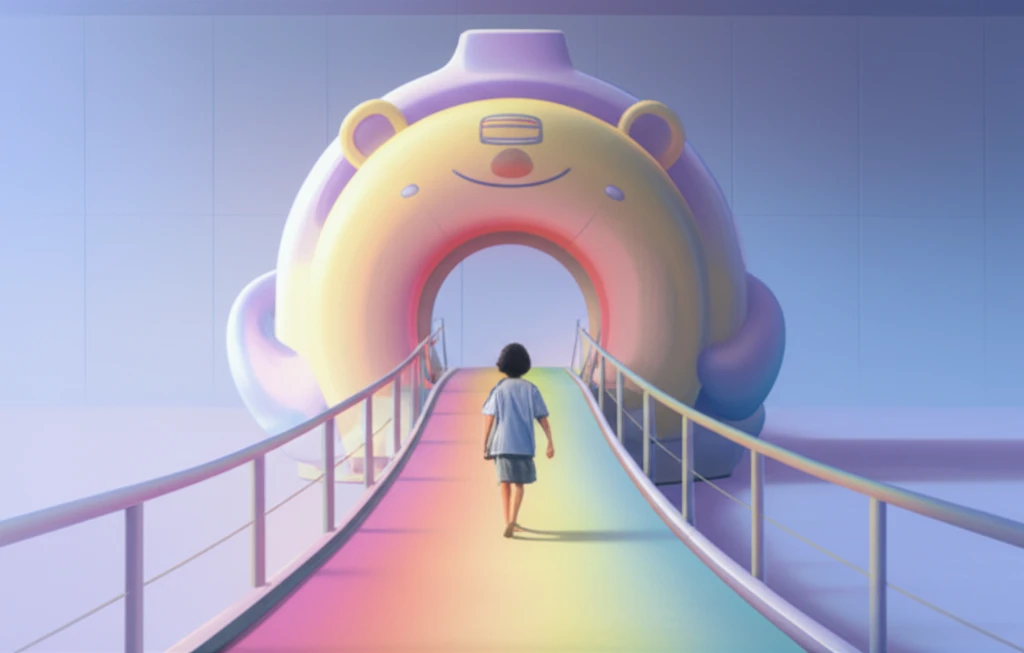
Easing MRI Anxiety in Kids: A Simple Scale Makes a Big Difference

"Discover how a modified anxiety scale can predict and improve MRI success in children, reducing the need for anesthesia."
Magnetic Resonance Imaging (MRI) is a vital diagnostic tool, but for children, it often means sedation or anesthesia. This is because the confined spaces, loud noises, and the need to stay perfectly still can trigger anxiety, making it hard to complete the scan. But what if there was a way to predict which kids could handle an MRI without needing to be put under?
A growing trend focuses on non-drug strategies to help children through MRIs. Things like MRI-compatible video goggles and having child life specialists (CCLSs) on hand have shown promise. These methods create a more comfortable environment, but they don't always work for children with high anxiety levels.
That's where the modified Yale Preoperative Anxiety Scale (mYPAS) comes in. This quick assessment tool helps identify children who are likely to benefit from preparation and support, potentially avoiding the need for anesthesia. This article explores how mYPAS works and why it could be a game-changer for pediatric MRI.
mYPAS: Your MRI Success Predictor
The modified Yale Preoperative Anxiety Scale (mYPAS) is a simple, observational tool used to assess a child's anxiety level before a medical procedure. Trained CCLSs use it to evaluate five key areas:
- Activity: How active or restless the child is.
- Vocalizations: What the child is saying – are they expressing fear or distress?
- Emotional Expressivity: How the child is showing their feelings through facial expressions and body language.
- State of Apparent Arousal: How alert and agitated the child seems.
- Use of a Parent: How much the child relies on their parent for comfort and reassurance.
The Future of Calmer Scans
The mYPAS offers a quick and effective way to screen children before their MRI. By identifying those at higher risk of anxiety, hospitals can tailor their approach, providing extra support and preparation to those who need it most. This means fewer children needing anesthesia, a safer and more comfortable experience for everyone, and more efficient use of medical resources.
While this study highlights the benefits of mYPAS, further research could explore even better ways to support anxious children. This might involve testing different mYPAS thresholds or using technology like virtual reality to prepare children for the MRI experience remotely.
The goal is to make MRI scans less stressful for children and their families. By using tools like mYPAS and embracing innovative preparation techniques, healthcare providers can create a more positive and successful imaging experience.