
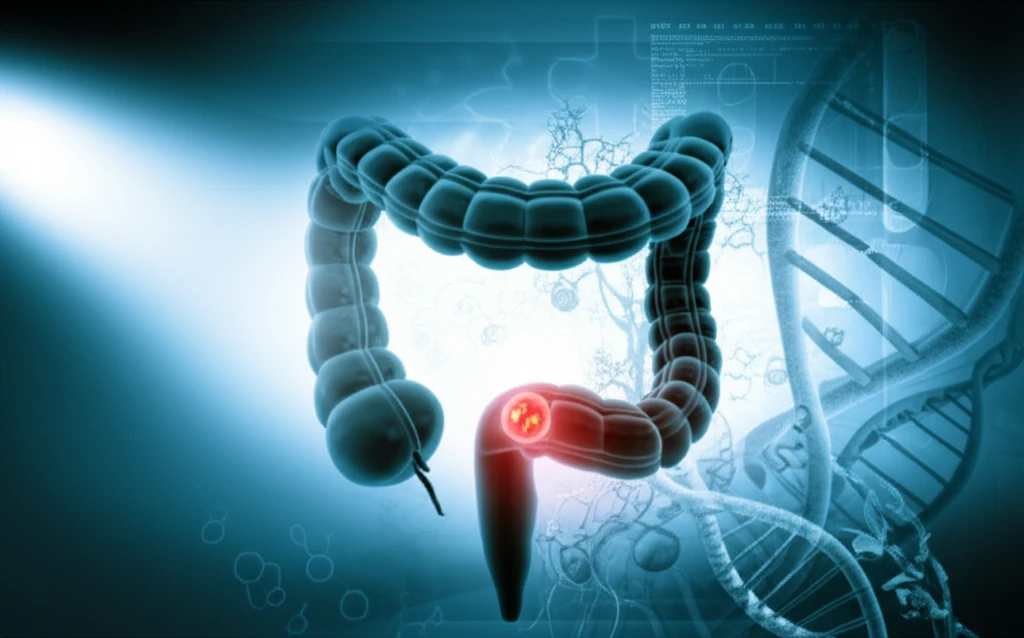
Illustration depicting early stage colon cancer and the importance of early detection.

Early Stage Colon Cancer: Your Comprehensive Guide to Understanding, Prevention, and Treatment

"Decoding Early Detection and Treatment: A Guide to Staying Informed and Proactive"


Colon cancer, though often a silent threat, is one of the most preventable and treatable forms of cancer when detected early. For many, the words "cancer" evoke fear, but with the advancements in medical science and a proactive approach to health, the narrative is shifting. This article delves into the specifics of early stage colon cancer, arming you with knowledge and empowering you to take control of your well-being.

Early stage colon cancer refers to the initial phases of the disease, where the cancer is confined to the colon or rectum and has not yet spread to other parts of the body. This stage is critical because the chances of successful treatment and long-term survival are significantly higher. The information provided here is for educational purposes and should not substitute professional medical advice.

This comprehensive guide aims to clarify the complexities of early stage colon cancer, covering its detection, diagnosis, treatment options, and the importance of lifestyle choices in prevention. Whether you're looking to understand your risk factors, learn about screening methods, or support a loved one, this guide provides the essential information in a clear, accessible format.

Understanding Early Stage Colon Cancer: What You Need to Know

Illustration depicting early stage colon cancer and the importance of early detection.

Early stage colon cancer is characterized by the initial development and growth of cancerous cells within the lining of the colon or rectum. This stage is often asymptomatic, meaning there are no noticeable symptoms, which underscores the importance of regular screenings and check-ups. The primary goal at this stage is to detect the cancer before it spreads to other parts of the body, such as lymph nodes or distant organs. Doing so greatly increases the chances of successful treatment and recovery.

The TNM staging system (Tumor, Node, Metastasis) is frequently used to describe the extent of colon cancer. In early stages (Stages 0 and I), the cancer is either confined to the innermost lining of the colon or has minimally invaded the surrounding tissues. Accurate staging is important for guiding treatment decisions and determining the best course of action for each individual. The earlier the stage, the better the prognosis, emphasizing the importance of proactive healthcare.

  • Stage 0 (Carcinoma in Situ): Cancer cells are found only in the innermost lining of the colon (mucosa).
  • Stage I: Cancer has grown into the inner layers of the colon wall but has not spread to the lymph nodes or other parts of the body.
  • Stage II: Cancer has grown deeper into the colon wall, but no lymph node involvement.
  • Stage III: Cancer has spread to nearby lymph nodes, but not distant sites.
  • Stage IV: Cancer has spread to distant sites, such as the liver or lungs.
Early detection often involves the removal of polyps during colonoscopies. These polyps can be precancerous growths that, if left untreated, can develop into cancer over time. Regular screenings, coupled with a healthy lifestyle, can significantly lower your risk of developing colon cancer.

Taking Action: Protecting Your Health and Well-Being

Early stage colon cancer is not a death sentence; it's a call to action. By staying informed, prioritizing regular screenings, and embracing a healthy lifestyle, you empower yourself to proactively protect your health. Remember, early detection and intervention offer the best chance for successful treatment and a fulfilling life. Consult with your healthcare provider to determine the best course of action for your individual needs and to discuss any concerns you may have.

About this Article -

This article was crafted using a human-AI hybrid and collaborative approach. AI assisted our team with initial drafting, research insights, identifying key questions, and image generation. Our human editors guided topic selection, defined the angle, structured the content, ensured factual accuracy and relevance, refined the tone, and conducted thorough editing to deliver helpful, high-quality information.See our About page for more information.

This article is based on research published under:

DOI-LINK: 10.3748/wjg.v19.i46.8468, Alternate LINK

Title: Early Stage Colon Cancer

Subject: Gastroenterology

Journal: World Journal of Gastroenterology

Publisher: Baishideng Publishing Group Inc.

Authors: Hugh James Freeman

Published: 2013-01-01

Everything You Need To Know

1

What exactly defines early stage colon cancer, and why is it so critical to identify it early?

Early stage colon cancer refers to the initial phases where cancerous cells are confined to the colon or rectum, without spreading to other parts of the body. Early detection is critical because treatment success and long-term survival rates are significantly higher at this stage. The goal is to identify and treat the cancer before it spreads to lymph nodes or distant organs. Regular screenings play a pivotal role in achieving this early detection.

2

How does the TNM staging system help in understanding the progression of colon cancer?

The TNM staging system (Tumor, Node, Metastasis) is used to describe the extent of colon cancer. 'T' refers to the size and extent of the primary tumor, 'N' indicates whether the cancer has spread to nearby lymph nodes, and 'M' signifies whether the cancer has metastasized to distant sites. In early stages, specifically Stages 0 and I, the cancer is confined to the innermost lining of the colon or has minimally invaded the surrounding tissues. Accurate staging helps guide treatment decisions and determine the best course of action.

3

What are the specific characteristics of Stage 0 and Stage I colon cancer according to the TNM staging system?

In Stage 0, also known as Carcinoma in Situ, cancer cells are found only in the innermost lining of the colon (mucosa). In Stage I, the cancer has grown into the inner layers of the colon wall but has not spread to the lymph nodes or other parts of the body. The distinction lies in the depth of invasion within the colon wall, with Stage I indicating a slightly more advanced stage than Stage 0, but still localized and highly treatable.

4

Besides early detection, what role do lifestyle choices play in preventing colon cancer, and how do regular screenings fit into a proactive health strategy?

Lifestyle choices, such as maintaining a healthy diet, engaging in regular physical activity, and avoiding tobacco use, play a significant role in preventing colon cancer. Regular screenings, like colonoscopies, can detect precancerous polyps, which can be removed before they develop into cancer. Combining a healthy lifestyle with regular screenings significantly lowers the risk of developing colon cancer. This proactive approach empowers individuals to take control of their health and well-being.

5

If early stage colon cancer is often asymptomatic, what specific screening methods are available, and how frequently should they be performed to ensure timely detection?

Since early stage colon cancer is often asymptomatic, regular screenings are crucial for detection. Colonoscopies are a primary screening method, allowing for the detection and removal of precancerous polyps. The frequency of screenings depends on individual risk factors, such as family history and age. Consulting with a healthcare provider is essential to determine the most appropriate screening schedule. Other screening methods include stool-based tests, such as fecal occult blood tests (FOBT) and stool DNA tests, but colonoscopies are generally considered the gold standard for their ability to both detect and remove polyps during the same procedure.

Newsletter Subscribe

Subscribe to get the latest articles and insights directly in your inbox.