
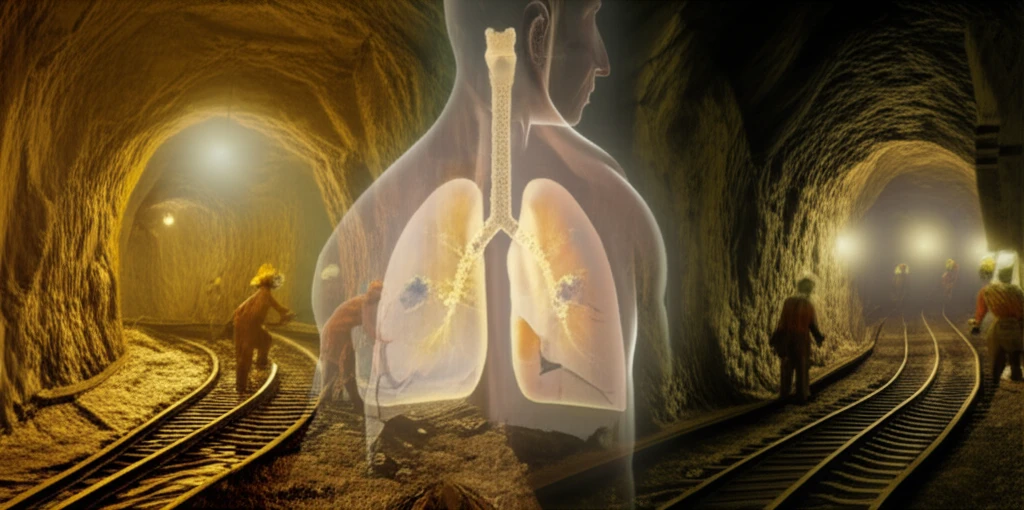
Dust to Dust: Unraveling the Tuberculosis, Silicosis, and Mining Connection

"How decades of research reveal a dangerous legacy in South African gold mines and what it means for global health."
For nearly a century, South African gold mining operated under a system characterized by racial segregation and migrant labor. This framework profoundly shaped the health and working conditions of its employees, leading to unique challenges that continue to resonate today.
Early in the 20th century, regulations mandated regular medical examinations for miners, focusing on detecting silicosis and tuberculosis. Compensation laws were enacted for these conditions, including postmortem benefits based on autopsy findings. This system, while controversial, established a long-standing precedent for addressing occupational health hazards in the mining sector.
The Pathology Automation System (PATHAUT), a digitized database initiated in 1975, contains over 100,000 lung autopsies and has become an invaluable resource for epidemiological studies. PATHAUT provides critical insights into disease trends within the mining population, allowing researchers to track and analyze the impact of various health interventions and occupational exposures.
The Triple Threat: HIV, Tuberculosis, and Silicosis
A recent study leveraging PATHAUT data highlights the persistent challenge of pulmonary tuberculosis in South African gold miners over the past 40 years. The research underscores the devastating synergy between HIV infection, tuberculosis, and silicosis, creating a 'triple epidemic' that disproportionately affects miners.
- The proportion of autopsies showing tuberculosis in Black miners surged tenfold between 1975-1979 and 2005-2009, even after adjusting for age, service duration, and silicosis.
- The study attributes the recent decline in tuberculosis cases (2010–2014) to the expansion of antiretroviral treatment programs within the mining industry and state clinical facilities.
- The researchers note that the reduction in mining jobs may contribute to a 'healthy worker effect,' potentially shifting the burden of tuberculosis to former miners.
A Renewed Focus on Prevention
The findings arrive at a crucial moment, as lung disease in the South African mining sector is once again in the spotlight. Recent civil suits concerning silicosis and tuberculosis have garnered significant public attention, culminating in a landmark class action settlement of approximately US$400 million. Additionally, the Global Fund to Fight AIDS, Tuberculosis and Malaria is investing US$30 million in screening and treatment programs for miners and communities in Southern Africa.