
Drive Smarter, Not Harder: Can Tech Make Eco-Friendly Driving Easier?

"Explore how in-vehicle technology can promote eco-safe driving habits and whether drivers will actually use it."
The road to a greener future is paved with good intentions, but also with technological advancements. As concerns about climate change and sustainability grow, the automotive industry is under increasing pressure to reduce the environmental impact of vehicles. While electric and automated vehicles offer long-term solutions, eco-driving technologies present a more immediate and accessible approach.
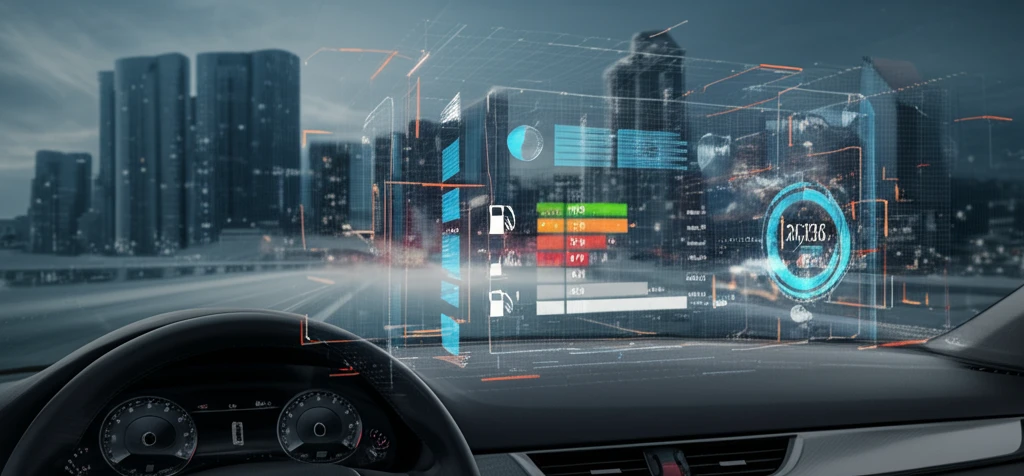
Eco-driving combines techniques and technologies that minimize fuel consumption and emissions. At the heart of this approach is the idea of changing driver behavior to promote smoother, safer, and more efficient vehicle operation. In-vehicle Human Machine Interfaces (HMIs) show promise to deliver real-time advice and feedback to help drivers adopt an eco-safe driving style.
However, the success of these HMIs hinges on more than just their ability to reduce fuel consumption. Driver acceptance, workload, and the overall impact on safety are critical factors that determine whether these technologies will truly take hold. This article dives into a research study evaluating the potential of in-vehicle HMIs for eco-safe driving, exploring the delicate balance between technology, driver behavior, and environmental responsibility.
Current Statistics & Impact
Research indicates broad driver support for monitoring eco-driving and safe driving behavior through in-vehicle human-machine interface (HMI) systems, with participants reporting these systems could improve their driving by increasing behavioral awareness. A 2019 driving simulator study was the first to test the effectiveness of an eco-safe HMI, comparing drivers' glance behaviors across different traffic situations and information display conditions. Market analyses project growth in the global eco-driving in-vehicle messages market, though adoption in emerging economies across Latin America, the Middle East, and Africa remains at a nascent stage as of 2025, with momentum expected as urbanization intensifies and governments introduce stricter emission norms.
Standard Approach, Accepted Methods & Their Limitations
A 2018 simulator study evaluated four conditions of an in-vehicle eco-safe HMI to examine impacts on driver acceptance, workload, and eco-safe driving behaviors. However, researchers note that no standard agreement on guidance design has been reached, creating difficulties in designing and implementing eco-driving guidance for human drivers, with both static and dynamic guidance systems showing a wide variety of results. Qualitative research highlights that eco-driving style remains hard to learn even with driving assistance systems, prompting development of immersive driving simulation training tools. For commercial applications, HMI design must balance multiple competing goals including fuel efficiency, safety, and delivery mission fulfillment while promoting sustainable long-term driving habits.
Historical Perspective, Milestones, Foundational Discoveries
The evolution of automotive human-machine interaction traces five distinct phases of HMI development, shaped by technological advancements, regulatory changes, and shifting consumer expectations. A comprehensive scoping review of 324 papers published between 2013 and 2023 provides a detailed classification of five key stages within the in-vehicle HMI design process. This progression spans from early simple knobs and buttons to today's cutting-edge touchscreen displays and voice recognition systems, reflecting a transformative journey in how drivers interact with vehicle systems.
What is Eco-Safe Driving and Why Does It Matter?
Eco-safe driving refers to a driving style that minimizes environmental impact while maximizing safety. It encompasses a range of techniques, including smooth acceleration and deceleration, anticipating traffic flow, maintaining safe following distances, and adhering to speed limits. The benefits of eco-safe driving are multifold:
- Reduced fuel consumption and emissions: By driving more efficiently, drivers can significantly lower their carbon footprint.
- Improved safety: Eco-safe driving practices, such as maintaining safe following distances and avoiding sudden maneuvers, reduce the risk of accidents.
- Cost savings: Less fuel consumption translates to lower fuel costs for drivers.
- Enhanced vehicle longevity: Smoother driving reduces wear and tear on the vehicle, potentially extending its lifespan.
Latest Research and Reviews
Recent research in 2023 contributed to a better understanding of the working mechanism and effectiveness of Ecolane-HMI-CVIS (Cooperative Vehicle-Infrastructure Systems), providing technical and policy references for CVIS-based eco-driving for traffic management departments. A comprehensive scoping review of 324 papers spanning 2013-2023 focuses on the design underpinnings of in-vehicle HMI development in driving automation. Industry benchmarking from 2024 evaluated nine vehicles in an end-of-year summary, providing comparative analysis of in-car HMI user experience across production models.
Counter Arguments and Failures
Despite promising laboratory results, real-world deployment of eco-driving HMI systems faces challenges including driver distraction risks, inconsistent behavioral change durability, and the difficulty of isolating HMI effects from other vehicle efficiency technologies. Some studies report diminishing returns over time as drivers habituate to feedback, while others note that poorly designed interfaces can increase cognitive load rather than reduce it. The lack of standardized evaluation metrics across studies further complicates comparative assessment of system effectiveness.
Comparative Analysis
A controlled simulator study with 40 drivers compared three variations of an eco-safe in-vehicle HMI: visual advice only, visual feedback only, and combined visual advice and feedback. The evaluation analyzed both subjective and objective measures including fuel consumption, eco-safe driving behavior, driver acceptance, and workload across the different HMI configurations. This comparative approach enables direct assessment of whether advice, feedback, or their combination yields superior outcomes for promoting eco-driving adoption.
The Road Ahead: Integrating Technology and Driver Behavior
The study's findings highlight the potential of in-vehicle HMIs to promote eco-safe driving, but also emphasize the importance of user-centered design. Systems that provide both advice and feedback appear to be most effective in reducing fuel consumption and improving driving behavior. However, developers must carefully consider how feedback is presented to avoid overwhelming or frustrating drivers. As technology continues to evolve, the key will be creating HMIs that seamlessly integrate into the driving experience, empowering drivers to make informed decisions and adopt sustainable habits. Only then can we truly unlock the full potential of eco-safe driving for a greener and safer future.
Synthesis & Expert Commentary
Analysis of eye-tracking data and subjective workload measures from driving simulator experiments contributes to understanding drivers' visual demand and mental workload while using eco-safe driving HMI systems. This research highlights the importance of balancing information delivery with driver attention management to avoid creating new distraction sources while promoting fuel-efficient behaviors.
Future Outlook & Next Frontiers
The next generation of automotive HMI is being reshaped by convergence of AI, advanced driver-assistance systems (ADAS), and increasing consumer demand for personalized in-vehicle experiences. Key trends for 2025 include AI-driven personalization, augmented reality head-up displays (AR HUDs), and over-the-air (OTA) updates enabling continuous improvement. Advanced display technologies and HMI innovations are redefining both the aesthetics and functionality of vehicle interiors and exteriors, while Gen-AI analysis of production vehicle trends examines future HMI directions through ergonomic insights and market dynamics.
Broader Context & Systemic Challenges
The integration of Environmental, Social, and Governance (ESG) principles into the in-car HMI and driver monitoring market is increasingly shaping product development strategies as of late 2025. This reflects a broader industry shift where sustainability metrics and social responsibility considerations are becoming embedded in the core design requirements for automotive interface systems, rather than treated as secondary features.
The Human Element & Real-World Impact
While laboratory studies demonstrate measurable improvements in eco-driving behaviors with HMI support, translating these gains to diverse real-world driving conditions remains challenging. Factors including varying traffic densities, road types, weather conditions, and individual driver differences can significantly affect system efficacy. Long-term behavior change sustainability and the risk of over-reliance on automated guidance are ongoing concerns for widespread adoption.