
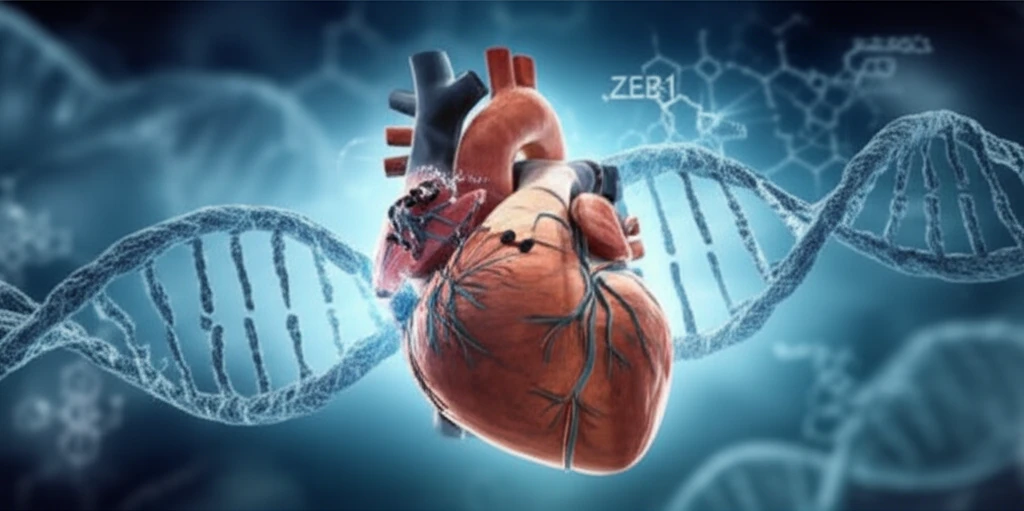
Doxorubicin's Double-Edged Sword: How It Upregulates a Key Receptor in Heart Cells

"Unlocking the Paradox: Exploring how the cancer drug Doxorubicin impacts CXCR4 and cardiac health."
Doxorubicin (DOXO) is a powerful chemotherapy drug, but its use is limited by a significant side effect: cardiotoxicity, or damage to the heart. This damage stems, in part, from the depletion of cardiac progenitor cells—cells crucial for heart repair and maintenance. Scientists are working hard to understand how DOXO affects the heart on a cellular level to find ways to protect against its harmful effects.
One key area of interest is the SDF1/CXCR4 axis, a signaling pathway known for its cardioprotective roles. Think of it like a cellular communication system vital for tissue repair and cell migration. While its protective functions are well-documented, its role during DOXO-induced cardiotoxicity remains largely unexplored. Recent research sheds light on this, revealing a surprising twist in how DOXO interacts with this pathway.
A new study uncovers that DOXO actually increases CXCR4 expression in human cardiac mesenchymal progenitor cells (CmPCs). These are specialized cells with regenerative potential. This upregulation is triggered through a complex mechanism involving miR-200c and ZEB1. This discovery opens the door to new strategies for mitigating DOXO's harmful impact on the heart.
Decoding Doxorubicin's Impact on CXCR4: What Does It Mean for Your Heart?
Researchers observed that after DOXO treatment, the number of CXCR4+ cells increased, especially among CmPCs. SDF1 (the signal that activates CXCR4) seemed to protect these cells from DOXO-induced death and even promoted their migration. This suggests that the increase in CXCR4 might be a protective response—the heart's attempt to call in reinforcements.
- ZEB1's Role: CXCR4's promoter region contains binding sites for ZEB1, a protein that usually represses gene expression. DOXO treatment reduces ZEB1 binding, effectively lifting the brakes on CXCR4 production.
- miR-200c Enters the Scene: DOXO induces the upregulation of miR-200c, a microRNA that directly targets ZEB1. By suppressing ZEB1, miR-200c indirectly promotes CXCR4 expression.
- SDF1's Protective Actions: In mice treated with DOXO, SDF1 administration partially reversed heart remodeling and improved cardiac function. It also dampened the DOXO-induced upregulation of miR-200c and a protein called p53.
The Future of Cardioprotection: Harnessing the SDF1/CXCR4 Axis
This research highlights the complex interplay between chemotherapy drugs and the heart. While DOXO is essential for treating various cancers, its cardiotoxic effects can significantly impact patients' quality of life. Understanding how DOXO modulates the SDF1/CXCR4 axis offers new therapeutic opportunities.
By further investigating this pathway, scientists may develop strategies to:
<ul> <li>Enhance the protective effects of CXCR4 upregulation.</li> <li>Minimize DOXO-induced damage to cardiac progenitor cells.</li> <li>Develop targeted therapies that mitigate cardiotoxicity without compromising DOXO's anticancer efficacy.</li> </ul>