
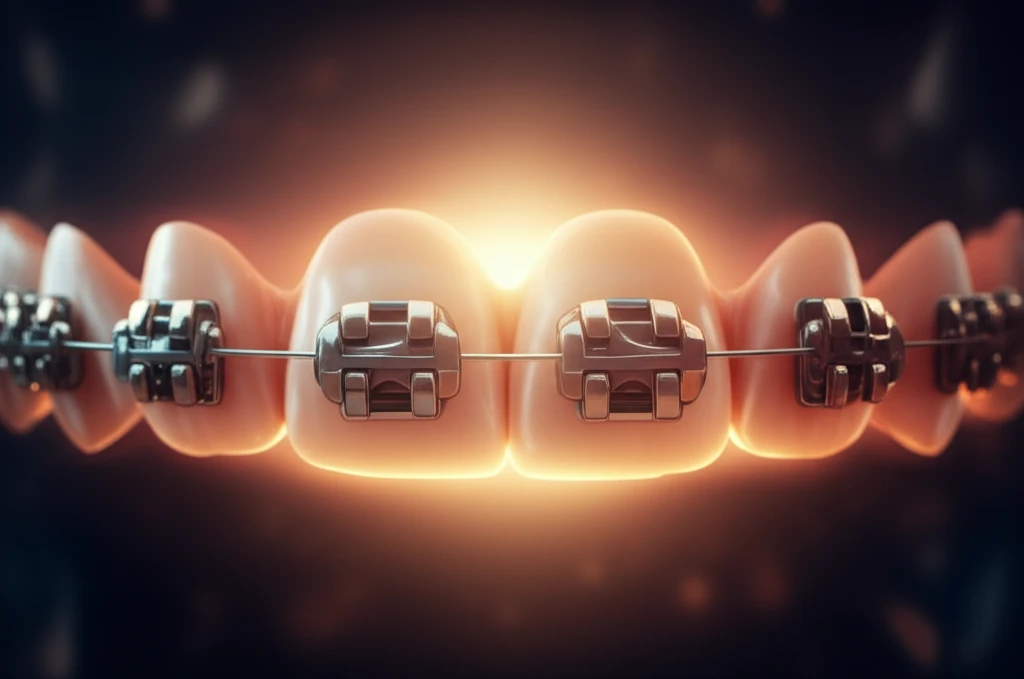
Close-up of durable self-ligating braces clip.

Do Self-Ligating Brackets Really Last? The Truth About Clip Durability

"Uncover the long-term performance of self-ligating bracket clips and how their resilience impacts your orthodontic treatment."


Self-ligating brackets have revolutionized orthodontics, promising more efficient and comfortable teeth-straightening compared to traditional braces. Unlike conventional systems that rely on elastics or metal ligatures to hold the archwire in place, self-ligating brackets feature a built-in mechanism – a clip – that performs this function. This design aims to reduce friction, potentially speeding up treatment and requiring fewer adjustments.

However, the long-term performance of these clips is a crucial factor for successful treatment. Do they maintain their integrity over months of adjustments and everyday wear? Can repeated opening and closing of the clip lead to weakening, deformation, or even breakage? These are critical questions for both orthodontists and patients considering self-ligating braces.

This article explores a recent study investigating the durability of active ceramic self-ligating bracket clips. We'll delve into the research methodology, key findings, and what these results mean for the real-world application of self-ligating brackets, offering insights to help you make informed decisions about your orthodontic care.

Clip Durability Under Pressure: What the Research Reveals

Close-up of durable self-ligating braces clip.

A recent study published in the Dental Press Journal of Orthodontics aimed to assess whether the repetitive opening and closing of self-ligating bracket clips could cause plastic deformation, potentially compromising their effectiveness. The researchers focused on three popular types of active/interactive ceramic self-ligating brackets: In-Ovation C, Quicklear, and WOW.

The methodology involved a controlled laboratory experiment where a specialized device mimicked 500 cycles of opening and closing each bracket clip, using instruments and techniques recommended by the manufacturers. Before and after these repetitive cycles, the stiffness of the clips was measured using tensile tests. Here's a breakdown of the key elements:

  • Standardized Testing: A custom-made device ensured consistent and controlled opening/closing cycles.
  • Tensile Tests: Measured the clip's resistance to deformation before and after the cycling.
  • Three Bracket Types: Compared the performance of In-Ovation C, Quicklear, and WOW brackets.
  • Simulated Environment: The experiment was conducted in a controlled temperature environment (37°C) with artificial saliva to mimic oral conditions.
The results of the study revealed some interesting insights. While there were significant differences in stiffness between the three bracket types (WOW being the stiffest, Quicklear the least), the repetitive opening and closing did not cause significant plastic deformation in any of the clips. In other words, the clips maintained their structural integrity despite repeated use. This suggests that, under controlled conditions, these active self-ligating bracket clips are quite resilient.

The Takeaway: Self-Ligating Brackets Can Go the Distance

The study's conclusion offers reassurance for both orthodontists and patients: repetitive, controlled opening and closing movements of active ceramic self-ligating bracket clips do not significantly alter their stiffness or cause plastic deformation. This suggests that these brackets are durable enough to withstand the rigors of orthodontic treatment, provided they are handled correctly.

However, it's important to remember that this research was conducted under ideal laboratory conditions. Real-world factors, such as variations in clinical technique, the use of different instruments, the presence of calculus or plaque, and the forces of chewing, could potentially impact clip durability. Further research is needed to investigate these clinical factors and their effects on the long-term performance of self-ligating brackets.

Ultimately, while this study provides a positive outlook on the resilience of self-ligating bracket clips, proper handling and maintenance remain crucial for ensuring the success and longevity of orthodontic treatment. Discuss any concerns you have about bracket durability with your orthodontist, and follow their recommendations for oral hygiene and bracket care.

About this Article -

This article was crafted using a human-AI hybrid and collaborative approach. AI assisted our team with initial drafting, research insights, identifying key questions, and image generation. Our human editors guided topic selection, defined the angle, structured the content, ensured factual accuracy and relevance, refined the tone, and conducted thorough editing to deliver helpful, high-quality information.See our About page for more information.

This article is based on research published under:

DOI-LINK: 10.1590/2176-9451.20.4.045-050.oar, Alternate LINK

Title: Evaluation Of Stiffness And Plastic Deformation Of Active Ceramic Self-Ligating Bracket Clips After Repetitive Opening And Closure Movements

Subject: Oral Surgery

Journal: Dental Press Journal of Orthodontics

Publisher: FapUNIFESP (SciELO)

Authors: Grace Kelly Martins Carneiro, Juliano Alves Roque, Aguinaldo Silva Garcez Segundo, Hideo Suzuki

Published: 2015-08-01

Everything You Need To Know

1

What are self-ligating brackets, and how do they differ from traditional braces?

Self-ligating brackets are a type of orthodontic appliance designed to straighten teeth. They differ from traditional braces by using a built-in clip mechanism instead of elastics or metal ligatures to hold the archwire. This clip is crucial because it directly impacts the efficiency and comfort of the treatment. The study focused on the durability of the clip, evaluating how it holds up to repeated opening and closing during adjustments.

2

Why is the durability of the clip in self-ligating brackets important?

The clip's durability is important because it ensures the self-ligating bracket functions as intended throughout the treatment process. The clip's ability to maintain its stiffness and structural integrity directly affects its performance in holding the archwire and guiding tooth movement. Any deformation or weakening of the clip could compromise the effectiveness of the self-ligating brackets, potentially leading to less efficient treatment or the need for more frequent adjustments.

3

What did the study investigate regarding self-ligating bracket clips?

A recent study examined the impact of repetitive opening and closing on active ceramic self-ligating bracket clips. The study used a specialized device to simulate the opening and closing of the clips of the In-Ovation C, Quicklear, and WOW brackets over 500 cycles. The stiffness of the clips was measured before and after these cycles using tensile tests. This research helped to understand the real-world performance of the clips.

4

What were the main findings of the study on the durability of the clips?

The study found that the repetitive opening and closing did not cause significant plastic deformation in the clips of the In-Ovation C, Quicklear, and WOW brackets. While there were differences in stiffness between the bracket types, the repeated use didn't compromise their ability to function effectively. This indicates that the clips are resilient to the stresses of orthodontic treatment when handled correctly.

5

What are the implications of the study's findings for orthodontic treatment?

The implications of these findings are significant for orthodontists and patients. It suggests that active ceramic self-ligating bracket clips, like those in the In-Ovation C, Quicklear, and WOW brackets, can withstand the demands of orthodontic treatment without significant degradation when handled properly. This durability supports the promise of efficient and comfortable teeth-straightening, providing reassurance that these brackets are designed to last throughout the course of the treatment.

Newsletter Subscribe

Subscribe to get the latest articles and insights directly in your inbox.