
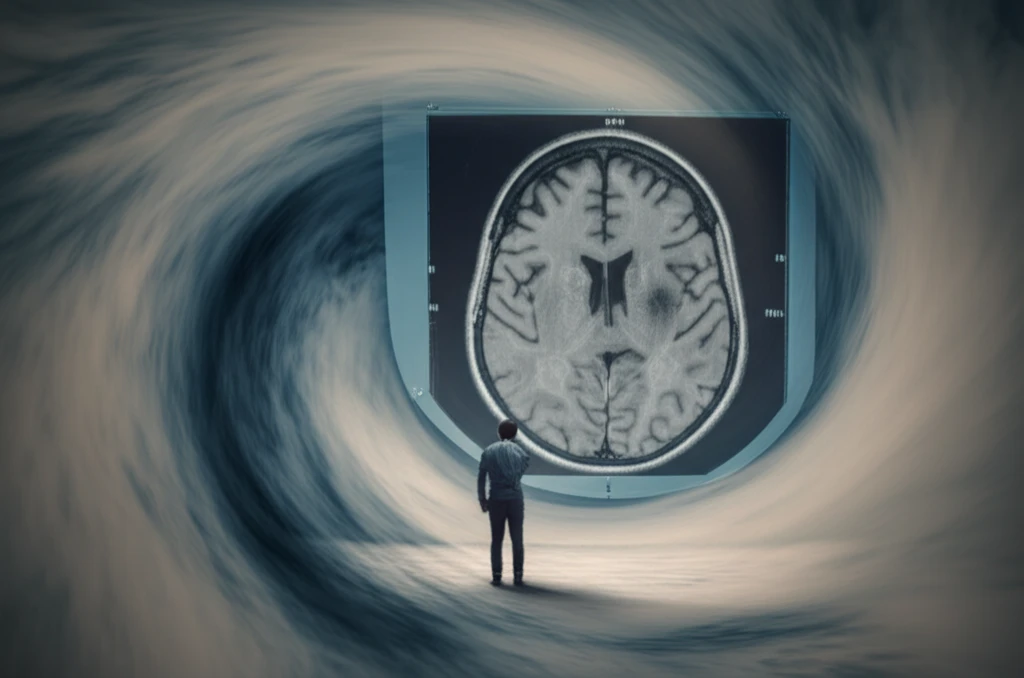
Dizzying Discoveries: How to Spot a Stroke When an MRI Misses It

"Unraveling the complexities of MRI-negative posterior circulation strokes and how timely clinical evaluation can save lives."
Imagine feeling suddenly dizzy, the room spinning without warning. While many things can cause dizziness, it's alarming to know that in some cases, it’s a stroke in disguise. Strokes, especially those affecting the posterior circulation of the brain (PCS), can be easily missed, even in a hospital setting. This is particularly true when initial MRI scans come back negative, creating a dangerous illusion of safety.
Why are PCS strokes so elusive? The posterior circulation serves vital functions related to balance and coordination, and strokes in this area often manifest as dizziness and vertigo. Unfortunately, these symptoms can be attributed to less serious conditions, leading to delays in diagnosis and treatment. Furthermore, standard MRI techniques may not always detect these strokes early on, especially if they are small or occur in certain locations.
But there's good news. Research has revealed key strategies for identifying these 'MRI-negative' strokes, emphasizing the importance of thorough clinical evaluation and advanced imaging techniques. This article will explore these strategies, providing clear insights into how to recognize a stroke when an MRI misses it, and why timely intervention is critical.
The Hidden Threat: Understanding MRI-Negative Posterior Circulation Strokes
A recent study published in the Journal of Neurology shed light on the challenges of diagnosing PCS strokes that present with acute dizziness or vertigo but don't show up on initial MRI scans. The study followed 1846 patients with PCS, identifying a subset of 850 who experienced acute dizziness or vertigo. Alarmingly, in 35 of these patients (4.1%), the initial MRI came back negative.
- Timing is Everything: Strokes are not detected by the initial MRI (MRI latency).
- Small Size, Big Impact: Small strokes, particularly in the posterior fossa, are more likely to be missed by initial MRI scans.
- Atypical Symptoms: The absence of clear neurological signs or spontaneous nystagmus can further complicate diagnosis.
Don't Dismiss Dizziness: A Call to Action for Stroke Detection
The research paints a clear picture: dizziness and vertigo can be stroke symptoms, and a negative MRI doesn't always mean the coast is clear. Relying solely on initial MRI results can be misleading. A significant percentage of PCS strokes presenting with acute dizziness are initially missed by MRI. A comprehensive approach, combining clinical evaluation with advanced imaging, is essential for accurate diagnosis.
So, what should you do if you or someone you know experiences sudden, severe dizziness? The key is to seek immediate medical attention and ensure a thorough neurological evaluation. This evaluation should include a detailed assessment of other symptoms, balance, and eye movements. If a stroke is suspected, even with a negative MRI, further investigation with PWI or repeat MRI scans is crucial.
By increasing awareness of this diagnostic challenge and advocating for a more comprehensive approach to stroke detection, we can improve outcomes for individuals experiencing these 'hidden' strokes. Remember, when it comes to stroke, time is brain, and early detection is key to minimizing long-term disability.