
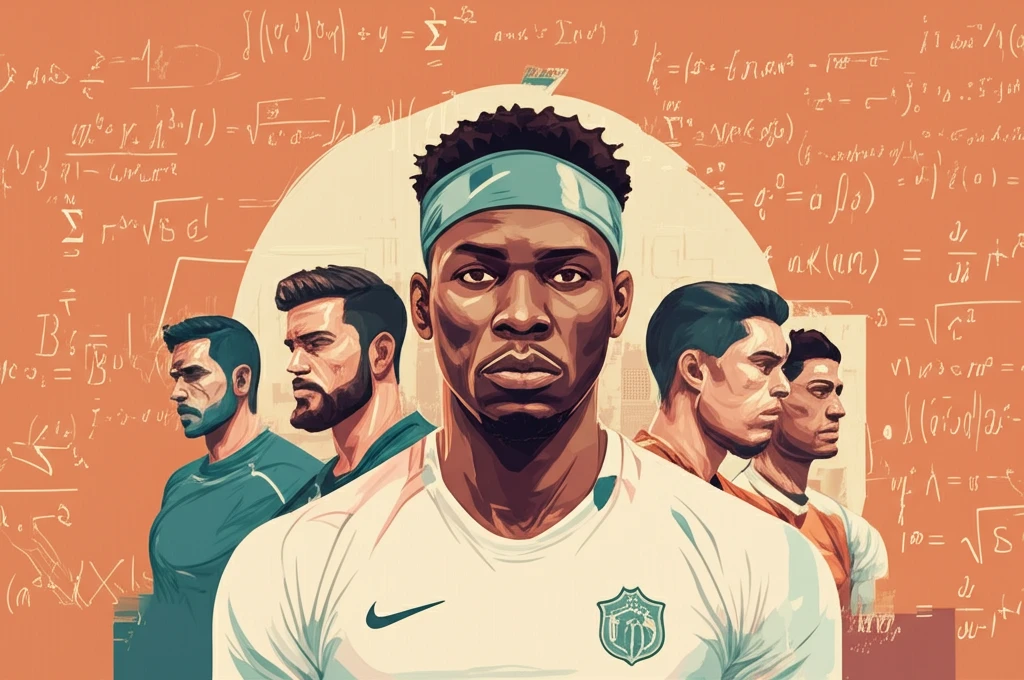
Dividing the Spoils: Can AI Make Team Assignments Fair?

"Explore how fair division algorithms, particularly those enhanced with AI, are changing the way teams are formed, ensuring equity and satisfaction for all involved."
Imagine you're a league organizer tasked with forming balanced and satisfied teams from a pool of diverse players. It's a challenge that goes beyond simply assigning individuals to groups. It requires a delicate balancing act to ensure fairness and satisfaction for everyone involved. Traditionally, this process might rely on manual selection, prone to biases and inefficiencies.
Fair division, a field of economics and computer science, tackles the problem of dividing resources or tasks among individuals or groups in a way that minimizes conflict and maximizes satisfaction. Recently, researchers have been exploring how to apply fair division algorithms to team assignments, considering the preferences of both the teams and the individuals involved.
A new study delves into the complexities of fair division in team formation, introducing algorithms that aim to guarantee envy-freeness and stability. These algorithms not only seek to distribute talent equitably but also take into account the personal preferences of the participants, ensuring a more harmonious and productive team environment.
The Two-Sided Preference Problem: Why It Matters
Traditional fair division algorithms often focus on one-sided preferences, meaning they only consider the desires of one party involved. In team assignments, this might mean only considering the team's preferences for players, without regard for the players' own preferences for which team they'd like to join. This oversight can lead to suboptimal outcomes and dissatisfaction.
- Envy-Freeness: Ensures that no team envies another, meaning they wouldn't prefer another team's set of members over their own.
- Swap Stability: Prevents situations where two individuals would both be better off swapping teams, maintaining overall satisfaction.
- Individual Stability: Guarantees that no individual would prefer to leave their assigned team for another, promoting team cohesion and commitment.
The Future of Fair Team Formation
As AI continues to evolve, fair division algorithms hold immense potential for revolutionizing team formation across various domains. By incorporating two-sided preferences and prioritizing stability, these algorithms can create more equitable and satisfying team environments, leading to improved performance and overall morale. Embracing these innovative approaches promises a future where team assignments are not only fair but also contribute to the success and well-being of all involved.