
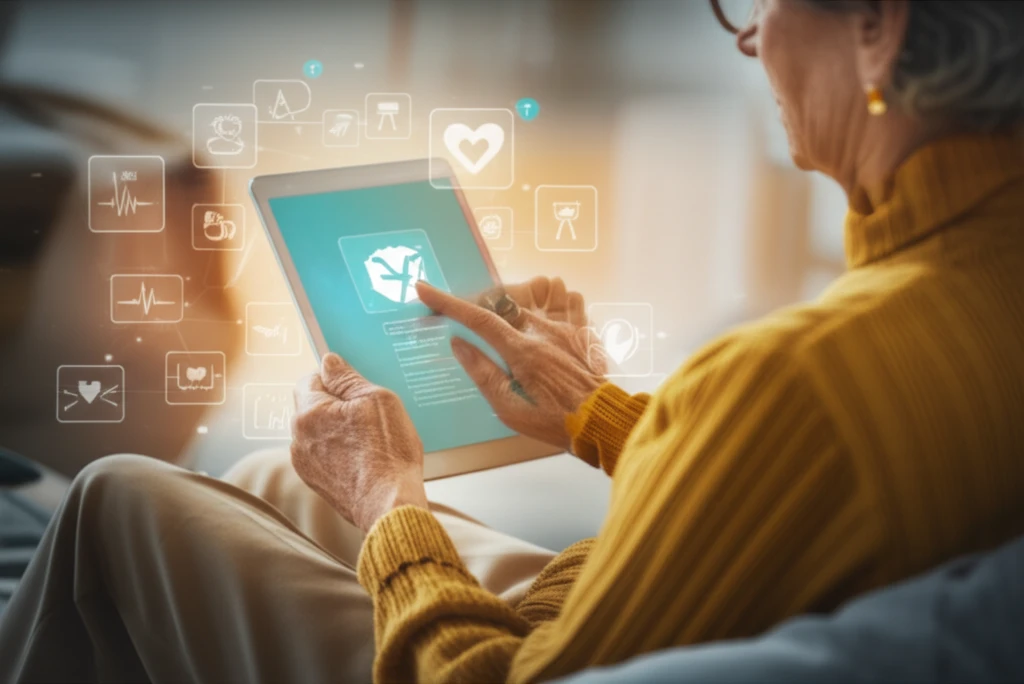
A senior using a patient portal on a tablet, representing digital health and accessible healthcare for older adults.

Digital Wellness for Seniors: How Patient Portals are Revolutionizing Healthcare

"Unlock a Healthier Tomorrow: Discover how patient portals are simplifying healthcare for older adults and empowering them to take control of their well-being."


In a world increasingly driven by technology, healthcare is undergoing a significant transformation. Patient portals, secure online platforms that provide access to personal health information, are at the forefront of this change. These portals are not just for tech-savvy millennials; they're becoming essential tools for seniors, offering new ways to manage their health and connect with healthcare providers.

For older adults, managing health often involves juggling multiple appointments, medications, and communications with various healthcare professionals. Patient portals streamline these tasks, offering a centralized hub for managing health records, scheduling appointments, and communicating with doctors, all from the comfort of home. This is particularly crucial for seniors who may face mobility challenges or limited access to transportation.

This article will explore the rise of patient portals, specifically focusing on how they can improve the lives of older adults. We'll examine the benefits, address common concerns, and provide practical tips to help seniors navigate and leverage these powerful digital tools for better health outcomes.

The Power of Patient Portals: Key Benefits for Seniors

A senior using a patient portal on a tablet, representing digital health and accessible healthcare for older adults.

Patient portals offer a range of advantages that can significantly improve the healthcare experience for seniors. They provide a user-friendly interface for managing various aspects of health, leading to better health outcomes and increased patient satisfaction. Here's a breakdown of the key benefits:

Patient portals provide a secure and convenient way for seniors to access their health information. This includes medical records, lab results, medication lists, and immunization history. Having this information readily available empowers seniors to be more informed about their health and to participate actively in their care. The ability to review medical records and test results independently allows seniors to understand their health status better and to discuss concerns with their doctors more effectively.

  • Enhanced Communication: Portals facilitate secure messaging with healthcare providers, allowing seniors to ask questions, request prescription refills, and receive timely responses without having to call the clinic.
  • Simplified Appointment Management: Seniors can schedule, reschedule, and manage appointments online, eliminating the need for phone calls and reducing wait times.
  • Medication Management: Many portals offer tools for managing medications, including refill requests, medication reminders, and access to medication information.
  • Improved Care Coordination: Portals can help seniors coordinate care by sharing information with different healthcare providers, ensuring everyone involved in their care is on the same page.
  • Educational Resources: Many portals provide access to educational materials and resources related to specific health conditions, empowering seniors with knowledge about their health.
By using patient portals, seniors can become active participants in their healthcare journey, leading to improved health outcomes, reduced healthcare costs, and a greater sense of control over their well-being.

Embrace the Digital Age of Healthcare

Patient portals represent a significant step forward in providing accessible, efficient, and patient-centered healthcare for seniors. By embracing these digital tools, older adults can enhance their healthcare experience, take control of their health, and improve their overall quality of life. As technology continues to evolve, the integration of patient portals into healthcare will only become more widespread, offering even greater opportunities for seniors to manage their health effectively. If you're a senior, now is the time to explore the benefits of patient portals and embark on a journey toward a healthier, more informed future.

About this Article -

This article was crafted using a human-AI hybrid and collaborative approach. AI assisted our team with initial drafting, research insights, identifying key questions, and image generation. Our human editors guided topic selection, defined the angle, structured the content, ensured factual accuracy and relevance, refined the tone, and conducted thorough editing to deliver helpful, high-quality information.See our About page for more information.

This article is based on research published under:

DOI-LINK: 10.1089/tmj.2018.0184, Alternate LINK

Title: The Effects Of A Theory-Based Patient Portal E-Learning Program For Older Adults With Chronic Illnesses

Subject: Health Information Management

Journal: Telemedicine and e-Health

Publisher: Mary Ann Liebert Inc

Authors: Eun-Shim Nahm, Shijun Zhu, Michele Bellantoni, Linda Keldsen, Vince Russomanno, Matt Rietschel, Tabassum Majid, Hyojin Son, Leslie Smith

Published: 2019-10-01

Everything You Need To Know

1

What are patient portals and why are they becoming essential for senior citizens?

Patient portals are secure online platforms that grant access to personal health information. They're becoming essential for seniors as they offer a centralized hub to manage health records, schedule appointments, and communicate with doctors from home. This is crucial, especially for seniors facing mobility challenges or transportation limitations. Patient portals streamline healthcare management, making it more accessible and efficient.

2

How do patient portals simplify appointment management for older adults?

Patient portals simplify appointment management by enabling seniors to schedule, reschedule, and manage appointments online. This eliminates the need for phone calls and reduces wait times. This feature provides a user-friendly interface to manage various aspects of health, leading to better health outcomes and increased patient satisfaction.

3

Besides access to health records, what other key benefits do patient portals offer seniors in managing their health?

Beyond accessing health records, patient portals offer enhanced communication through secure messaging with healthcare providers for questions and prescription refills. They also provide medication management tools like refill requests and reminders, improved care coordination by sharing information among different providers, and access to educational resources related to specific health conditions. These features empower seniors to actively participate in their healthcare journey.

4

In what ways do patient portals enhance communication between seniors and their healthcare providers, and why is this important?

Patient portals enhance communication by providing a secure messaging system that allows seniors to ask questions, request prescription refills, and receive timely responses from healthcare providers without needing to call the clinic. This is crucial because it ensures that seniors can easily address their concerns and receive necessary information promptly, leading to better-informed decisions and improved health outcomes. This direct line of communication also promotes a more patient-centered approach to healthcare, empowering seniors to take an active role in their care.

5

How can patient portals contribute to better care coordination for seniors who may be seeing multiple healthcare specialists?

Patient portals facilitate better care coordination by enabling seniors to share their health information with different healthcare providers. This ensures that everyone involved in their care is on the same page, promoting more informed and cohesive treatment plans. This feature addresses the challenge of fragmented care that can occur when seniors see multiple specialists, leading to improved health outcomes and a more seamless healthcare experience. By centralizing health information and communication, patient portals help bridge the gaps between different providers, ultimately benefiting the senior's overall well-being.

Newsletter Subscribe

Subscribe to get the latest articles and insights directly in your inbox.