
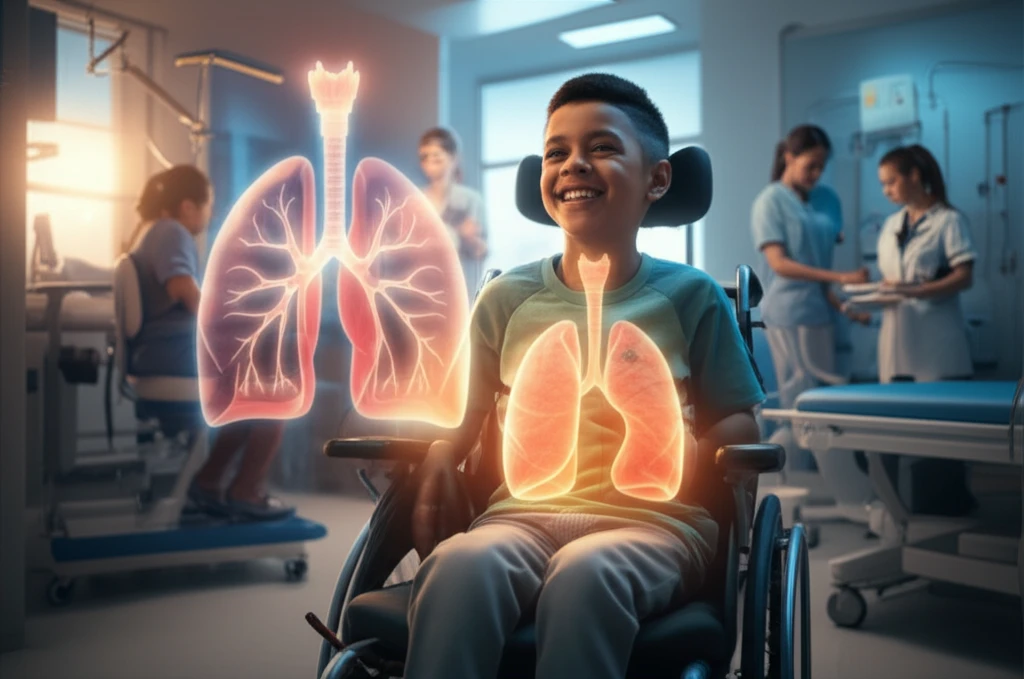
Diaphragm Pacing: A Game Changer for Pediatric Spinal Cord Injuries?

"Discover how diaphragm pacing is revolutionizing respiratory care and inpatient rehabilitation for children with cervical spinal cord injuries, offering new hope and improved quality of life."
Spinal cord injuries (SCI) in children, particularly at the C3 level and above, lead to tetraplegia and severe respiratory issues. These young patients often require long-term positive pressure ventilation (PPV), which, while life-saving, comes with significant complications and morbidity. The challenges are immense, impacting not only their physical health but also their overall quality of life.
Diaphragm pacing (DP) offers a promising alternative. This technique, which involves functional electrical stimulation (FES) of the diaphragm, allows for more natural negative pressure breathing. By replacing or reducing the need for PPV, diaphragm pacing can lead to numerous benefits, including improved speech, reduced caregiver burden, and decreased secretion issues.
This article reviews the limited yet compelling research on the safety and effectiveness of diaphragm pacing in pediatric SCI patients. It highlights a collaborative effort between two institutions to facilitate DP implantation for children with ventilator-assisted tetraplegia during inpatient rehabilitation. It further details the process of ventilator weaning and diaphragm conditioning, providing a comprehensive overview for healthcare professionals and families alike.
What Are the Benefits of Diaphragm Pacing for Children with SCI?
Diaphragm pacing provides natural negative pressure ventilation by stimulating intact lower motor neuronal units in the spinal column. The system consists of surgically implanted electrodes into the diaphragm muscle, an external pulse generator (EPG), and a cable to connect the generator to the electrodes. DP was developed to replace or decrease PPV need in high level cervical spinal cord injuries. Patients and families report many benefits of diaphragm pacing.
- Ease of wheelchair mobility
- Elimination of the fear of accidental ventilator disconnection
- Loss of social stigma associated with attachment to a ventilator
- Elimination of ventilator noise
- Improved speech
- Improved sense of smell
- Reduced caregiver burden
- Improved well-being
- Overall health
Looking Ahead: The Future of Diaphragm Pacing in Pediatric SCI
Diaphragm pacing offers a safe and effective alternative to long-term positive pressure ventilation for children with high-level tetraplegia and respiratory insufficiency. Early implantation may lead to faster PPV weaning times and, crucially, can allow inpatient rehabilitation to begin ventilator-free. The benefits of diaphragm pacing far outweigh the effort required to facilitate implantation during inpatient rehabilitation, paving the way for improved outcomes and enhanced quality of life for these young patients.