
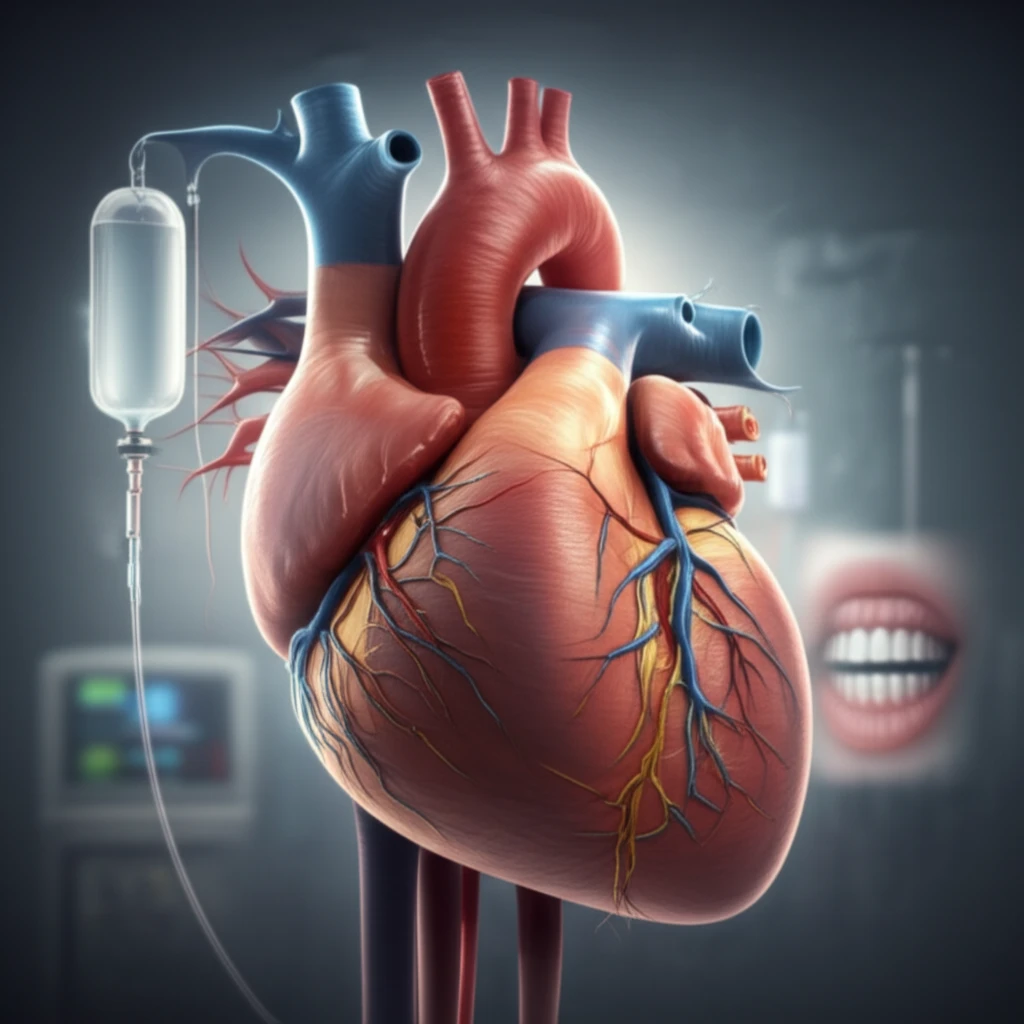
A heart intertwined with healthy gums, symbolizing the connection between oral health and cardiovascular well-being in dialysis patients.

Dialysis Dilemma: Can Dental Care Save Your Heart?

"New Research Shows a Surprising Link Between Periodontal Treatment and Cardiovascular Health in Hemodialysis Patients"


For individuals undergoing hemodialysis, cardiovascular disease (CVD) stands as a significant and life-threatening complication. The intricate relationship between kidney function and cardiovascular health means that those on dialysis face a disproportionately high risk of heart-related issues. Traditional risk factors such as diabetes and hypertension are often amplified in this population, compounded by the physiological stresses of renal replacement therapy.

Innovative approaches aimed at mitigating these risks are continuously being explored. While conventional treatments focus on managing blood pressure, cholesterol, and blood sugar, emerging research suggests that seemingly unrelated health interventions could offer unexpected benefits. One such area of interest is periodontal health, and its potential impact on cardiovascular outcomes in dialysis patients.

A recent study published in the Journal of Clinical Medicine sheds light on the surprising connection between intensive periodontal treatment and reduced risks of CVD and all-cause mortality in hemodialysis patients. This article delves into the findings, exploring how addressing gum disease could be a game-changer for improving the overall health and longevity of those on dialysis.

The Surprising Link: How Gum Health Impacts Heart Health in Dialysis Patients

A heart intertwined with healthy gums, symbolizing the connection between oral health and cardiovascular well-being in dialysis patients.

The study, conducted by researchers in Taiwan, investigated the impact of intensive periodontal treatment on a cohort of 3,613 hemodialysis patients. The treatment group received comprehensive periodontal care, including scaling, root planing, and periodontal flap surgery. This group was then compared to a control group of hemodialysis patients who did not receive such intensive dental treatment.

Researchers meticulously tracked the incidence of cardiovascular events, such as heart attacks, strokes, and congestive heart failure, as well as all-cause mortality in both groups. The results were striking:

  • Reduced CVD Risk: The treatment group experienced a significant 22% reduction in the risk of hospitalization for cardiovascular diseases compared to the control group.
  • Lower Mortality Rates: Intensive periodontal treatment was associated with a notable decrease in overall mortality rates among hemodialysis patients.
  • Fewer Cardiovascular Events: The treatment group exhibited lower risks of developing acute coronary syndrome, acute myocardial infarction, stroke, congestive heart failure, and sudden cardiac death.
These findings suggest that addressing periodontal disease may be a valuable strategy for improving cardiovascular health and extending the lives of individuals undergoing hemodialysis. But how can gum disease, seemingly a localized issue, have such a profound impact on the heart?

A New Frontier in Dialysis Care: Prioritizing Oral Health

This study opens new avenues for research and clinical practice in dialysis care. By highlighting the connection between periodontal health and cardiovascular outcomes, it underscores the importance of a holistic approach to patient well-being. Further investigations are needed to fully understand the mechanisms by which periodontal treatment exerts its protective effects on the cardiovascular system. However, the current evidence strongly suggests that integrating comprehensive dental care into the standard treatment protocol for hemodialysis patients could significantly improve their quality of life and overall survival rates.

About this Article -

This article was crafted using a human-AI hybrid and collaborative approach. AI assisted our team with initial drafting, research insights, identifying key questions, and image generation. Our human editors guided topic selection, defined the angle, structured the content, ensured factual accuracy and relevance, refined the tone, and conducted thorough editing to deliver helpful, high-quality information.See our About page for more information.

Everything You Need To Know

1

Why are people on hemodialysis at a higher risk for cardiovascular issues?

Cardiovascular disease, or CVD, is a major complication for individuals undergoing hemodialysis. The connection between kidney function and heart health means that dialysis patients are at a higher risk of heart-related problems. Factors like diabetes and hypertension are often worsened, along with the stress of renal replacement therapy. Managing blood pressure, cholesterol, and blood sugar are important, but new research shows that periodontal health could offer benefits.

2

What does 'intensive periodontal treatment' actually involve?

Intensive periodontal treatment involves comprehensive dental care, including scaling, root planing, and periodontal flap surgery. This aims to address gum disease thoroughly. The treatment involves removing plaque and calculus from the teeth and root surfaces, smoothing the root surfaces to prevent further buildup, and, if necessary, performing surgery to reduce periodontal pockets and promote tissue regeneration. The goal is to reduce inflammation and infection in the gums.

3

What were the main findings of the study regarding periodontal treatment and cardiovascular health in hemodialysis patients?

The study showed that intensive periodontal treatment was associated with several positive outcomes for hemodialysis patients. Specifically, it led to a 22% reduction in the risk of hospitalization for cardiovascular diseases. Additionally, patients who received intensive periodontal treatment experienced lower overall mortality rates and a reduced risk of cardiovascular events such as acute coronary syndrome, acute myocardial infarction, stroke, congestive heart failure, and sudden cardiac death. These findings suggest a link between gum health and heart health in this population.

4

What are the implications of this study for the treatment of hemodialysis patients?

The study suggests that addressing periodontal disease may improve cardiovascular health and extend the lives of individuals undergoing hemodialysis. Periodontal treatment's protective effects on the cardiovascular system require further research to fully understand the mechanisms. However, integrating comprehensive dental care into the standard treatment for hemodialysis patients could significantly improve their quality of life and overall survival rates.

5

Besides intensive treatment, what can hemodialysis patients do to maintain good oral health?

While the study focuses on intensive periodontal treatment, general oral hygiene practices are always essential. Regular brushing and flossing help prevent gum disease from developing or worsening. Also, regular dental check-ups and cleanings allow dentists to detect and treat any potential issues early on. Maintaining good oral hygiene is a proactive approach to supporting both dental and overall health, particularly for individuals at higher risk of cardiovascular complications.

Newsletter Subscribe

Subscribe to get the latest articles and insights directly in your inbox.