
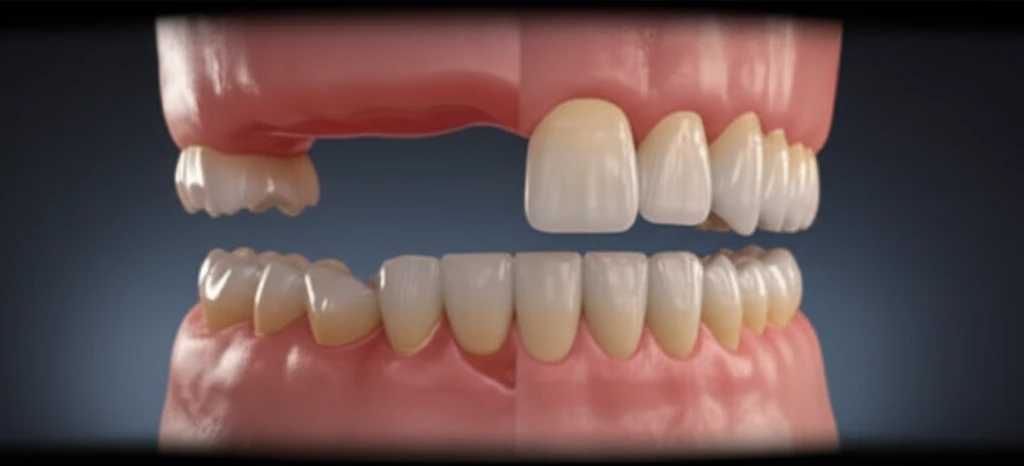
Dentures Transforming

Denture Dilemmas: Can New Dentures Really Improve Chewing and Muscle Strength?

"A new study explores how replacing old dentures, especially lower ones, impacts chewing ability, muscle thickness, and overall oral function in older adults."


Losing teeth and relying on dentures can bring a host of challenges, from struggling to enjoy your favorite foods to changes in your facial muscles. While implant-supported dentures have become a popular option, many people still depend on traditional complete dentures (CDs). But what happens when those dentures, especially the lower ones, aren't quite up to par? Many people end up not using their complete dentures, which leads to loss of retention and stability, pain, or discomfort from ill-fitting prostheses. A recent study investigated just how much replacing old dentures with a new set impacts chewing, muscle strength, and oral function in older adults.

The research focused on edentulous (toothless) individuals who wore only upper CDs and examined whether new upper and lower dentures could improve masticatory function and oral perception. Masticatory function declines with age, and the ability to properly chew food diminishes. Oral sensory ability also decreases, making it harder to detect intraoral shapes and prepare food boluses for swallowing, which causes increased risk of dysphagia. Maximum tongue pressure can predict oral function deterioration.

This article explores how new dentures can improve chewing and muscle strength. By diving into the key findings, we'll uncover how replacing those old dentures can lead to a better quality of life.

Chewing, Muscles, and New Dentures: What the Study Revealed

Dentures Transforming

The study focused on fifteen edentulous elderly people who wore only upper CDs and received new upper and lower CDs. They were evaluated at baseline and after 1, 3, and 6 months of new prosthesis use. The participants underwent several tests to measure their masticatory performance (MP), masseter muscle thickness (MT), and oral sensorial ability (OSA).

Here's a breakdown of the key measurements and how they were assessed:

  • Masticatory Performance (MP): Assessed using a sieving method to measure how well participants could break down food.
  • Masseter Thickness (MT): Measured by ultrasonography to evaluate muscle size and strength.
  • Oral Sensorial Ability (OSA): Evaluated through oral stereognosis tests.
  • Maximum Tongue Pressure (MTP): Verified by pressure sensors to measure tongue strength and function.
The results revealed some significant improvements with the new dentures. Masticatory performance (MP) and maximum tongue pressure (MTP) decreased after one month, indicating improved chewing efficiency, and remained stable thereafter. Masseter thickness (MT) increased after three months, suggesting enhanced muscle activity and strength. Interestingly, oral sensorial ability (OSA) did not show significant differences. Here are the key conclusions of the study:

The Takeaway: New Dentures, Stronger Chews

The study offers valuable insights into the benefits of replacing old dentures with new ones. For older adults struggling with chewing and muscle weakness due to ill-fitting dentures, a new set can make a significant difference. By enhancing masticatory function and muscle thickness, new dentures improve the ability to eat properly and maintain overall oral health.

Though the study showed benefits, it's also important to remember that everyone's experience with dentures is unique. Factors like the period of edentulism, individual oral conditions, and personal habits can influence the outcomes. Regular dental check-ups and professional guidance are essential to ensure the best possible results.

If you're experiencing difficulties with your current dentures, talking to your dentist about replacement options could be a game-changer. New dentures can not only improve your chewing ability and muscle strength but also boost your confidence and overall quality of life.

About this Article -

This article was crafted using a human-AI hybrid and collaborative approach. AI assisted our team with initial drafting, research insights, identifying key questions, and image generation. Our human editors guided topic selection, defined the angle, structured the content, ensured factual accuracy and relevance, refined the tone, and conducted thorough editing to deliver helpful, high-quality information.See our About page for more information.

This article is based on research published under:

DOI-LINK: 10.1111/joor.12729, Alternate LINK

Title: Influence Of Lower Complete Denture Use On Masseter Muscles And Masticatory Function: A Longitudinal Study

Subject: General Dentistry

Journal: Journal of Oral Rehabilitation

Publisher: Wiley

Authors: Talita Malini Carletti, Mayara Abreu Pinheiro, Thais Marques Simek Vega Gonçalves, Renata Cunha Matheus Rodrigues Garcia

Published: 2018-10-26

Everything You Need To Know

1

How does replacing old dentures improve chewing ability?

Replacing old complete dentures, particularly lower complete dentures, with a new set can lead to improved chewing efficiency and oral function. The study showed that masticatory performance, measured by the sieving method, and maximum tongue pressure, assessed with pressure sensors, improved after one month of use with new dentures. This suggests that individuals are able to break down food more effectively and exert better tongue control, essential for swallowing and overall oral health.

2

What does the study reveal about the impact of new dentures on muscle strength in older adults?

The study indicated that masseter thickness, gauged by ultrasonography, increased after three months of using new complete dentures. This implies that the muscles involved in chewing become stronger and more active over time with better-fitting dentures. Enhanced masseter thickness contributes to improved bite force and overall chewing capability, but it is important to note that oral sensorial ability did not significantly change.

3

How are masticatory performance, muscle thickness, and oral sensorial ability measured in the study?

Masticatory performance is measured using a sieving method to assess how well a person can break down food. Masseter thickness is determined via ultrasonography to evaluate muscle size and strength. Oral sensorial ability is tested through oral stereognosis tests. Maximum tongue pressure is verified by pressure sensors to measure tongue strength and function. These measurements collectively provide a comprehensive view of oral function and how it changes with new dentures.

4

Does the research mention the use of implant-supported dentures and their effects compared to complete dentures?

While the study focused on complete dentures and their impact on masticatory performance, masseter thickness, and oral sensorial ability, it did not delve into the effects of implant-supported dentures. Implant-supported dentures offer increased stability and retention compared to traditional complete dentures. Future research could compare the outcomes of replacing old complete dentures with new complete dentures versus transitioning to implant-supported options to provide a more comprehensive understanding of denture solutions.

5

What are the broader implications of improved chewing and muscle strength due to new dentures for older adults?

Improved masticatory performance and increased masseter thickness can significantly enhance the quality of life for older adults. Better chewing efficiency means individuals can enjoy a wider variety of foods and maintain proper nutrition. Stronger muscles can lead to improved facial aesthetics and reduced discomfort. While oral sensorial ability did not show significant changes in the study, other factors like speech and social confidence could also be positively influenced by new, well-fitting dentures.

Newsletter Subscribe

Subscribe to get the latest articles and insights directly in your inbox.