
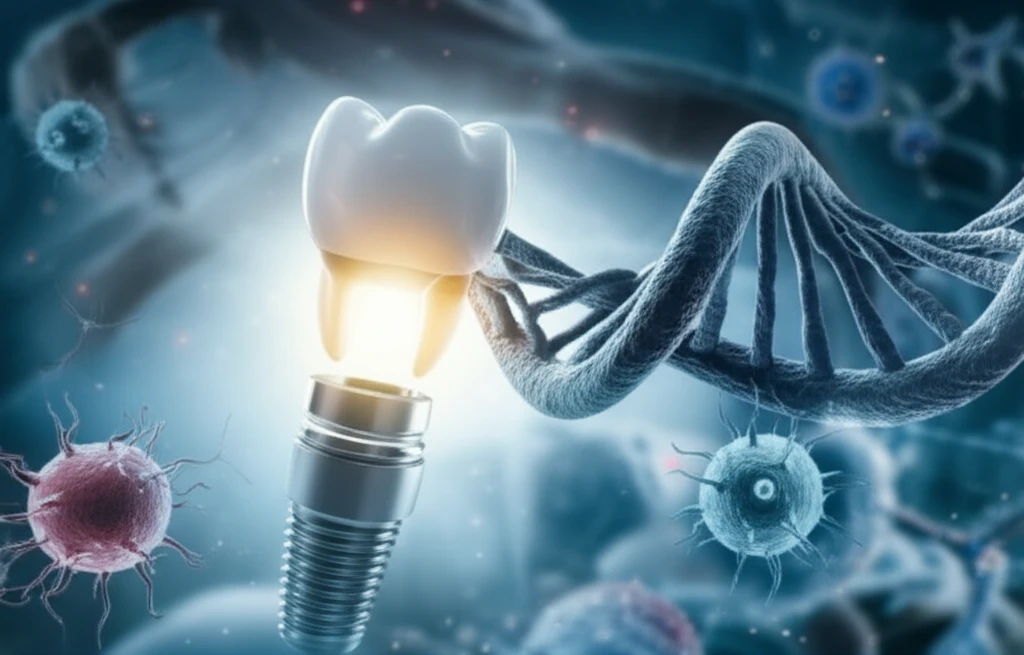
Dental Implant Loss: Unlocking the Genetic Clues

"How Lactotransferrin Gene Polymorphisms Could Be the Key to Predicting and Preventing Implant Failure"
Dental implants have become a cornerstone of modern restorative dentistry, offering a reliable solution for replacing missing teeth and restoring oral function. However, despite advancements in implant technology and surgical techniques, a significant percentage of dental implants still fail. This failure can lead to patient discomfort, additional procedures, and increased healthcare costs. Identifying the factors that contribute to implant loss is crucial for improving the long-term success of these treatments.
Recent research has begun to explore the potential role of genetics in dental implant outcomes. One particular area of interest is the Lactotransferrin gene (LTF), which plays a vital role in the body's immune response and defense against infection. Polymorphisms, or variations, in the LTF gene, have been linked to a range of health conditions, including inflammatory diseases and susceptibility to infections. Given the importance of inflammation and infection in the healing process following implant placement, researchers have hypothesized that LTF gene polymorphisms may also influence the success or failure of dental implants.
A case-control association study delved into the connection between LTF gene polymorphisms and dental implant loss, aiming to uncover whether specific genetic variations within the LTF gene could be correlated with an increased risk of implant failure. By understanding these genetic factors, dental professionals can develop personalized treatment strategies to mitigate risks and improve outcomes. This research has the potential to transform how dental implants are approached, making the process more predictable and successful for patients.
The Lactotransferrin Gene (LTF): A Key Player in Dental Implant Success?
The Lactotransferrin gene (LTF) encodes for lactotransferrin, a protein that belongs to the transferrin family. Lactotransferrin, also known as lactoferrin, is found in various bodily fluids such as milk, saliva, tears, and nasal secretions. It is also present in neutrophils, a type of white blood cell that plays a critical role in the immune system. Lactotransferrin exhibits a wide range of biological activities, including:
- Antimicrobial activity: Lactotransferrin inhibits the growth of bacteria, fungi, and viruses.
- Anti-inflammatory properties: It modulates the immune response, reducing inflammation and tissue damage.
- Immunomodulatory effects: Lactotransferrin influences the activity of immune cells, enhancing the body's defense mechanisms.
- Iron regulation: It binds and transports iron, an essential element for cell growth and metabolism.
- Bone metabolism: Lactotransferrin promotes bone cell growth and differentiation, contributing to bone regeneration.
Personalized Dental Care: The Future of Implantology
The research into LTF gene polymorphisms and dental implant loss represents a significant step towards personalized dental care. By identifying individuals who are genetically predisposed to implant failure, dentists can implement proactive strategies to mitigate these risks. This may involve more rigorous infection control measures, the use of anti-inflammatory therapies, or even alternative implant designs that are better suited to the patient's individual genetic profile. As our understanding of the genetic factors influencing implant outcomes grows, we can look forward to a future where dental implant procedures are more predictable, successful, and tailored to the unique needs of each patient.