
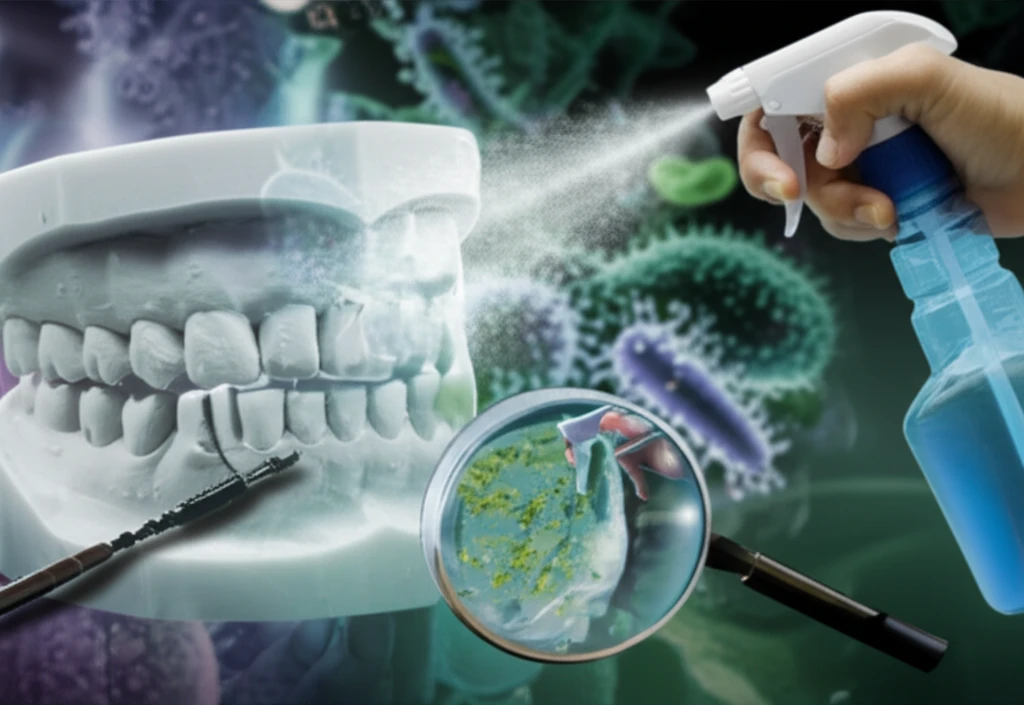
Dental stone model being disinfected.

Dental Disinfection Dilemmas: Are Your Cleaning Methods Harming Accuracy?

"Discover how common dental disinfectants impact the precision of stone models, and whether your clinic's protocols could be unintentionally compromising results."


In the world of dentistry, achieving a perfect fit isn't just about skill; it's about precision at every step. From the first impression to the final restoration, accuracy is key. But what if the very methods used to ensure safety—disinfection protocols—are subtly undermining the precision you strive for? This is a critical question for every dental professional who values both patient safety and treatment excellence.

Disinfecting tools and materials is a non-negotiable part of dental procedures. Without proper disinfection, dentists, hygienists, and lab technicians face significant risks of cross-contamination. Impression materials, essential for creating accurate casts of oral tissues, must be meticulously cleaned to prevent the spread of infectious diseases like herpes, hepatitis, tuberculosis, and AIDS. This creates a constant balancing act in your daily practice.

The challenge lies in finding disinfectants that are powerful enough to kill harmful microbes without compromising the dimensional accuracy or surface detail reproduction of impression materials and the resulting stone models. The American Dental Association (ADA) advocates for using approved disinfectants, but what happens when these solutions interact with different alginate impression materials? Let's examine the factors at play and explore how to safeguard the accuracy of your work.

Do Standard Disinfectants Distort Dental Models? The Accuracy Balancing Act

Dental stone model being disinfected.

A recent study published in the Brazilian Dental Journal investigated the impact of common disinfectant solutions on the surface detail reproduction and dimensional accuracy of stone models. The research compared models created from molds disinfected with 2% sodium hypochlorite, 2% chlorhexidine digluconate, or 0.2% peracetic acid against those from non-disinfected molds, using three different alginate materials: Cavex ColorChange, Hydrogum 5, and Jeltrate Plus.

The study meticulously prepared molds with lines of varying widths (20, 50, and 75 µm) and subjected them to pressure using a perforated metal tray. After gelation, the molds were either disinfected by spraying with one of the solutions and storing in closed jars for 15 minutes, or left untreated. The molds were then filled with dental gypsum (Durone IV), and the resulting stone models were evaluated for surface detail reproduction and dimensional accuracy.

Here's what the study revealed:
  • Surface Detail Reproduction: All alginate impression materials flawlessly reproduced the 50 µm line, regardless of the disinfection procedure.
  • Dimensional Accuracy: No significant differences were found in the dimensional accuracy of stone models based on the disinfectant used or the alginate material.
  • Materials Tested: The study used common alginate impression materials (Cavex ColorChange, Hydrogum 5, and Jeltrate Plus) and disinfectant solutions (2% sodium hypochlorite, 2% chlorhexidine digluconate, and 0.2% peracetic acid).
These findings suggest that the choice of disinfectant solutions and alginate materials may not significantly impact surface detail reproduction or dimensional accuracy. This is great news, but understanding the nuances behind these results can help you make even more informed decisions in your practice.

Making Informed Choices: Disinfection Without Compromise

While the study indicates that the tested disinfectants and alginate materials do not significantly affect surface detail reproduction or dimensional accuracy, it's essential to consider other factors. Always follow manufacturer guidelines for both impression materials and disinfectants to ensure optimal results. Proper rinsing and storage of impressions are also crucial to prevent distortions.

About this Article -

This article was crafted using a human-AI hybrid and collaborative approach. AI assisted our team with initial drafting, research insights, identifying key questions, and image generation. Our human editors guided topic selection, defined the angle, structured the content, ensured factual accuracy and relevance, refined the tone, and conducted thorough editing to deliver helpful, high-quality information.See our About page for more information.

Everything You Need To Know

1

What is the primary concern regarding dental disinfection in relation to achieving accurate dental models?

The main concern is balancing effective disinfection to prevent the spread of infectious diseases like herpes, hepatitis, tuberculosis, and AIDS, with maintaining the dimensional accuracy and surface detail reproduction of impression materials and the resulting stone models. The goal is to ensure patient safety without compromising the precision needed for a perfect fit of dental restorations.

2

What specific disinfectants and alginate impression materials were tested in the study, and what were the key findings related to surface detail and dimensional accuracy?

The study evaluated three alginate impression materials: Cavex ColorChange, Hydrogum 5, and Jeltrate Plus, and compared their performance after being disinfected with 2% sodium hypochlorite, 2% chlorhexidine digluconate, or 0.2% peracetic acid. The main findings were: All alginate materials flawlessly reproduced the 50 µm line, regardless of the disinfection procedure. Also, no significant differences were found in the dimensional accuracy of stone models based on the disinfectant used or the alginate material.

3

Why is it important to meticulously clean impression materials, and what are the risks if this step is overlooked?

Meticulously cleaning impression materials is crucial to prevent the spread of infectious diseases like herpes, hepatitis, tuberculosis, and AIDS. Without proper disinfection, there is a significant risk of cross-contamination between patients, dental professionals, and lab technicians. This can lead to the transmission of serious illnesses and compromise patient safety.

4

Beyond the specific findings of the study, what other factors should dental professionals consider to ensure accurate dental models when using disinfectants?

Dental professionals should always follow manufacturer guidelines for both impression materials and disinfectants to ensure optimal results. Proper rinsing and storage of impressions are also essential to prevent distortions. Even though the study showed no significant impact from the tested disinfectants, these additional steps are crucial for maintaining the integrity and accuracy of the impression and stone models.

5

What is the role of the American Dental Association (ADA) in dental disinfection protocols, and why is it important to adhere to their recommendations?

The American Dental Association (ADA) advocates for using approved disinfectants in dental practices. Adhering to ADA recommendations is crucial because it ensures the use of disinfectants that are effective against harmful microbes while minimizing any potential negative impact on impression materials and stone models. Following ADA guidelines helps dental professionals maintain high standards of patient safety and treatment quality, aligning with best practices in the field.

Newsletter Subscribe

Subscribe to get the latest articles and insights directly in your inbox.