
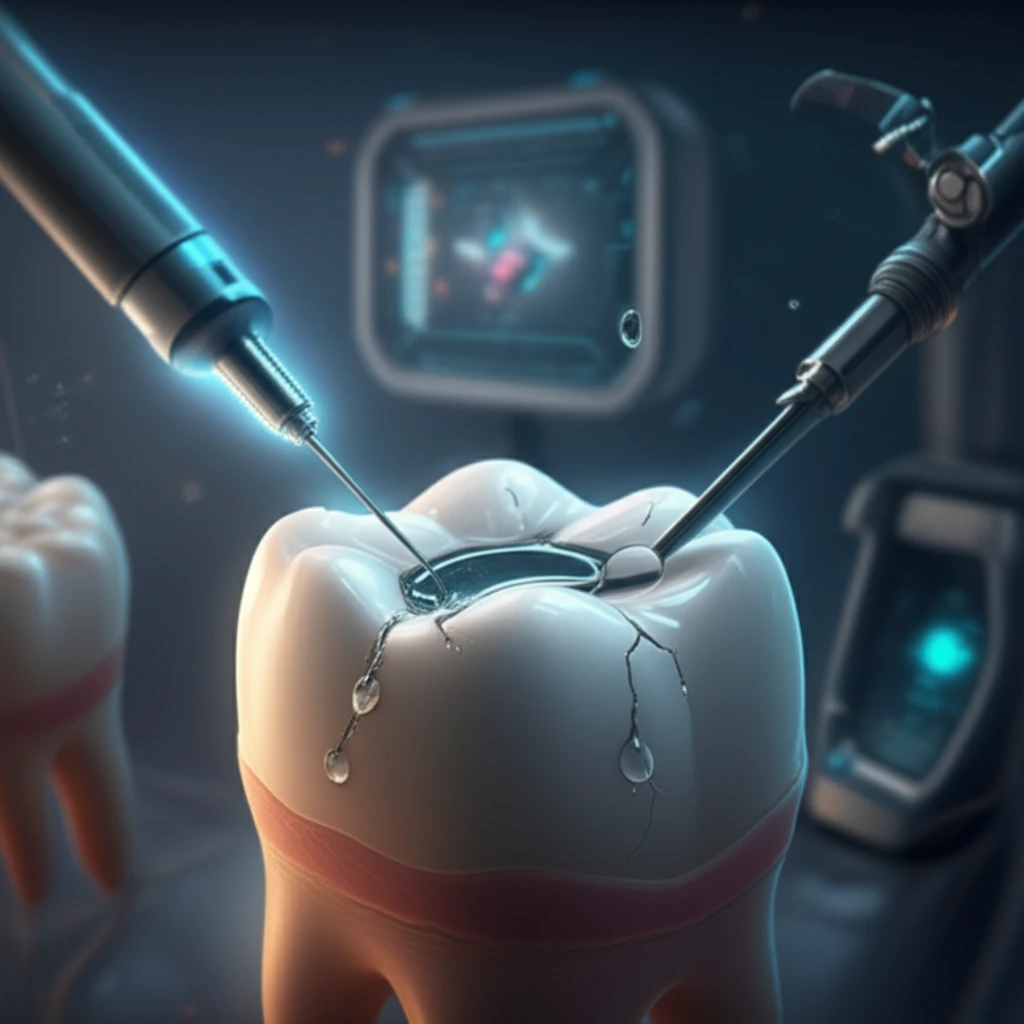
Dental adhesive sealing a tooth, symbolizing protection against water sorption and nanoleakage.

Dental Adhesive Showdown: Does Solvent Evaporation Really Matter?

"Uncover the truth about solvent evaporation in dental adhesives and its impact on restoration longevity."


In modern dentistry, the success of restorative treatments heavily relies on the effectiveness of dental adhesives. These adhesives, designed to bond filling materials to the tooth structure, are complex mixtures of hydrophilic and hydrophobic monomers, solvents, and other essential components. Getting the balance right between these elements is crucial for a strong and lasting bond.

Solvents play a key role in dental adhesives, helping to carry resin monomers into the collagen fibrils of the dentin after etching. They also aid in evaporating water from the dentin surface, improving the infiltration of monomers and enhancing the interaction between the adhesive and the tooth. This process is vital for creating a reliable bond that can withstand the stresses of everyday use.

However, the presence of solvents also introduces potential problems. If not properly evaporated, residual solvents can lead to incomplete monomer polymerization, creating weak spots in the hybrid layer. This can compromise the bond's durability and increase the risk of water sorption, solubility, and nanoleakage, all of which can lead to restoration failure. So, does solvent evaporation really matter? Let’s delve into the science.

Solvent Evaporation: Why It's a Hot Topic in Dental Bonding

Dental adhesive sealing a tooth, symbolizing protection against water sorption and nanoleakage.

A recent study published in the Journal of Applied Oral Science investigated the effects of solvent evaporation on water sorption, solubility, and nanoleakage in various adhesive systems. Researchers aimed to determine whether evaporating solvents before light-curing adhesives could improve the performance and longevity of dental restorations. The study focused on understanding how different adhesive protocols affect the way adhesives interact with water and the potential for microscopic leakage at the bonding interface.

The experiment involved creating disk-shaped specimens from four different adhesive systems: Clearfil S³ Bond (CS3), Clearfil SE Bond (CSE), Optibond Solo Plus (OS), and Scotchbond Universal Adhesive (SBU). Half of the specimens from each adhesive group underwent solvent evaporation for 30 seconds, while the other half did not. All specimens were then light-cured and stored in either distilled water or mineral oil to assess water diffusion over a seven-day period.

  • Water Sorption (WS): Measures the amount of water absorbed by the adhesive over time.
  • Solubility (SL): Measures the amount of adhesive material that dissolves in water over time.
  • Net Water Uptake: The sum of water sorption and solubility, indicating the overall water interaction.
  • Nanoleakage: Microscopic leakage at the adhesive-tooth interface, assessed using ammoniacal silver impregnation and SEM analysis.
After seven days, the specimens were evaluated for water sorption, solubility, and nanoleakage. Statistical analysis revealed that the type of adhesive significantly influenced water-related properties, but solvent evaporation had no significant impact on water sorption or solubility. However, nanoleakage was significantly enhanced when solvents were not evaporated from the adhesives. This suggests that while solvent evaporation doesn't affect how much water an adhesive absorbs, it does play a crucial role in the integrity of the bond at the microscopic level.

Key Takeaways for Dental Professionals

While the study indicates that solvent evaporation doesn't significantly alter water sorption and solubility, it is crucial for minimizing nanoleakage and ensuring a durable bond. The bottom line? Always follow the manufacturer's instructions for your specific adhesive system, and ensure proper solvent evaporation to maximize the longevity and success of your dental restorations.

About this Article -

This article was crafted using a human-AI hybrid and collaborative approach. AI assisted our team with initial drafting, research insights, identifying key questions, and image generation. Our human editors guided topic selection, defined the angle, structured the content, ensured factual accuracy and relevance, refined the tone, and conducted thorough editing to deliver helpful, high-quality information.See our About page for more information.

Everything You Need To Know

1

What are dental adhesives and why are they important in restorative treatments?

Dental adhesives are essential materials used in restorative dentistry to bond filling materials to tooth structure. These adhesives are complex mixtures containing hydrophilic and hydrophobic monomers, solvents, and other components. The right balance of these elements ensures a strong and lasting bond, which is crucial for successful dental restorations. Without effective dental adhesives, restorations are more likely to fail due to poor bonding between the filling material and the tooth.

2

What role do solvents play in dental adhesives, and why is their proper evaporation so critical?

Solvents in dental adhesives are key for carrying resin monomers into the collagen fibrils of the dentin after etching. They also help evaporate water from the dentin surface, improving monomer infiltration and enhancing interaction between the adhesive and the tooth. This process is vital for creating a reliable bond capable of withstanding daily stresses. However, if solvents are not properly evaporated, residual solvents can lead to incomplete monomer polymerization, creating weak spots in the hybrid layer, which can compromise the bond's durability.

3

What do water sorption and solubility indicate about a dental adhesive's performance?

Water sorption measures the amount of water absorbed by the adhesive over time, while solubility measures the amount of adhesive material that dissolves in water over time. Net water uptake is the sum of water sorption and solubility, indicating the overall water interaction. These properties are crucial because excessive water absorption and solubility can degrade the adhesive, weaken the bond, and lead to restoration failure. While solvent evaporation may not significantly alter water sorption or solubility, understanding these properties is vital for predicting the long-term performance of dental adhesives.

4

What is nanoleakage, and why is it a concern in dental bonding?

Nanoleakage refers to microscopic leakage at the adhesive-tooth interface. It is assessed using techniques like ammoniacal silver impregnation and SEM analysis. Nanoleakage is important because it indicates imperfections in the bond, which can lead to bacterial infiltration, secondary caries, and ultimately, restoration failure. The study showed that proper solvent evaporation is crucial for minimizing nanoleakage, even if it doesn't significantly affect water sorption or solubility. This highlights the importance of following proper application techniques to ensure a durable and long-lasting bond.

5

Which specific dental adhesives were examined in the study, and why were they chosen?

The study examined four different adhesive systems: Clearfil S³ Bond (CS3), Clearfil SE Bond (CSE), Optibond Solo Plus (OS), and Scotchbond Universal Adhesive (SBU). These adhesives were chosen to represent a range of commonly used dental adhesives, allowing researchers to assess the impact of solvent evaporation across different formulations. Understanding how each adhesive performs with and without proper solvent evaporation helps dental professionals make informed decisions about adhesive selection and application techniques in their practice.

Newsletter Subscribe

Subscribe to get the latest articles and insights directly in your inbox.