
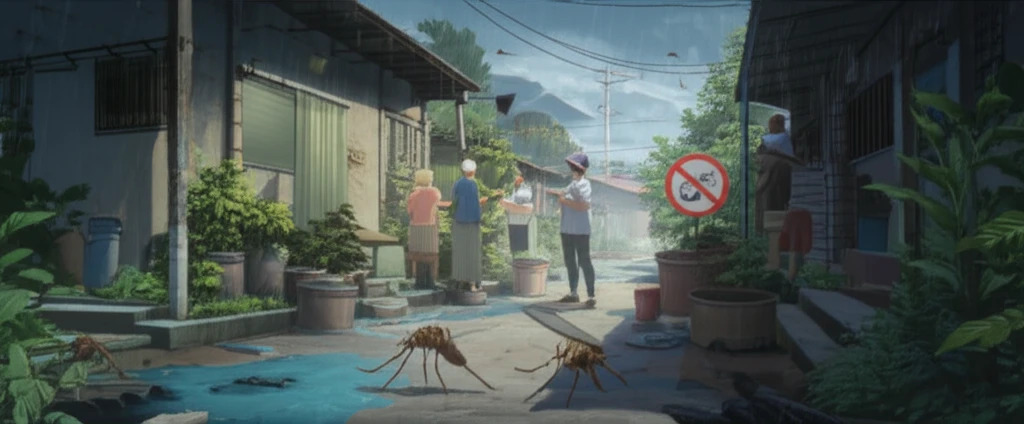
Community members in Southern Taiwan working together to prevent dengue.

Dengue Hotspots: How Targeted Mosquito Control Can Protect Your Community

"A new study reveals the key breeding grounds for Aedes aegypti mosquitoes in Southern Taiwan, offering insights for more effective prevention."


Dengue fever is a serious global health concern, transmitted by the Aedes aegypti mosquito. With no specific antiviral treatment or widely approved vaccine, controlling mosquito populations is the primary strategy for preventing outbreaks. But with Aedes aegypti thriving in diverse environments, from flower pots to water storage containers, effective control requires a deep understanding of their breeding habits.

For decades, Southern Taiwan has battled annual dengue epidemics. Now, a groundbreaking study published in PLOS Neglected Tropical Diseases sheds light on the specific locations and conditions that favor mosquito breeding in the region. By identifying key predictors for juvenile and pupal mosquito populations, this research offers valuable insights for more targeted and effective control strategies.

This article explores the study's findings, revealing how location, season, and container type influence mosquito breeding. We'll delve into the implications for public health officials and community members, highlighting the importance of a collaborative approach to dengue prevention.

Key Findings: Where Mosquitoes Breed and Why It Matters

Community members in Southern Taiwan working together to prevent dengue.

The study, conducted in Kaohsiung City and Pingtung County, Southern Taiwan, focused on identifying the characteristics of water-holding containers that harbor Aedes aegypti mosquitoes. Researchers examined various factors, including location (indoor vs. outdoor), season (wet vs. dry), ownership (private vs. government), and container function (water storage, discarded items, etc.).

Here's a breakdown of the most important findings:

  • Urban vs. Rural: Mosquitoes were overwhelmingly concentrated in urban areas.
  • Seasonal Impact: Wet seasons saw significantly higher juvenile and pupal mosquito populations.
  • Private Property Matters: Containers on private properties were more likely to harbor juvenile mosquitoes.
  • Indoor Water Storage: Indoor containers used for water storage were prime breeding grounds for pupae.
  • Outdoor Receptacles: Outdoor items like flower pot saucers and water catchment buckets also harbored significant pupae populations.
These findings highlight the need for targeted interventions. Instead of a one-size-fits-all approach, control strategies should focus on specific environments and conditions that promote mosquito breeding.

Taking Action: How to Protect Your Community

The study's findings emphasize the importance of a multi-pronged approach to dengue prevention. Public health authorities should expand control efforts to include indoor water storage containers and outdoor water receptacles on both private and government properties. Community engagement is also crucial. By educating residents about mosquito breeding habits and encouraging them to take responsibility for managing water sources around their homes, we can collectively reduce the risk of dengue outbreaks. Simple actions, like scrubbing containers to remove mosquito eggs and eliminating standing water, can make a big difference. Let's work together to create a safer, healthier environment for everyone.

About this Article -

This article was crafted using a human-AI hybrid and collaborative approach. AI assisted our team with initial drafting, research insights, identifying key questions, and image generation. Our human editors guided topic selection, defined the angle, structured the content, ensured factual accuracy and relevance, refined the tone, and conducted thorough editing to deliver helpful, high-quality information.See our About page for more information.

Everything You Need To Know

1

What is dengue fever and why is it important to control mosquito populations?

Dengue fever is a serious illness spread by the Aedes aegypti mosquito. Since there isn't a widely available vaccine or specific antiviral treatment, managing mosquito populations is key to preventing outbreaks. This involves understanding where they breed and taking steps to eliminate breeding grounds.

2

Where do Aedes aegypti mosquitoes typically breed?

The Aedes aegypti mosquito thrives in diverse environments, but certain conditions are more favorable. Urban areas, wet seasons, and water-holding containers on private properties are key breeding grounds. Specifically, indoor water storage containers and outdoor receptacles like flower pot saucers are prime spots for mosquitoes to lay eggs.

3

What does 'targeted mosquito control' mean and how does it differ from other approaches?

Targeted mosquito control focuses on specific environments and conditions that promote breeding, rather than a one-size-fits-all approach. For example, understanding that indoor water storage is a key breeding site allows public health officials to focus efforts on inspecting and treating these areas.

4

What actions should public health authorities take to prevent dengue outbreaks?

Public health authorities should expand control efforts to include indoor water storage containers and outdoor water receptacles on both private and government properties. Also, community engagement is crucial. Educating residents about mosquito breeding habits and encouraging them to manage water sources can collectively reduce the risk of dengue outbreaks.

5

How can I, as an individual, help prevent dengue in my community?

Everyone can help prevent dengue by taking simple actions. Scrubbing containers to remove mosquito eggs, eliminating standing water around your home, and regularly emptying flower pot saucers are effective ways to reduce mosquito breeding. If we all take responsibility for managing water sources, we can significantly reduce the risk of outbreaks.

Newsletter Subscribe

Subscribe to get the latest articles and insights directly in your inbox.