
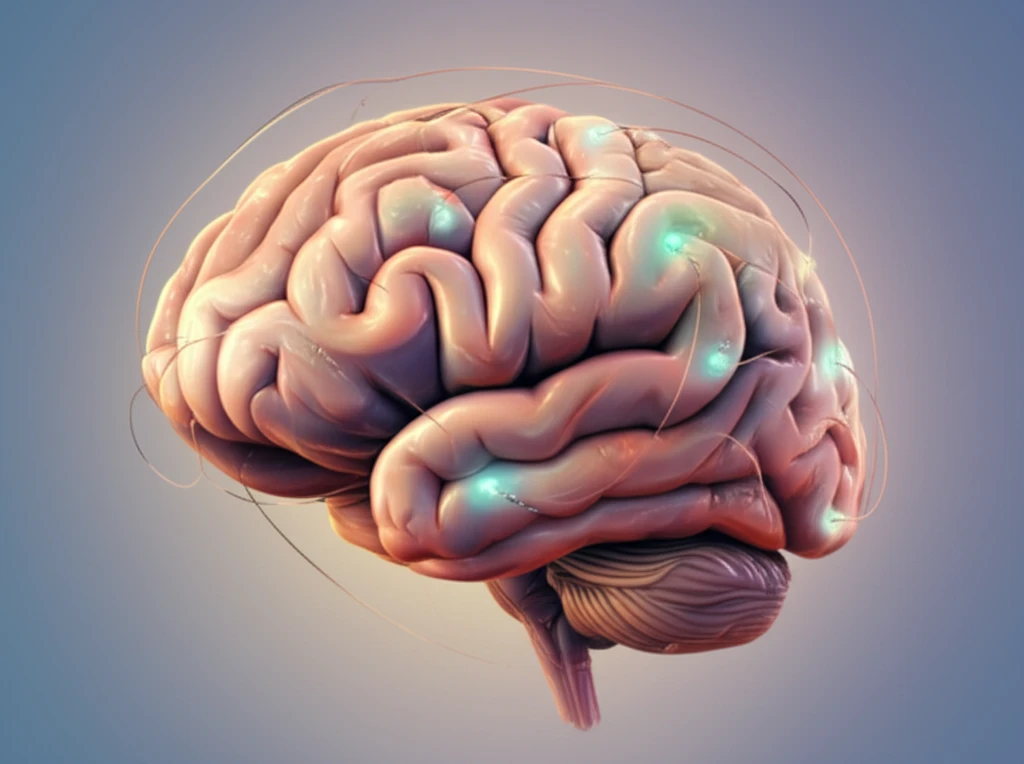
Deep Brain Stimulation: A Ray of Hope for Holmes' Tremor

"Discover how a cutting-edge approach combining thalamic and subthalamic stimulation offers new possibilities for those battling this rare and debilitating movement disorder."
Holmes' tremor (HT), first identified in 1904, stands as a particularly challenging movement disorder, characterized by a combination of resting, action, and intention tremors. Unlike more common tremors, Holmes' tremor is often resistant to traditional drug therapies, leaving those affected searching for effective solutions to regain control of their movements and improve their daily lives.
Traditional treatments for tremor, including medications like levodopa, often prove ineffective in managing Holmes' tremor. As a result, surgical interventions, such as stereotactic thalamotomy or deep brain stimulation (DBS), are frequently considered to alleviate symptoms when medication fails. These surgical options aim to disrupt the neural pathways responsible for the tremor, providing much-needed relief.
This article explores a recent case where deep brain stimulation (DBS) targeting the ventralis intermedius nucleus of the thalamus (VIM) and the posterior subthalamic area (PSA) successfully improved the condition of a patient with Holmes' tremor resulting from a brainstem hemorrhage. This approach offers a promising avenue for individuals seeking relief from this debilitating condition, highlighting the potential of targeted neurostimulation.
The Dual-Target DBS Approach: How It Works
The technique involves implanting electrodes in two key brain regions: the ventralis intermedius nucleus of the thalamus (VIM) and the posterior subthalamic area (PSA). The VIM is traditionally targeted for tremor control, while the PSA is believed to modulate motor circuits involved in various types of tremor. Stimulating both areas simultaneously may offer a more comprehensive approach to managing the complex symptoms of Holmes' tremor.
- Ventralis Intermedius Nucleus (VIM): A primary target for tremor suppression, disrupting the abnormal neural activity that causes tremors.
- Posterior Subthalamic Area (PSA): Modulates motor circuits and potentially impacts different types of tremor, offering a broader therapeutic effect.
- Stereotactic Techniques: Precise surgical methods that ensure accurate electrode placement within the brain.
- Intraoperative Adjustments: Real-time monitoring and adjustments during surgery to optimize electrode position and stimulation settings.
Looking Ahead: DBS and the Future of Tremor Treatment
This case report offers valuable insights into the potential of dual-target DBS for managing Holmes' tremor, a condition notoriously difficult to treat. While further research is needed to confirm these findings and optimize treatment protocols, the results are encouraging and suggest a promising avenue for future investigation.
Future research should focus on larger studies to assess the long-term efficacy and safety of this approach. Additionally, investigations into the specific mechanisms by which VIM and PSA stimulation interact to alleviate tremor symptoms could lead to even more targeted and effective therapies.
By continuing to explore innovative approaches like dual-target DBS, the medical community can offer new hope to individuals battling Holmes' tremor and other challenging movement disorders, improving their quality of life and helping them regain control over their bodies.